Chuck

Based on the true story that inspired the Rocky films, Chuck is a boxing biopic about Chuck Wepner, the sports folk hero from the working-class town Bayonne, New Jersey and known as The Bayonne Bleeder, and his struggles in life following his fifteen minutes of fame, boxing Muhammad Ali. A small-time professional boxer who lives paycheck-to-paycheck as an alcohol salesman, Chuck, terrifically played by Liev Schreiber, gets a once-in-a-lifetime offer from the famous boxing promoter Don King to fight the reigning heavyweight world champion Muhammad Ali in 1975. In typical fashion for a boxing movie, the scenes preceding the much-hyped match follow his strict training regimen with encouragement from his manager and trainer played by Ron Perlman. Although he ultimately loses the fight, he is praised as a underdog hero after valiantly holding off Ali for fifteen rounds, which everyone thought impossible. Already a drunk and overall mess, he gets into further marital problems with his wife Phyllis, played by Elisabeth Moss, after his sudden rise to fame. His wife and kids eventually leave him, and he begins a relationship with the local bartender Linda, played by Naomi Watts. With the release of the hugely successful film Rocky in 1976, Chuck constantly brags about being the inspiration for Sylvester Stallone and even attempts to contact Stallone despite not receiving a penny from the movie. He finally gets to meet Sylvester Stallone, and he is offered a small role in Rocky II set to be released in 1979. His increasing minor celebrity status leads to more alcohol and a severe cocaine addiction, which further wreaks havoc in his already chaotic life as he is having trouble finding work. Overall, I thought it was a good, albeit a rather cookie-cutter boxing film whose redeeming qualities include the strong acting performance of Liev Schreiber and the fascinating and largely unheard of story about the man who inspired the great Rocky character. 

The Wall

Directed by Doug Liman who directed 2002’s The Bourne Identity and 2014’s Edge of Tomorrow, The Wall is a gritty psychological war thriller about two American soldiers ambushed and trapped by a mysterious sniper while on a mission by themselves in the Iraqi desert shortly after the Iraq War. Sniper and U.S. Army Staff Sergeant Shane Matthews, played by professional wrestler John Cena, and his spotter Sergeant Allen Isaac, played by Golden Globe winner Aaron Taylor-Johnson, are on a relatively simple scouting operation but are unexpectedly shot at by an unseen sniper while waiting for extraction. Matthews is critically wounded out in the open and Isaac tries to rescue him but is forced to hide behind a crumbling wall after another barrage of sniper fire. Himself slightly injured, Isaac is unable to radio headquarters because their long-distance radio is damaged, but all of a sudden a mysterious voice appears on the two-way radio. Isaac soon learns that the man is an infamous Iraqi civilian sniper nicknamed Juba and is the one who has been shooting at them. With the wall as his only protection, Isaac desperately tries to find Juba’s location while dealing with dehydration and his bleeding leg wound. He becomes increasingly frustrated because Juba continues to try to engage in strangely friendly conversation about Isaac’s life and how the American military is destroying his country. At the end of the movie, it appears Isaac and the now slightly conscious Matthews have a chance to survive, but Juba may still have the upper hand. For a war movie, there are surprisingly few action sequences, and it resembles more of a intimate psychological thriller between two adversaries, Isaac and Juba, in a life-or-death situation. The film reminds me of another movie that I saw recently, 2016’s Mine in which the protagonist is by himself but is trapped by stepping on a landmine and also must deal with the psychological issues of dying in combat alone. Overall, I thought the filmmaker did a good job of presenting a psychological thriller, but the film never fully rises to its potential and is primarily remarkable only for its unique context and wartime setting. 

King Arthur: Legend of the Sword

Directed by Guy Ritchie who is known for stylish thrillers like 2000’s Snatch, King Arthur: Legend of the Sword is a unique and visually over-the-top take on the classic legendary story of King Arthur and Camelot. The star-studded cast and director gives a certain gravitas but, unfortunately, the film is nothing more than an average attempt at a Hollywood blockbuster Medieval action/adventure with the hopes of booting a highly profitable series of sequels. The movie begins with a fast-moving epic battle sequence at Camelot between malevolent fantastical forces known as mage and Uther the king of Britons, played briefly by Eric Bana. Ultimately, the king is killed and his scheming brother Vortigern, played by a cunning Jude Law, ascends to the throne but Uther’s young son escapes. The new brutal king spends years searching for his nephew who threatens his rule, and the appearance of the sword Excalibur, which can only be removed by the rightful heir to the throne, gives him a test to find his nephew. It turns out that his nephew is Arthur who lived for most of his life in a London brothel unaware of his heritage and portrayed by new action star Charlie Hunnam. After he is able to extract Excalibur, he must live a life on the run from his uncle’s vicious soldiers known as Blacklegs. Eventually, he teams up with his father’s former general Sir Bedivere, played by Djimon Hounsou, and his loyalists, a character played by the terrific Aidan Gillen of Game of Thrones fame, a mage who worked with Merlin, and some of his friends from the brothel. He must first go on an adventure and learn how to harness the sheer power of Excalibur, which he could not handle at first. With his renewed strength, Arthur leads several ambushes on the Blacklegs, and he eventually successfully confronts his evil uncle who has sacrificed many of their relatives to gain mystical power. At the end of the movie, Arthur becomes who he was predestined to become and hints of the creation of the Knights of the Round Table. In typical Guy Ritchie fashion, many of the scenes include narration on top of frenetic and bloody stylish fight sequences and often includes flashbacks and flash-forwards. However, the quickfire editing sometimes creates a convoluted narrative that looks pretty but may be hard to follow. Also, the over-the-top fantastical elements and the extremely dark and mysterious atmosphere and mood of the film undercuts the classic Arthurian stories the audience may remember. Overall, I found that Guy Ritchie brought a certain amount of energy to the age-old King Arthur tales, but the movie ultimately failed with its over-reliance on style rather than substance.

Norman: The Moderate Rise and Tragic Fall of a New York Fixer

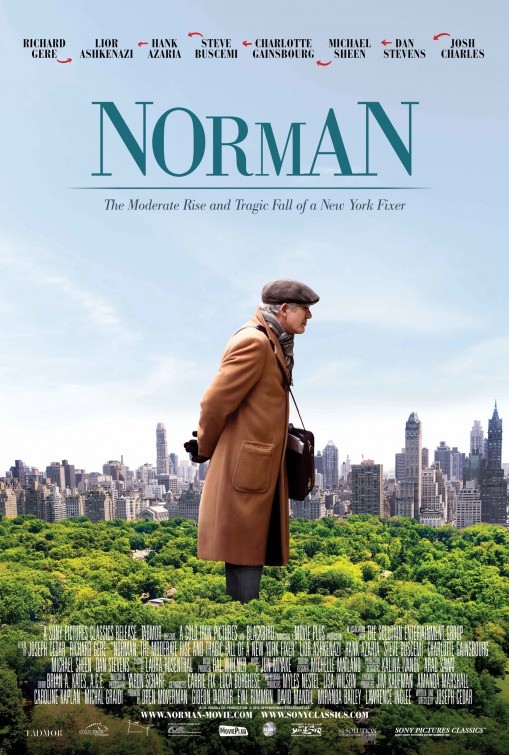
Written and directed by acclaimed Israeli filmmaker Joseph Cedar, Norman: The Moderate Rise and Tragic Fall of a New York Fixer is a terrifically well-crafted film about a scheming small-time fixer in New York City; Richard Gere’s devastating performance is what makes the film truly great. When we first meet Norman Oppenheimer, played by Richard Gere in one of his greatest roles, he is down on his luck and is desperate for any business connection and willing to do almost anything to be a well-respected fixer. Like we do not know much about his personal history, what he actually does as a fixer and how he makes money is never very clear in the movie. Many people he encounters who recognize him actively avoid him, including Dan Stevens’ character who is given a business deal while jogging in Central Park and must literally run away from Norman. Eventually, he befriends the minor Israeli politician Eshel, played by Israeli actor Lior Ashkenazi, and buys him a very expensive pair of shoes. The movie fast-forwards three years when Eshel rises to power in Israeli politics and becomes the prime minister of Israel. Norman, who still has not been very successful as a fixer, tries to cultivate this relationship with such a powerful man as Eshel but to no avail because he is never allowed to communicate with him. At the same time, Norman plays up his relationship and finds himself entangled in a whole set of deals with those who previously ignored him, including his quasi-friend played by Michael Sheen and his rabbi desperate for funds to keep the synagogue and played by Steve Buscemi. Acting out like a Shakespearean tragedy or a Woody Allen film, Norman’s life begins to rapidly unravel and is scapegoated by a hesitant Eshel who is being investigated for corruption. The best part of the film is Richard Gere’s nuanced performance as a desperate man who comes off as a scheming and not skillful fixer. Overall, I enjoyed the well-timed pacing and elaborate writing that made the movie feel more like a dramatic play, complete with a star-studded cast and the superb Richard Gere.

Finding Oscar

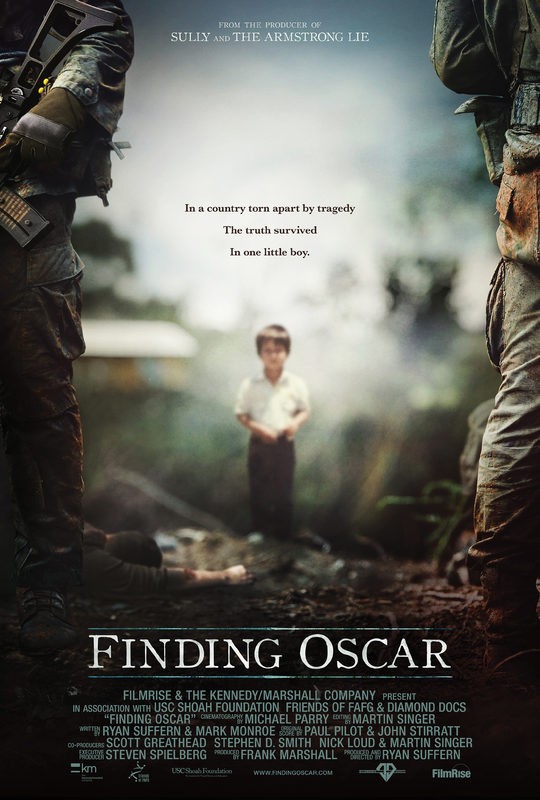
Produced by Steven Spielberg, Finding Oscar is a riveting and shocking documentary about one of the largest massacres during the 36 year-long Guatemalan Civil War. Under the de facto military president, an elite group of soldiers tasked with eliminating guerrilla fighters entered the small rural village Dos Erres in December 1982 allegedly to flush out the anti-government fighters supposedly hiding in the village. What unfolded was the killing of over two hundred innocent men, women, and children who were beaten to death and thrown into a local well. Only two young boys survived, and they were taken by two soldiers to become members of their family. The film follows the contemporary forensic anthropologists who went through the victim’s skeletal remains to uncover the truth that the Guatemalan military was responsible for the massacre. In hopes of gathering more details and an eyewitness account of that day, a group of activists search the world for the two surviving boys, especially a boy named Oscar who was particularly hard to find. Through the accounts of the forensic anthropologists, activists, lawyers, some of the soldiers that committed the atrocities, and surviving family members, we learn about a war that many in the United States are unaware of and the unheard of war crimes, including the estimated 200,000 dead civilians and this particularly horrific massacre. More disturbing is the fact that the United States government and President Ronald Reagan supported the Guatemalan regime and had friendly meetings with the very president who ordered the massacre around the same time. Overall, I found it to be a terrific documentary that highlights a atrociously bloody war that took place in our hemisphere yet most Americans know nothing about; this powerful film provides a much-needed history lesson about Guatemala and the questionable dealings of the United States had with the regimes during the Civil War.

The Circle

Based on Dave Eggers’ best-selling 2013 novel, The Circle is a movie full of potential with an impressive cast about pertinent issues surrounding technology, but ultimately fails its lofty expectations as a result of weak writing and narrative structure. Emma Watson plays an idealistic millennial who is given the opportunity of a lifetime to work at the Circle, the largest technology and social media corporation in the world serving billions of customers. She is excited to work with a supposedly innovative company and amazed by the sprawling campus that offers everything a young worker would want, an environment remarkably similar to the headquarters of Facebook and Google. With the encouragement of the Steve Jobs-like co-founder and CEO, played by Tom Hanks, Watson’s character allows her entire life to be recorded for the entire world to see as a part of the company’s experiment for full transparency. After the project causes friction with her family and friends over their lack of privacy, she realizes that everything at the company is not as it seems, and there may be dark secrets that harm its customers. The film becomes a cautionary tale and raises the vital implications of technology for convenience sake being detrimental to basic privacy and people’s mental and physical well-being. Unfortunately, it feels like there is something missing from the movie, especially the lackluster ending that does not resolve much of anything and distracts from the overall message. Overall, despite its particularly timely subject matter and star-studded cast, I found it to be nothing more than your average technological thriller that was slightly entertaining and simply passed the time.

Their Finest

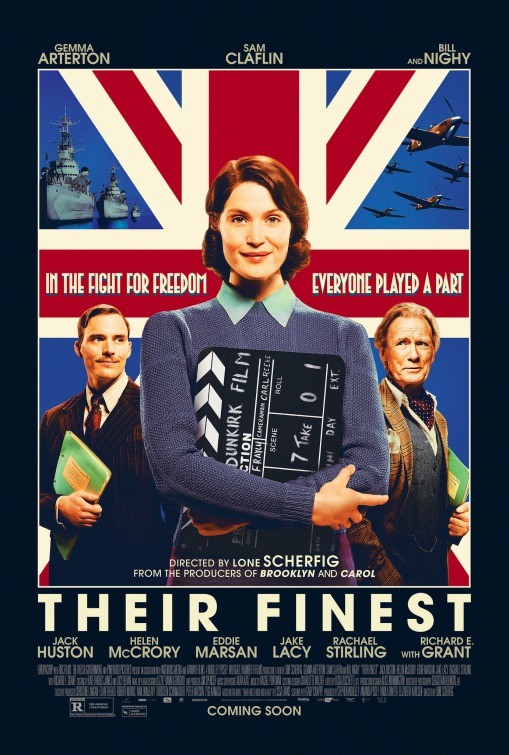
Set in 1940 in the midst of World War II in London, Their Finest is an entertaining wartime film blending charming characters with the serious plotline of creating cinematic propaganda to help the British war effort against the Nazi. The vibrant and nuanced Gemma Arterton plays a young secretary who finds herself becoming a screenwriter for British films promoting the Allied cause. Although she is in a complicated relationship with a struggling artist, she develops a close bond with the main screenwriter, played by Sam Claflin. They are enscripted to work on a dramatic romance revolving around the massive evacuation of British troops from Dunkirk in the summer of 1940. Greenlit by the British Ministry of Information, the film is able to add star power by encouraging an older and rather pompous actor, played brilliantly by Bill Nighy, who is struggling to find work after enjoying great success many years ago. Arterton’s character eventually falls in love with Claflin’s character while on location on the British coastline with a large group of witty and eccentric actors and crew members. Despite containing elements of comedy and endearing romance, the movie makes the audience aware that it is a story set during war by showing the tragic impact of the German bombardment of London and emphasizing the characters’ roles in creating propaganda to help defeat the Axis powers. Overall, I found it to be a thoroughly engaging film that highlights an often overlooked aspect of World War II and effectively develops sympathetic and charismatic characters, especially those of Gemma Arterton and Bill Nighy.

The Lost City of Z

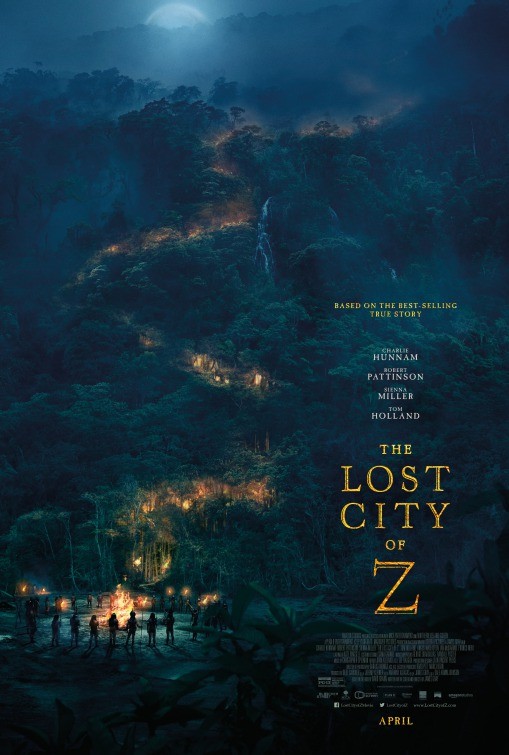
Based on the best-selling non-fiction book written by David Grann in 2009, The Lost City of Z is a beautifully crafted film in the great tradition of the Hollywood epics, complete with gorgeous panoramic cinematography and detailed adventurous storytelling. It tells the true story of British Colonel Percy Fawcett, played terrifically by Charlie Hunnam, who is a early 20th century explorer and led expeditions to Amazonian South America and ended up obsessed with discovering a lost city. He was first recruited by the British Royal Geographic Society to help survey the Bolivian frontier to settle a border dispute with Brazil and, while on the arduous months-long journey, he heard and saw evidence of a long lost civilization in the middle of Amazonia. He is also accompanied on most of the expeditions by a fellow explorer and close confidante, a British corporal played by Robert Pattinson. Returning home for a while to his wife, played by Sienna Miller, and his two young children, he eventually decides to embark on yet another adventure back to the jungle to find what he calls the lost city of Z. However, things do not turn out well after taking one of his investor explorers and running into unwelcoming indigenous tribes on the especially challenging trip. His almost fanatical quest is interrupted by World War I when he is sent to the front lines in France and where he witnesses the horrors of war alongside a number of his expeditionary companions. In 1925, he sets out on his final mission with his son Jack and a much smaller group, but the expedition comes to a mysterious end that has yet to be solved. Besides reminding me of such classic epics as 1962’s Lawrence of Arabia, the film’s dark and mysterious atmosphere of adventuring into the dangerous unknown is reminiscent of 1979’s Apocalypse Now. Like in Apocalypse Now, the protagonist is a complicated character who is close to descending into madness deep in the jungle and surrounded by unsuspecting natives, some of whom are primitive cannibals. Overall, I thought the filmmaker did an excellent job of recapturing the epic adventure genre and creating a thoroughly enjoyable and fascinating cinematic experience.

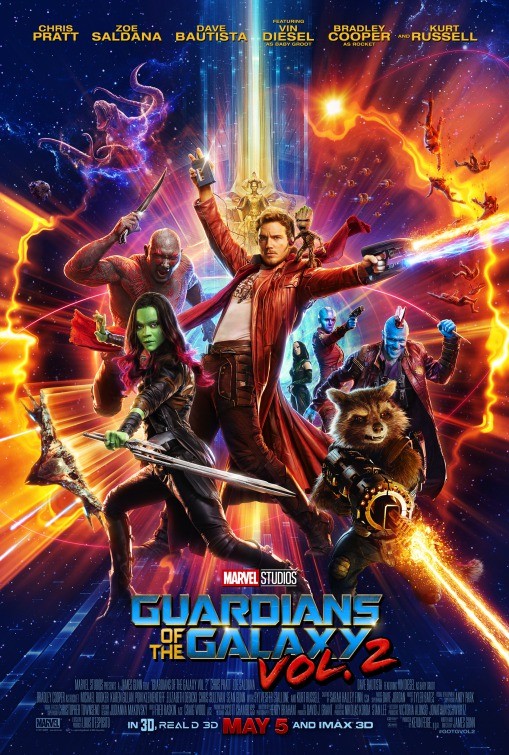
Guardians of the Galaxy Vol. 2

The sequel to the hugely successful 2014 comic book movie Guardians of the Galaxy, Guardians of the Galaxy Vol. 2 lives up to its predecessor as a raucously good time of a movie with the perfect balance of visually dazzling action, irreverent humor, and a nostalgic soundtrack. The movie takes place after the eccentric ragtag group of heroes known as the Guardians of the Galaxy help save the universe and are now tasked with protecting a set of high energy batteries with potentially deadly consequences. Chris Pratt plays the charming jokester Peter Quill or Star-Lord who is half human and the leader of the group, which consists of the green-skinned human-like Gamora, played by Zoe Saldana, the large strong alien with a sense of humor Drax the Destroyer, played by Dave Bautista, the feisty genetically engineered talking raccoon Rocket, voiced by Bradley Cooper, and the adorable tree creature Baby Groot, voiced by Vin Diesel. Eventually, their friendships are tested after Peter meets his father Ego, portrayed by Kurt Russell, who is a god-like alien form known as a Celestial, and Peter learns the previously undiscovered truth about his background. Through a series of spectacular CGI fight sequences, the team is emboldened to save the universe one more time after learning of a threatening malevolent force. In addition to the thrills and often uproarious humor and wit of the characters, in particular Chris Pratt’s character, the movie has an unexpected layer of sentimentality by revealing the complicated and endearing relationship between father or father-figure and son, as well as between close friends. The music, which is heavily from the seventies and eighties, is perfectly timed and so unique that it is an integral part of creating such a fun moviegoing experience. The most effective song was Cat Stevens’ classic lyrical Father and Son, which was played towards the end as Peter reflects on his real father and the mercenary Yondu, played by Michael Rooker, who really raised him. Overall, I found it to be one of the most fun and clever cinematic experiences of the year, and I would recommend it to even those who are not fans of the comic book superhero genre.

Gifted

Gifted is a heartwarming, slightly melodramatic film that is marked by endearing acting performances and tells an interesting story about a child prodigy. Frank, played by Chris Evans, lives a simple life as a boat mechanic in Florida and has been raising his seven-year-old niece Mary, played by the energetic young actress McKenna Grace. We discover that she is actually a mathematics prodigy after expressing her boredom at her new school, and her sweet teacher Bonnie, portrayed by Jenny Slate, encourages Frank to enroll her in a school for gifted children. However, he is opposed to the idea since he wants Mary to have a normal life unlike her brilliant mathematician mother who killed herself. Octavia Spencer who plays their beloved landlady and good friend also agrees with Frank and cautioned him about starting the new school in the first place. A heartbreaking custody battle ensues after Mary’s grandmother and Frank’s mother who has disappeared from their lives tries to intervene in forcing Mary to follow in the footsteps of her daughter, Mary’s mother, by solely focusing on her studies. The movie reveals the difficulties in how best to educate children, in particular child prodigies like Mary and whether they should attend schools for the gifted or be allowed to live a semblance of a normal life at a regular school. It is very much about how to balance education and simply being a kid. Overall, I found it to be a light-hearted and uplifting story, with some serious undercurrents of information about education, and whose best asset is the pleasant cast of characters.