The BFG

Adapted from Roald Dahl’s children book of the same name written in 1982, The BFG is a cute family-friendly film about an orphan girl and a gentle giant. The film reunites director Steven Spielberg and Academy Award winning actor Mark Rylance who were both involved in 2015’s Bridge of Spies. Rylance plays the CGI-enhanced titular character BFG, which stands for big friendly giant. The movie begins at a London orphanage where Sophie is lonely and often wanders the hallways in the middle of the night. This one particular night she hears something stirring outside the window and is amazed to discover a literal giant roaming the streets. She is taken by him back to the magical Giant Land and his cave where he lives. Eventually, they develop a close friendship and Sophie helps him, who she affectionately calls BFG, to fight off nine bullying giants. With such whimsical names as Fleshlumpeater and Gizzardgulper, BFG also must protect Sophie from these giants who want her for food since they are human “bean” eaters. One of my favorite parts of the film is the humorous language spoken by BFG, a quaint combination of broken English and gibberish with such made-up words as crockadowndillies and scrumdiddlyumptious. Visually, the movie is marvelously well done: CGI was effective in creating a realistic illusion of giants while still retaining the actors’ recognizable facial features. By using live action with elements of CGI, the film’s ability to tell a uniquely fantastical story was greatly enhanced. The juxtaposition of an actual child actor playing Sophie with the realistically outsized BFG underscores the story’s lesson about friendship. People of all shapes and sizes and from all backgrounds who may normally be enemies can in fact develop close relationships. Quite simply, not all giants should be judged as scary human-eating creatures; BFG is the complete opposite of the sinister perception of a monster. Furthermore, it is about the power of dreams. BFG is a dreamcatcher who sneaks into the human-inhabited cities to capture children’s dreams and also has the power to give children either good or bad dreams. Beyond fostering simple dreams while sleeping, he is able to fulfill Sophie’s dream of leaving the orphanage and having a semblance of a family with BFG. Overall, I found the movie to be an adorable film that can be enjoyed by all in a family. Its fantasy style and hopeful storytelling reminded me of Martin Scorsese’s 2011 Hugo and the many iterations of Peter Pan.

The Legend of Tarzan

Following a long line of film adaptations of Edgar Rice Burrough’s Tarzan books, The Legend of Tarzan takes a different take on the eponymous character of Tarzan played by Alexander Skarsgård. Almost a decade removed from the African jungles, John Clayton III, also known as Tarzan, is living a life of an aristocrat in England with his beautiful wife Jane played by Margot Robbie. However, at the request of the British government, he is sent back to the Congo as a diplomatic envoy. Accompanied by Jane and the gun-toting American diplomat George Washington Williams played by Samuel L. Jackson, Tarzan discovers that the Congo and his tribal friends are being brutally oppressed by the Belgian colonial powers of King Leopold II. Eventually, Tarzan runs into trouble with the reprehensible Belgian leader Captain portrayed by the always marvelously devious Christoph Waltz. Waltz’s performance is by far the best of the film: his character, based on a real person, nonchalantly orders the wholesale butchering of locals in the greedy pursuit of diamonds. He does all this while dressed in immaculate white suits and clutching a rosary that he uses as a weapon. With the help of his animal friends, including some of the apes that raised him, Tarzan returns to his wild self to rescue Jane and the enslaved tribesmen. Although the story has been told countless times, the film contains flashbacks to Tarzan as a child taken care of by animals and his first meetings of Jane. As a lover of history, I was mostly fascinated by the depiction of Belgian colonialism in Africa in the late 19th century. The movie was set in the Congo Free State at a time when the Belgian military and mercenaries known as the Force Publique exploited the territory for its rich natural resources. Their ruthless stranglehold resulted in what some believe to be an estimated ten million Congolese deaths and the enslavement of millions. The atrocities were a stark reminder to Jackson’s character who witnessed American slavery and the abusive treatment of Native Americans. Interestingly, his character George Washington Williams was a real historical figure who helped expose the brutalities in the Congo. Overall, I found the film to be an entertaining adventure story that brings a unique twist to the Tarzan saga. It is particularly noteworthy for providing a historical context enlightening to many viewers who may never have known about the genocidal Belgian colonialism in the Congo.

Finding Dory

The sequel to Finding Nemo released in 2003, Finding Dory is the latest in a long line of great Pixar animated movies that delights children and adults alike. It very effectively uses non-vulgar comedy and adventure to convey important messages about life. The film follows everyone’s favorite blue fish with short-term memory loss, Dory voiced by Ellen DeGeneres, as she looks for her long lost parents voiced by Eugene Levy and Diane Keaton. With the help of Nemo and his father Marlin voiced by Albert Brooks, Dory goes on a fun-filled journey across the ocean and eventually ends up at the Marine Life Institute. A subtle indictment of SeaWorld, the Marine Life Institute is an aquatic-themed amusement park that houses sea life for so-called rehabilitation before they are supposed to be released back into the ocean. There, Dory inadvertently parts ways with Nemo and Marlin but encounters new friends, including the grumpy octopus Hank voiced by Ed O’Neill and clumsy beluga whale voiced by Ty Burrell. Through a series of cleverly funny episodes, Dory must figure out how to deal with her memory issues in order to navigate her way back to her parents. Although her forgetfulness is entertaining to watch, the audience feels sympathetic for Dory who suffers from the disability of having short-term memory loss. Therefore, the film, showing Dory’s struggles and its effects on others around her, addresses an important issue: finding ways to cope with and accept disabilities. Like most Pixar movies, it uses incisive humor with a heavy dose of puns and wit to create a very amusing moviegoing experience. It is able to do all this while teaching a lesson that the audience is not even aware of at the time. Overall, I would highly recommend the movie to all ages and say that it is even a worthy competitor to the original Finding Nemo.

Independence Day: Resurgence

image

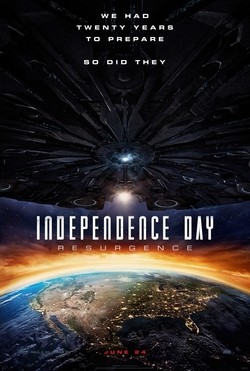
A follow-up to the Hollywood blockbuster Independence Day released in 1996, Independence Day: Resurgence is a fairly lackluster sequel that is visually appealing but filled with cliche, cheesy dialogue. It is basically the same film as the original: the same aliens return to invade Earth yet again and humans unify to fight the aliens. This time, an international defense force is created using alien technology but the attack is on a much larger scale. Relying heavily on CGI, the aliens obliterate many cities and landmarks in epic fashion. I did feel a sense of nostalgia as I watched the film since I remember the original from when I was 11 years-old. The original was one of the first major sci-fi popcorn flicks I saw that was visually stunning, at least for 90’s standards prior to today’s advanced CGI. Although Will Smith did not reprise his role, the movie brings back several of the major members of the original cast, including Jeff Goldblum and Bill Pullman. Like the original, it even included an inspiring speech from Pullman who now portrays the reclusive former president. The movie includes the requisite elements of a love story, eccentric scientists, military camaraderie, and rousing patriotism. Overall, I found the film to be a fairly typical sci-fi blockbuster, with a rather silly premise, whose primary purpose is to serve as a vehicle for special effects.

Special Report: Back to the Future

Recently, I attended a special screening of Back to the Future at a fundraising benefit in Chatham, Massachusetts for the Michael J. Fox Foundation for Parkinson’s Research. I had the distinct privilege of meeting and talking with actor Christopher Lloyd who played Dr. Emmett “Doc” Brown and co-writer and producer Bob Gale.

image

Still easily recognizable as the white-haired eccentric scientist in his most well-known role, Lloyd was very approachable and graciously answered my questions about Back to the Future. He, along with Gale, told me that the cast and crew members are like a family, and they still gather several times a year. Lloyd and a few other Back to the Future alums, including Gale and the director Robert Zemeckis, live in Santa Barbara, California, so it is not unusual for them to get together. Lloyd told me that he remains close to Michael J. Fox, who courageously fights Parkinson’s and tries to attend Back to the Future events despite tiring easily. In fact, Lloyd told me that he was just with Fox in Philadelphia for one of the many Comic-Cons that he attends a year. When I asked him about the possibility of another Back to the Future film, he said he does not know and that it is up to Gale.

image

I also talked at length with Bob Gale who was the one that came up with the premise for the films. Much more outspoken than Christopher Lloyd and clearly passionate about filmmaking, Gale told me how he was inspired to write Back to the Future. A number of years ago, he was going through his father’s belongings and discovered a yearbook describing his father as the senior class president, a fact that he never knew. Gale remembered that his class president was quite disagreeable and wondered whether he would have been friends with his father in high school. Curious about his father’s past, he thought it would be interesting to make a movie that travels back in time to when a character’s parents were younger.

I asked Gale a more timely question: whether Donald Trump was really an inspiration for the older Biff character. He told me that Trump was not the only direct inspiration, but rather he got his ideas from other people at the time like Trump, people with large egos who wanted their name plastered all over cities like Las Vegas. More generally, I asked if there were any other inspirations for Back to the Future. He didn’t mention any filmmaker that really inspired him besides the Westerns of John Ford for the third Back to the Future film.

Finally, Gale gave me insight into the casting of Michael J. Fox as Marty McFly. The first half of the film was originally filmed with Eric Stoltz as Marty, but he said they were eventually fortunate enough to arrange for Fox, their first choice, to join the cast. They were not able to get him initially because Fox was on the popular show Family Ties and was not given leave for the filming of Back to the Future.

Then, I asked whether there will ever be another Back to the Future. Unlike Christopher Lloyd’s response, Gale said there will never be another film in the series without Michael J. Fox, who is unlikely to reprise his role as a result of his health condition. Finally, Bob Gale mentioned that he has two other projects in the pipeline but said he could not divulge the details due to being superstitious.

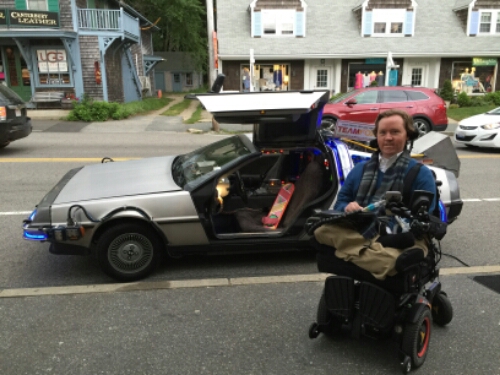
After these fascinating conversations with Lloyd and Gale, I got to see the original Back to the Future on the big screen for my first time. Even though it was made in 1985, the movie itself still stands up as a cult classic with the right blend of sci-fi and comedy. It was a truly memorable evening to be able to talk with Christopher Lloyd and Bob Gale and see the film in its proper setting, all for a worthy cause in combating Parkinson’s disease. I even got to stand in front of a replica of the famed DeLorean, complete with a flux capacitor!

image

Warcraft

image

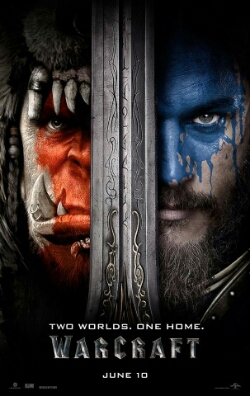
Based on the massively popular video game series first released in 1994, Warcraft follows in a long line of epic fantasy films popularized by The Lord of the Rings series. It is your fairly typical 3D CGI-heavy film that involves humans and fantastical creatures known as orcs fighting over a magical land known as Azeroth. Although it attempts to dumb down the esoteric details of the Warcraft universe, the film feels like it is catered to the millions of role-playing gamers engrossed by Warcraft. The film even at times feels like a video game, with the overhead views of massive battlefields controlled by magic and specialized weapons and ending with a final Boss Level-like fight sequence. While the special effects are well done with an obviously big budget and the story has original fantasy elements, the movie will entice Warcraft gamers but overall does not contribute much to the fantasy genre. Audiences have gotten used to stunning CGI and may feel let down when there already is great fantasy storytelling with The Lord of the Rings and Game of Thrones.

X-Men: Apocalypse

image

X-Men: Apocalypse is a fairly standard comic book movie that pits superheroes with CGI-enhanced powers against a supervillain threatening humanity. It is the ninth installment in the lucrative X-Men franchise and part of a trilogy following the X-Men characters in their youth beginning in the 1960s. The film is set in 1983 coinciding with the rise of the main antagonist, an ancient mutant known as En Sabah Nur played by Oscar Isaac under a heavy layer of makeup and special effects. A ragtag group of young mutants under the tutelage of a young Professor Xavier played by James McAvoy join forces to save the human and mutant races from this god-like malevolent force. There is also a subplot rivalry between Professor Xavier and the multi-dimensional Magneto played by Michael Fassbender, archrivals as they get older in the earlier films. The movie feels more like an extension of an origin story and would not work as well as a standalone film. We are introduced to many mutants before they become the familiar characters from the previous films. Their younger selves are presented in unique and sometimes entertaining ways that provide important background information on their more recognizable adult selves. However, I enjoyed the first movies more because of the acting gravitas of Patrick Stewart and Ian McKellen and the appearance of Hugh Jackman’s Wolverine beyond a simple cameo. Overall, I thought the film did not break the comic book movie mold but stuck to the rather generic formula proven to practically guarantee box office success for the major studios. It provides enough CGI action and entertainment to appease the hordes of die-hard comic book fans and those looking for a summer popcorn flick.