The Zookeeper’s Wife

Based on the true story as recounted in Diane Ackerman’s 2007’s book of the same title, The Zookeeper’s Wife tells a fascinating mostly untold story about the director of the Warsaw Zoo, Jan Żabiński, and his wife Antonina, portrayed by Jessica Chastain, who were instrumental in saving many Jewish lives throughout World War II in the bombarded city of Warsaw, Poland. The movie begins showing the innocent goings-on of the zoo during the typical days before the Nazis invaded Poland and focuses mostly on Chastain’s character and her love of animals. Eventually, after it suffers catastrophic damage from German bombings in which many animals are killed, the zoo is shuttered by the new Nazi regime and becomes the testing grounds for Hitler’s so-called zoologist, played by the sinister Daniel Brühl, to breed a large extinct animal. Still living on the zoo’s property with their young son, the couple devise a plan to hide Jewish citizens from the infamous Warsaw Ghetto who would eventually be condemned to death in the extermination camps. Over the course of the war, over 300 men, women, and children are estimated to have been saved as a result of their heroic actions of sneaking Jews away from the ghetto and harboring them until they could be safely freed from German-occupied Poland. Like many Holocaust-themed films, at times it was very hard to watch, especially the scenes taking place within the inhumane Warsaw Ghetto and when the Nazis finally decided to liquidate all of its Jewish residents. What also struck me about the movie was the uncanny parallels between the zoo animals who were kept in cages yet very much loved by their zookeepers and the innocent Jewish victims who were deprived of their human rights and forced to live in cages of their own as if they were animals themselves. Overall, I found it to tell a very enlightening story that significantly contributes to the innumerable tales of horror and heroism during one of the darkest times in our history.

A United Kingdom

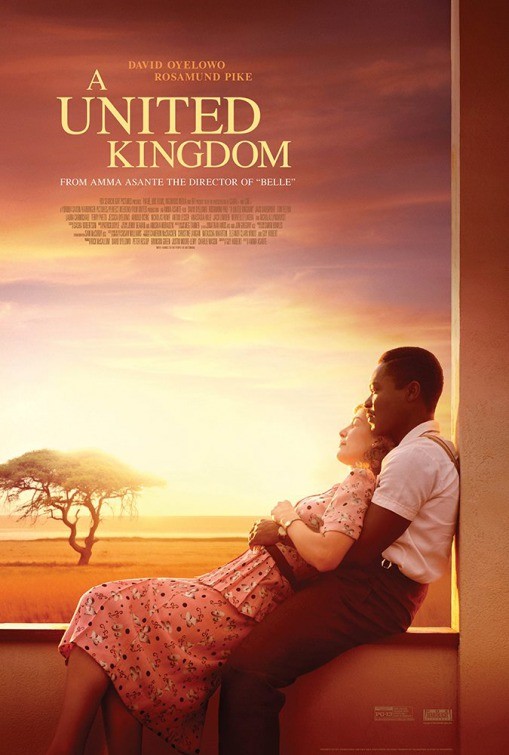
Based on an incredible true story, A United Kingdom is a beautifully crafted film with strong acting performances that tells a remarkable story of forbidden love. Set in the late 1940s, the story follows Seretse Khama, the black King of Bechuanaland (modern-day Botswana) and portrayed by David Oyelowo, and his controversial romantic relationship with a white British woman named Ruth Williams, played by Rosamund Pike, whom he met during his studies in London. To the chagrin of British authorities and his family and tribe back home, they eventually marry and move back to his hometown in Africa to officially become the king of his people. The British government fear that the interracial couple will interfere with politics, particularly the government’s relationship with South Africa, which just imposed apartheid criminalizing interracial marriage. It is believed that South Africa could use the marriage as a pretext to invade colonial Botswana, or the British could lose out on the potential for oil and other minerals in the region. Despite opposition, internationally, and from Khama’s own powerful uncle who served as regent, they steadfastly refuse to divorce, and they start their own family in Bechuanaland even though they are threatened with exile and a lengthy separation from one another. At one point during a meeting with British authorities, he is not allowed to leave England and cannot visit his wife who is still in Africa. Their case to be allowed to live in his beloved homeland as ruler makes its way all the way through the British Parliament and is even discussed by Winston Churchill. The movie is especially poignant because it tells a truly extraordinary story I have never heard of about injustice and race relations that feels particularly relevant in today’s divisive political climate. It is made even more powerful as a result of the terrific performances of the two main lead actors whose chemistry makes the characters’ profound love feel realistic. Overall, I found it to be a must-see film about how forbidden love due to unjust laws can be overcome, with brilliant filmmaking and acting to boot.

The Founder

Directed by John Lee Hancock who is best known for 2009’s The Blind Side, The Founder is an entertaining film that tells the fascinating true story of the great American icon known as McDonald’s. Oscar-nominated actor Michael Keaton gives a strong performance as Ray Kroc, a desperate businessman from Illinois who helped transform McDonald’s into a billion-dollar global corporation. We first meet Kroc in 1954 working as a traveling salesman for a milkshake maker manufacturer and hoping to break through in the business world while supporting his wife played by Laura Dern. Eventually, he ends up in San Bernardino, California where he discovers a small pioneering fast food restaurant owned and operated by the McDonald brothers, the older Mac played by John Carroll Lynch and the inventive Dick played by Nick Offerman. Ray Kroc will do anything to get a piece of the McDonald’s pie and will ultimately use questionable tactics to take advantage of the two hard-working brothers already satisfied with running a single successful restaurant. Providing a remarkably fast and efficient method never used before to serve hamburgers, the McDonald’s innovative fast food model inspires Kroc to convince the brothers to franchise the restaurant across the nation. Kroc becomes increasingly hostile to the largely naive founding brothers who are hesitant to give more control to their new partner. To get around the original contract and make more money, he devises a plan to purchase the real estate of each franchise and form a company exerting more control over McDonald’s. The movie effectively illustrates the corrupting influence of money by depicting Ray Kroc towards the end as a conniving character unsympathetic to the true founders of McDonald’s and even to his own wife who stood by his side. Through the alluring performance of Michael Keaton, the viewer is given a glimpse into the largely unseen side of such an iconic brand and a man who has become known as the founder of McDonald’s. Overall, I found it to be a highly compelling film about a complicated figure in the seemingly mundane fast food world and leaves the audience with a disillusioned view of the Golden Arches.

Hidden Figures

Based on a true story, Hidden Figures is a well-crafted inspirational film about a group of women who contributed significantly to the early American space program despite facing intense discrimination. Set in 1961 as the nascent NASA attempts to send the first American into space, it follows three African-American female mathematicians working at the Langley Research Center in Hampton, Virginia tasked with computing the flight trajectories of manned spacecraft. Due to the discriminatory norms and laws of the time, they were forced to work in a segregated division where it was practically impossible to move up the career ladder. Eventually, the main protagonist Katherine Goble Johnson, a brilliant mathematician played by Taraji P. Henson, breaks the color barrier by being permitted to work at the Space Task Group led by the tough director Al Harrison portrayed by Kevin Costner. She was allowed access out of necessity in order to catch up with the rapidly advancing Soviets who were the first to send a satellite and human into space. At the same time, the movie shows the struggles of Mary Jackson, portrayed by Janelle Monáe, who fights for her education to become an engineer, and Dorothy Vaughan, played by Oscar winner Octavia Spencer, who wants to be treated as an equal as a supervisor at NASA. Helping to round out the characters, the film also presents the women’s personal lives and how they cope with the immense pressures they experience at their stressful yet important jobs. Their vital contributions that ensure the safety of such astronauts as Alan Shepard and John Glenn seem to be readily dismissed simply because of their skin color and gender. Overall, I found it to be a must-see movie that provides an uplifting and historically relevant glimpse into the largely unknown role of African American women in such a quintessentially American success story as putting a man in space.

Jackie

Directed by the critically acclaimed Chilean filmmaker Pablo Larraín, Jackie is a powerful film about the JFK assassination as told from the personal perspective of Jacqueline Kennedy, with a remarkable performance from Academy Award-winning actress Natalie Portman. The JFK assassination has been explored many times in cinema and television, yet this movie gives a uniquely important contribution by depicting the personal toll the horrific event had on those intimately involved. The movie follows Jackie as she experiences the visceral shock of watching her husband being viciously murdered and the aftermath as she tries to cope with his death as well as helping the American people cope with the tragedy. It is primarily told through a series of flashbacks as she recounts those fateful days in November 1963 to a journalist, played by Billy Crudup, at the Kennedy Compound in Hyannis Port, Massachusetts. Although much of the dialogue is fictionalized dramatization, the filmmaker crafts a vivid picture of the emotional trauma experienced by Jackie, not just as another public figure, but as a wife who just lost her beloved, albeit complicated husband. We witness her heart-wrenching grief of suddenly becoming a widow and having to tell her two young children that their father is gone. Portman gives a nuanced and dignified performance, very much like the real young and stylish first lady, who must deal with her own emotions while at the same time planning the logistics of burying an American president, moving out of the White House, and ensuring a seamless transition to the new president. The film’s power lies in its subdued and vignette-heavy structure that focuses on intimate details rather than the sensational criminal act of the assassination itself. It feels very much like an independent movie because of its artistic use of cinematography, slow pace, and in-depth character studies that rely on terrific acting performances. The filmmaker also cleverly uses songs from the musical Camelot to underscore the idealistic JFK presidency, often referred to as Camelot, that came to a crashing halt with an act of violence. Overall, I found it to be a film of immense poignancy that effectively captures the human emotion of grief, primarily as a result of Natalie Portman giving one of the more memorable acting performances of the year.

Loving

From well-known independent movie director Jeff Nichols who directed 2012’s Mud and 2016’s Midnight Special, Loving is a subtle yet beautiful film based on the amazing true story of one of the most important civil rights victories of the 20th century. It follows an interracial couple, Richard and Mildred Loving, from the small town of Central Point, Virginia who were married in 1958 but faced legal trouble for being married in a state that forbid interracial marriage. As emphasized by the understated performances of Joel Edgerton who plays Richard and Ruth Negga who plays Mildred, the poor and largely uneducated couple were simple country folks who just wanted to spend time together as a married couple. Due to the law in Virginia, they were almost immediately arrested and thrown in jail after they married in Washington, D.C. where interracial marriage was legal. The extremely unsympathetic local sheriff and judge ordered them to leave the state or face long imprisonment. As a result, they settled in an impoverished neighborhood of Washington, D.C. where they raised their three children. Eventually, after several years, Mildred feared for the safety of her children, and the family surreptitiously moved back to Virginia to be nearby their extended relatives. Hiding away from authorities, the ACLU got involved and hired a team of lawyers to overturn the anti-interracial marriage laws. Through their efforts, the Supreme Court decided in their favor in 1967 and resulted in the legalization of interracial marriage throughout the entire nation. The film was remarkably effective in showing the quietly affectionate and humble couple by following a slow and subdued plot line. Both characters really did not speak much and were hesitant to take legal recourse because it would complicate their lives. The nuanced acting performances gave the audience the impression that this was a couple in great pain and cared for nothing more than sharing their love with one another. Although it revolved around a landmark civil rights case, the filmmaker made the movie less of a legal drama and more of a character study about unquestioned yet, at the time, rather unusual love. Overall, I found the film to be an emotionally powerful cinematic experience that tells a truly historic story about overcoming racial injustice. It especially resonates with contemporary audiences since it follows the equally significant Supreme Court decision to legalize same-sex marriage as well as the continued racial friction in the United States.
Backdrop

Richard Perry Loving was born in 1933 to impoverished white parents in Central Point, Virginia, and Mildred Delores Jeter Loving was born in 1939 in the same small town to parents who were of mixed African American and Native American heritage. After Mildred became pregnant at the age of 18, they married in Washington, D.C. in June 1958 but were arrested a few weeks later in July after returning to Virginia where interracial marriage and cohabitation was outlawed under the Racial Integrity Act of 1924. They received a sentence of one year in jail in early January 1959, the sentence was suspended for 25 years if they moved out of the state. They lived the next several years in Washington, D.C. with their three children Donald, Peggy, and Sidney. Tired of being far away from their family and the difficulties of living in the city, Mildred wrote a letter in 1964 to Attorney General Robert F. Kennedy who referred them to a team of American Civil Liberties Union lawyers led by Bernard S. Cohen. After years of unfavorable judgments and appeals in Virginia and federal court, the United States Supreme Court led by Chief Justice Earl Warren on June 12, 1967 overturned the 1883 decision Pace v. Alabama and ruled that so-called anti-miscegenation were unconstitutional. At the time of the ruling, Virginia along with fifteen other Southern states had laws forbidding interracial marriage. The landmark case Loving v. Virginia became the legal precedent for the more recent same-sex marriage court cases, including Obergefell v. Hodges decision in 2015 that legalized it nationwide. Neither of them would live to see their legacy because Richard died at the age of 41 in 1975 following a traffic accident with a drunk driver, and Mildred died at the age of 68 in 2008 from pneumonia. 

Hacksaw Ridge

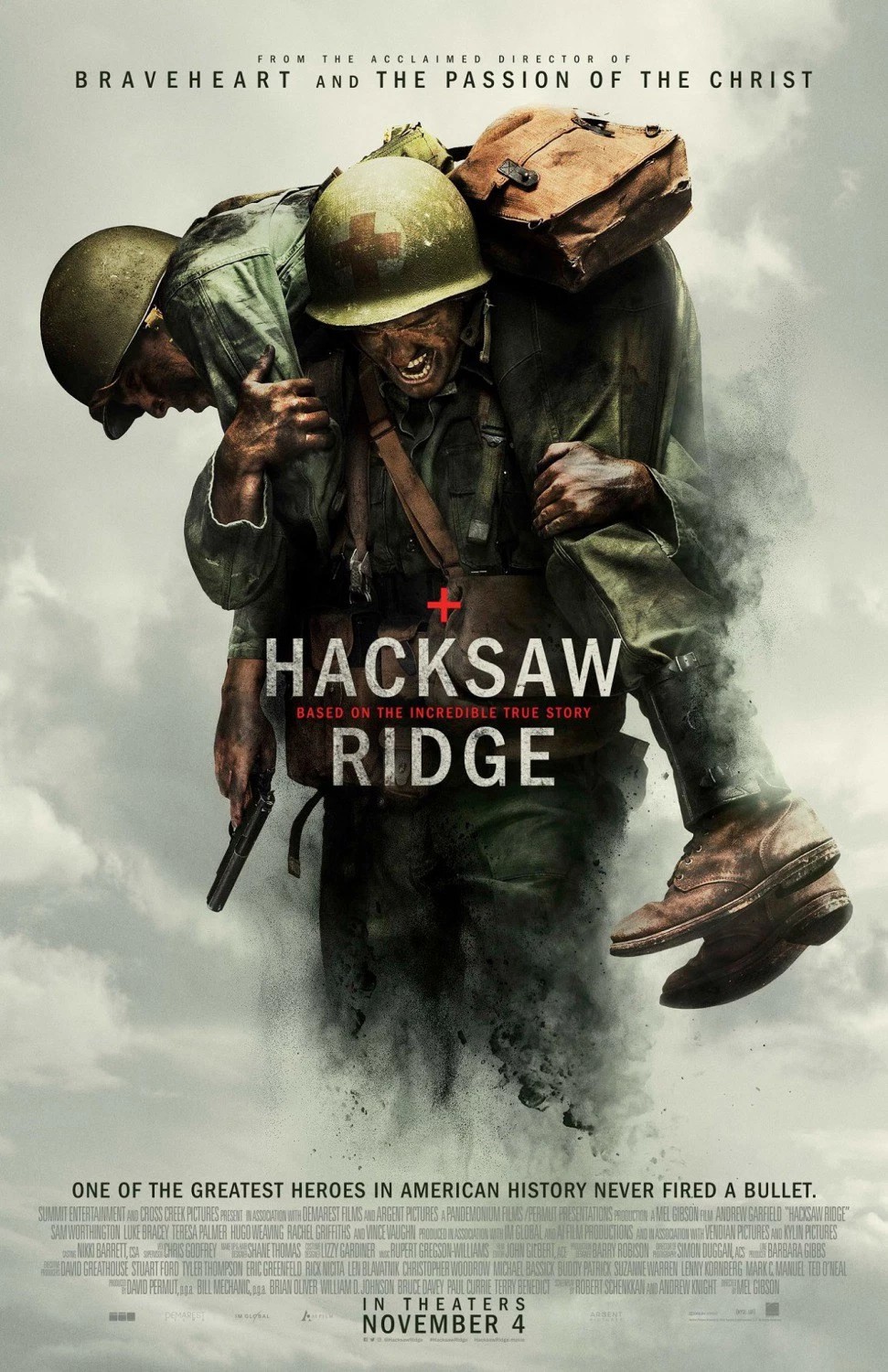
Directed by Mel Gibson in his first movie since 2006’s Apocalypto, Hacksaw Ridge is a tremendous World War II movie that is remarkable both for its brutally realistic depiction of war and powerful story of heroism. It is based on the true life story of Desmond Doss who served in the Pacific Theater as a combat medic and was distinct for refusing to carry a weapon of any sort. Growing up in a working-class family in Lynchburg, Virginia, Doss, portrayed by the baby-faced Andrew Garfield, had a difficult childhood but always maintained deeply-held religious convictions as a Seventh Day Adventist. The first part of the film is primarily focused on his life back at home before he enlisted in the army and includes his falling in love with a local nurse named Dorothy. It also revealed his often tense relationship with his drunk and abusive father, played by Hugo Weaving, who clearly suffers from post-traumatic stress as a World War I veteran. Although his faith taught him to be nonviolent, Doss enlisted in the military to serve the United States like his fellow countrymen and eventually was deployed with the 77th Infantry Division in 1944. However, while at boot camp where he meets his initially unsympathetic sergeant, played by Vince Vaughn, he is scorned by his fellow soldiers and commanding officers for his pacifist stance. Ultimately, he is granted conscientious objector status and allowed to serve as a medic without ever touching a rifle. The second part of the movie is much more gritty and does not hold back on showing the truly hellish parts of warfare. It follows Doss and his regiment in May 1945 as they attempt to take control of an area of the Japanese-controlled island of Okinawa, simply referred to as Hacksaw Ridge. At times, the very extended sequence of extremely graphic combat violence is difficult to watch but is very much necessary to underscore the horrific costs of war. Throughout such intense scenes, Desmond Doss is portrayed as the epitome of courage: he voluntarily goes in harm’s way to save as many lives as possible without a means of defending himself. He must literally rely on his fellow soldiers for his life and, in the process, develops an unbreakable bond of brotherhood. His heroism was richly rewarded when he became the first conscientious objector to receive the Congressional Medal of Honor from President Harry Truman. Overall, I found the film to be one of the best war movies made and the horrifically gruesome battle scenes reminded me of Saving Private Ryan. Besides simply presenting a skillful portrayal of warfare, it has a heartfelt message about courage and the struggle between a person’s conscience and patriotic duty. For all his personal flaws, Mel Gibson is finally back to form and gives us a film worthy of Braveheart.

Backdrop

Born in 1919 in Lynchburg, Virginia, Desmond Doss was drafted in April 1942 and worked in a naval shipyard in Newport News before serving as a combat medic in an infantry unit. Although he could have received a deferment as a conscientious objector, he was deployed with a rifle company in the 1st Battalion, 307th Infantry, 77th Infantry Division and sent to the Pacific Theater, first to Guam and the Philippines before eventually arriving on Okinawa in May 1945. He participated in taking the 350-foot high Maeda Escarpment, ominously referred to as Hacksaw Ridge, a heavily fortified part of the vitally important island of Okinawa. The three-month campaign collectively known as the Battle of Okinawa resulted in over 12,000 American deaths and more than 75,000 Japanese deaths on top of the upwards of 150,000 civilian casualties. Okinawa was only 340 miles off the Japanese Mainland and therefore could serve as a crucial air base for an Allied invasion.

During the course of the battle over the Ridge, Desmond Doss is estimated to have saved the lives of 75 soldiers, all without touching a single weapon or killing any Japanese. Throughout the war, he was injured at least three times and lost five ribs and a lung as a direct result of contracting tuberculosis on the island. He was also largely deaf for more than twelve years as a result of doctors accidentally giving him an overdose of antibiotics. Following the war, he spent five and a half years recuperating at various times in VA hospitals and was eventually discharged in 1951. He spent the remainder of his life primarily in Georgia and Alabama where he grew his own vegetables on a farm with his wife Dorothy who he was married to from 1942 until her death in 1991. In 1993, he married his second wife Frances and together until his death in 2006. He died in Piedmont, Alabama at the age of 87 due to respiratory complications associated with his tuberculosis. For his service, he was awarded the Congressional Medal of Honor on October 12th, 1945 by President Harry Truman, which made him the first conscientious objector to receive the honor and remains to this day only one of three to have ever received it.

Denial

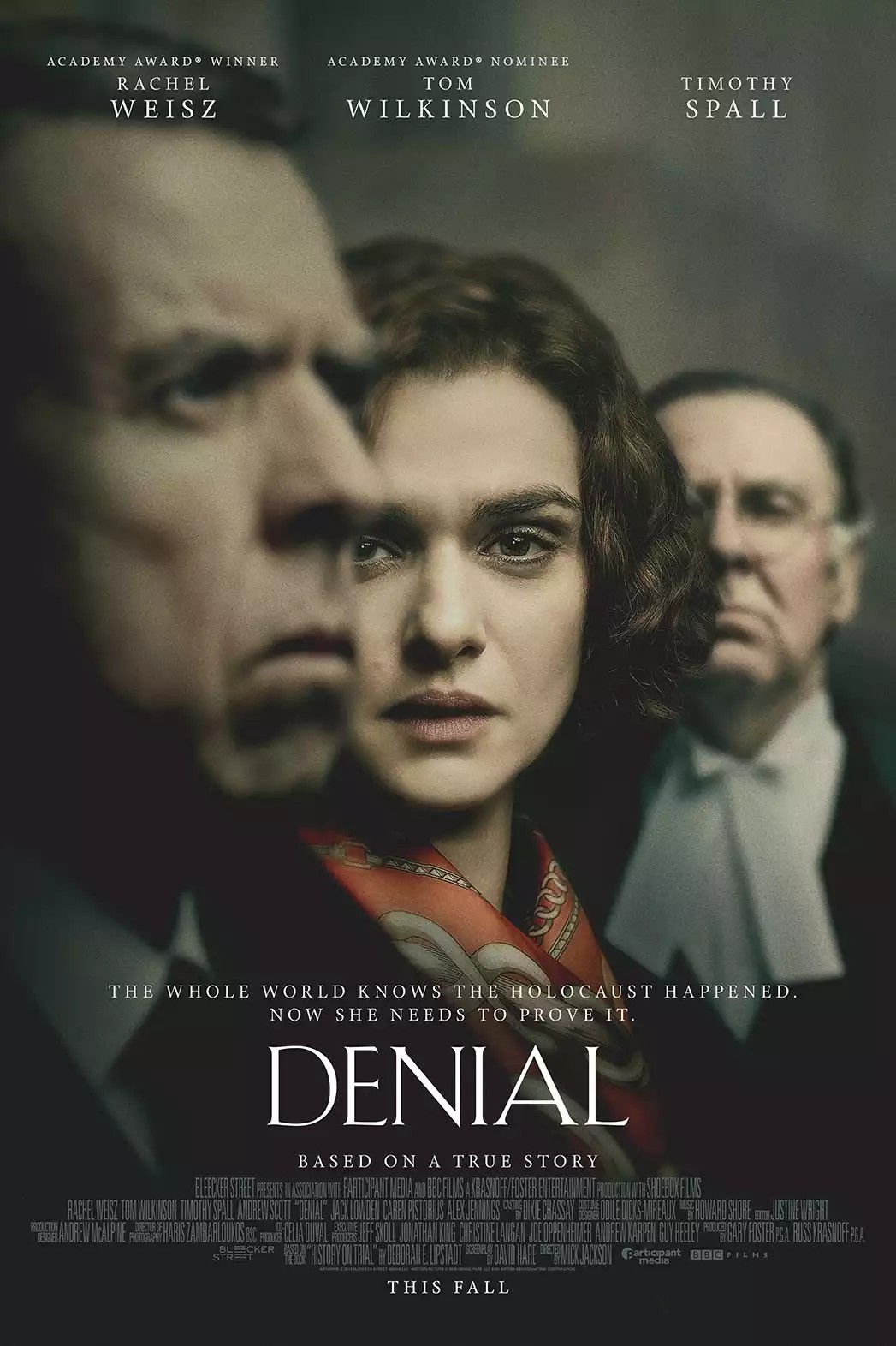
Based on a true story, Denial is a fascinating courtroom drama that delves deep into the issues of freedom of speech, the justice system, and the role of historians. It revolves around a noteworthy 2000 libel case tried in the United Kingdom and brought by a particularly infamous British Holocaust denier named David Irving, brilliantly portrayed by Timothy Spall, against a respected American Holocaust historian, played by Academy Award winner Rachel Weisz. Weisz’s character Deborah Lipstadt becomes a target of the provocative amateur historian Irving after she publishes a book about Holocaust denial that harshly criticizes his writings. He claims she defamed his name and therefore decides to sue her in the British court system, which, unlike, the American system does not assume that the accused are innocent until proven guilty. Along with her publisher Penguin Books, she hires a group of high-powered British lawyers, including the solicitor who represented Princess Diana and a barrister specializing in libel law who is played by the always terrific Oscar-nominated actor Tom Wilkinson Wilkinson. Much of the film takes place during the trial as the defense team prepares for the highly unusual task of proving that the Holocaust really happened in order to prove that Irving’s case is unfounded. Consequently, the filmmakers quite effectively attempt to grapple with what forms of speech are protected and and whether something that is widely perceived as offensive like Holocaust denial should be allowed a platform in public. Furthermore, I was greatly intrigued by learning about some of the intricate details of the British legal system, something that I knew little about and assumed was much more similar to the American system. There were also emotionally powerful moments, especially as Weisz’s character and her legal team visit the ruins of the Auschwitz gas chambers. Overall, I found it to be a compelling movie that raised significant points about justice and what is acceptable in society while presenting a gripping story about a rather unusual trial.

Backdrop

An American of Jewish and German heritage, Deborah Lipstadt remains on the faculty of Emory University in Atlanta, Georgia as a Professor of Modern Jewish History and Holocaust Studies and is the author of several historical books, including her seminal work Denying the Holocaust published in 1993. That book was the basis for David Irving’s lawsuit that he brought forth in 1996 and was finally decided in her favor in a 334-page judgement in 2000 disproving many of his claims about the Holocaust.

David Irving started his career as a largely reputable World War II historian who wrote extensively beginning in the 1960s primarily about Nazi Germany. Although he lived during World War II as a British citizen and his father served in the British military, sometime around 1988, he became a revisionist historian who felt Hitler was misconstrued and that the Holocaust was fabricated. He was heavily influenced by the discredited pseudo-scientific Leuchter Report written by an American execution expert who tried to find evidence disputing the genocidal purpose of the gas chambers at Auschwitz. Under Europe’s strict Holocaust denial laws, Irving has been banned from entering Austria, New Zealand, and Germany. In 1989, Austrian officials had a warrant out for his arrest but did not face jail time until 2005 when she snuck into Austria for a series of speeches to extremist organizations. He was sentenced to three years in jail but only served 13 months after his appeal in 2006. The Southern Poverty Law Center, the preeminent organization on hate groups, calls him the world’s most prominent Holocaust denier.

The Birth of a Nation

Written and directed by Sundance Film Festival favorite Nate Parker, The Birth of a Nation is a phenomenally powerful and intense film about the horrors of slavery. It is based on the true story of Nat Turner, a preacher and slave who led a slave rebellion in Southampton County, Virginia in August 1831. Without even watching a single frame, the movie makes a potent statement in its reappropriation of the title The Birth of a Nation, which is also an infamous 1915 movie that denigrated African Americans and praised the Ku Klux Klan. We first meet Nat, who is superbly played by Nate Parker, as a child who is taught to read the Bible from his master’s wife. Over the course of the film’s first half, he is a preacher who tries to uplift fellow slaves with a hopeful message. Eventually, he is used by his master to help other nearby slave owners appease their slaves by preaching a perverted message justifying slavery. The film undergoes a dramatic tonal shift after Nat’s wife is brutally raped by a group of white men. His preaching becomes much more aggressive, and he finally decides that something must be done to avenge himself and fellow slaves. He organizes a group of slaves in a full-blown revolt that would result in over 60 killings of slave masters and their family members. Nat’s turning point goes to the heart of the film’s message: is violence, including the deaths of some innocents, ever a justified response to such an evil practice as slavery? What really makes the movie stand out is its effective use of visceral imagery and symbolism. For instance, there is a brief shot of a piece of corn gushing red blood, likely to underscore the blood spilled on Southern plantations simply for profit. The film also begins and ends with dreamlike sequences depicting African spiritual ceremonies in which Nat and presumably his ancestors are in traditional garb and covered by what appears to be a warpaint. For me, the most powerful scene is when the camera slowly pulls out revealing dead black men, women, and even children hanging from a tree, while Nina Simone’s rendition of Strange Fruit plays in the background. That particular song is so evocative because it is a ballad about lynchings in the South and comparing blacks to strange fruit hanging from trees. Overall, I found it to be one of the best movies of the year and comprable to the 2013 Oscar-winning 12 Years a Slave in its vivid portrayal of America’s greatest sin. Notwithstanding the controversial nature of the film’s violence and its filmmaker, it must stand on its own merits and be viewed as one of the more important films you will see in a long time.

Backdrop

Born in 1800 on a plantation in Southampton County, Virginia, Nat, along with his mother, were the slaves of Benjamin Turner until his death in 1810 after which his brother Samuel Turner became his master. As was the custom of taking an owner’s surname, he was known as Nat Turner and commonly called The Prophet by fellow slaves due to his fervent religiosity. He spent his entire life at the same Turner plantation, and there is some disputed evidence that he was married to a slave named Cherry. Claiming to have received a vision from God, Nat ultimately was able to recruit 70 slaves and freedmen to take part in a violent revolt against slave owners. In a period of 48 hours beginning on August 21, 1831, the group killed upwards of 65 white men, women, and children in a seemingly indiscriminate fashion, save for a few impoverished white farmers. He survived two months after the first skirmish and was eventually sentenced to death in November 1831. He was hung on November 11, 1831 in Jerusalem, Virginia and his body was flayed, beheaded, and quartered in order to set an example. In the uprising’s aftermath, over 200 blacks were killed in retaliation and 45 of his cohorts were tried in court. Although it would set the stage for the eventual freedom of slaves after the Civil War, the rights of slaves and freedmen were drastically curtailed in response to the violent slave rebellion. 

Queen of Katwe

Directed by the critically acclaimed Indian director Mira Nair, Queen of Katwe is an inspiring underdog story of a girl from the slums of Kampala, Uganda who becomes an unlikely international chess star. Selling corn on the streets of the poor neighborhood Katwe from a young age to help support her family and widowed mother, Phiona Mutesi feels her life is hopeless as an impoverished, uneducated young woman. Eventually, she sees a glimmer of hope after a local missionary named Robert Katande, played by the Golden Globe-nominated actor David Oyelowo, teaches her how to play chess. Interestingly, the film has a certain degree of realism by having Phiona impressively portrayed by Madina Nalwanga, an Ugandan actress in her first movie who also happens to be from the same slums as her character. The movie follows Phiona as she and her teammates compete in progressively harder chess tournaments against more privileged competitors throughout Uganda and eventually even in Russia. The film also effectively presents the more personal side of Phiona’s life. For instance, Katande becomes less of a coach and more of a father figure despite himself struggling to find a steady job to support his wife and infant daughter. Despite her successes on the chessboard, she must face the harsh realities of her life and be there for her single mother played by the Oscar-winning actress Lupita Nyong’o. Her mother fears Phiona will become jaded and used to a more comfortable life that may not continue after her chess career. Overall, I found the film to be one of the more inspiring stories of how a girl against all odds is able to overcome her extremely difficult life and excel at a game associated with the highly educated and privileged. It is also refreshing that Disney decided to make a mainstream movie defying the cinematic stereotypes of Africa: it is comprised of an all black cast and is set almost exclusively in the real neighborhoods of Uganda. There is no archetypal white savior who single-handedly saves the impoverished black child from a life of crime and misery.

Backdrop 

Now 20 years old and considered one of the top chess players in the world, Phiona Mutesi originally had to drop out of school at the age of 9 due to a lack of money and following the death of her father from AIDS. In 2010, she returned to school and participated in her first major international tournament at the 39th Chess Olympiad held in Russia. By 2012, she was the Uganda junior girls champion three times and represented Uganda at the 40th Chess Olympiad where she became a Woman Candidate Master along with her fellow teammate, becoming the first females with titles in Ugandan chess history. She also became the first girl to win the open category in the National Junior Chess Championship in Uganda in 2012 and followed the next year as the overall champion. She was able to support her family after getting paid as the subject of a biography about her inspiring story written in 2012 by the Sports Illustrated journalist Tim Crothers entitled The Queen of Katwe, which is the basis for the film.