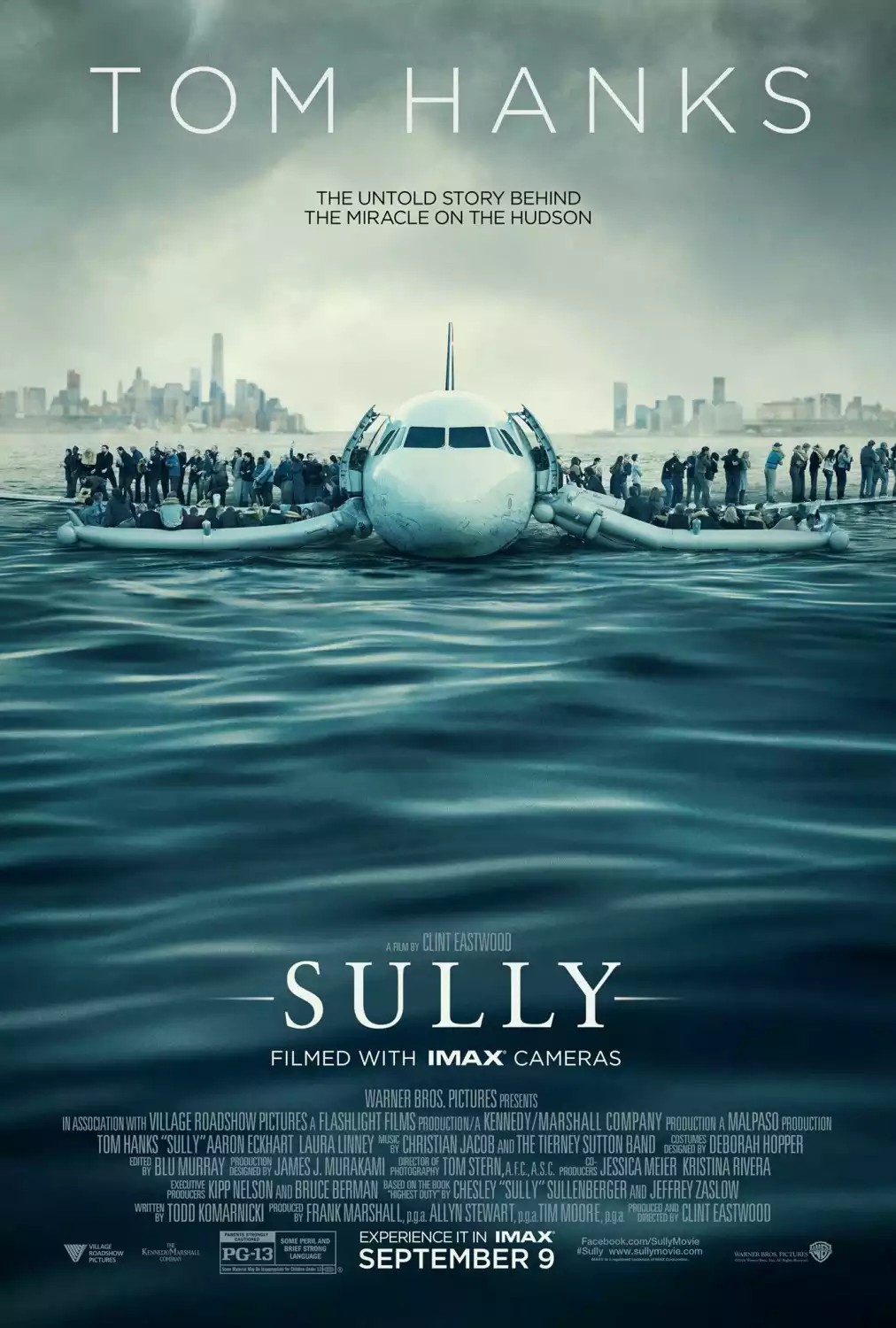
Directed by Clint Eastwood, Sully is a well-crafted movie that tells the amazing true story of the Miracle on the Hudson when Captain Chesley ‘Sully’ Sullenberger safely landed US Airways Flight 1549 on the Hudson River in New York City on January 15, 2009. With its relatively short runtime and attention to detail on what happened during and after the flight, the film feels more like a documentary. Much of the story takes place after the incident during the investigation when Captain Sullenberger, played by the always terrific Tom Hanks, is being questioned by the National Transportation Safety Board. The movie is particularly fascinating because it delves into largely unreported details of the bureaucratic aftermath of the miraculous water landing. It shows the various attempts of trying to recreate his actions on a flight simulator and the criticisms of what he did as a pilot despite the survival of all 155 passengers and crew members. The overly officious aviation officials take up the role of the archetypal bad guys while the audience cheers for Sully to be rightly recognized for his heroism. The film is particularly effective in dramatizing the actual incident and the realtime reactions of Sully and First Officer Jeffrey Skiles portrayed by Aaron Eckhart. Interspersed with the technical aspects of what happened, there are personal scenes of Sully having flashbacks and nightmares and emotional encounters with his family and total strangers praising him as a hero. The audience comes away with the feeling that Captain Sullenberger is a very humble man who feels the attention is not merited because he was simply doing his job. Overall, I found the film to be a particularly powerful case study of heroism and that the world, despite all of its problems, is full of amazing people and inspirational stories. It reminded me of the 2012 movie Flight because it also focused on the actions of a pilot saving many lives but also under the microscope of an investigation. However, in this case, Sully is unquestionably a moral man while Denzel Washington’s character is deeply flawed with substance abuse issues.
Author: Keith Young
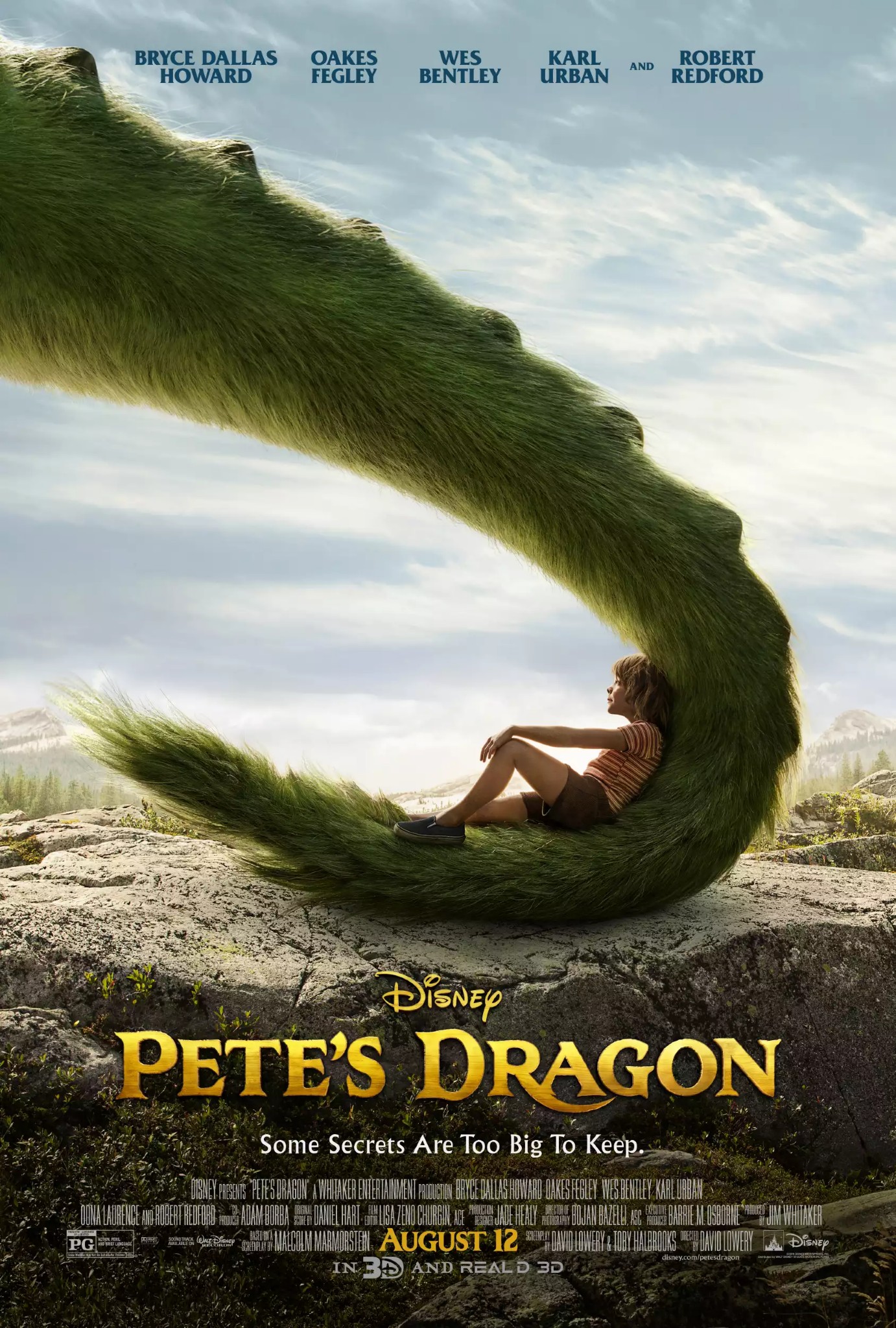
Pete’s Dragon
Based on the Disney animated movie of the same name released in 1977, Pete’s Dragon follows in the recent succession of Disney remaking classic animated movies into well-crafted live action films. The plot revolves around Pete who loses his parents in a car accident and is left alone in the forested wilderness where he survives with the help of a friendly dragon. The film takes place six years after the opening scene when Pete and eventually the dragon named Elliot are discovered by a crew of lumberjacks and a local park ranger played by Bryce Howard Dallas. Pete, portrayed by the terrific young actor Oakes Fegley, must figure out a way to live in civilization and away from the only companion that he has ever really known, a large furry green dragon that everyone believes is a figment of his imagination. The only true believer is the scruffy old outdoorsman played by Robert Redford who has been claiming for years that he saw a dragon in the woods. When Elliot is finally discovered, many of the lumberjacks and residents of the nearby Pacific Northwest town of Millhaven overreact and try to hunt him down as a threat. At the heart of the film is a charming and inspirational tale of overcoming personal tragedy and finding familial bonds with the most likely of people and, in this particular case, creatures. The film is not only a family story, but it is a particularly well-done movie marked by beautiful cinematography, an atmospheric soundtrack, and a great cast. The whole experience is tinged with nostalgia harking back to the original film and other family-friendly classics. In addition, the film has an undercurrent relevant to contemporary issues of environmentalism. It can be seen as an allegory for preserving nature as it is: the conflict between the timber industry and park ranger service, as well as whether to allow Elliot to live in his native wild habitat or be held in captivity like a zoo animal. Overall, I thought the movie was better than the original animated version due to its creative blending of wholesome adventure, magical whimsy, endearing charm, and important lessons about family and nature.
Snowden
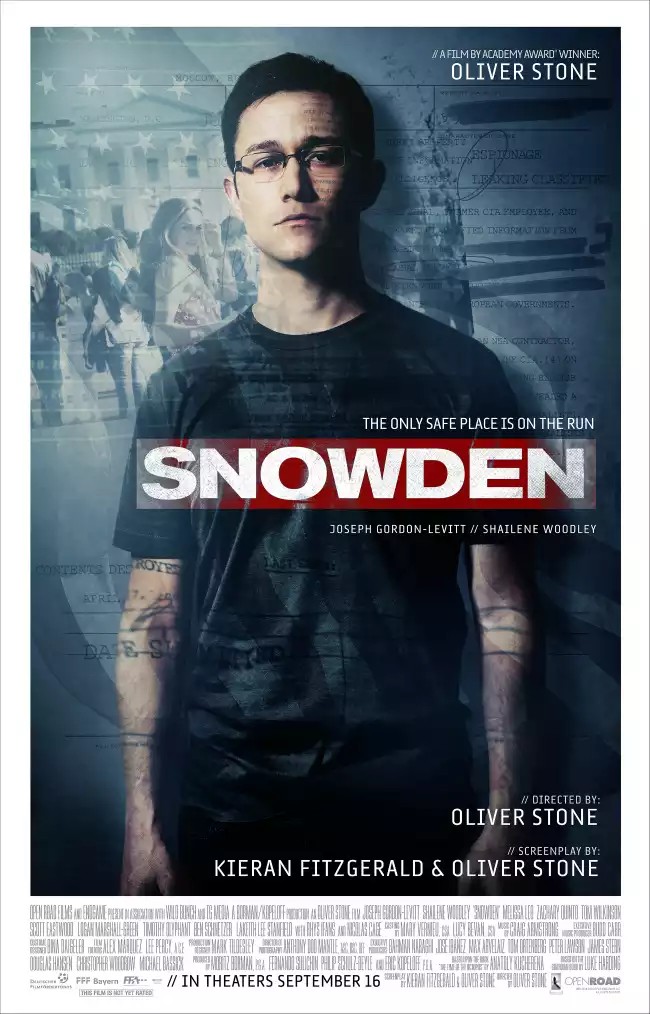
Directed by Oliver Stone, Snowden is a fascinating dramatization of the true life story of Edward Snowden and the largest leak in American intelligence history. Although obviously biased in favor of Snowden’s actions, the film is surprisingly less heavy-handed and controversial than what would be expected from such a famous provocateur as Oliver Stone. Much of the movie is a series of flashbacks to Snowden’s past during an interview with the journalists that publicized the damning allegations that he revealed about the US government in 2013. In fact, the interview was the basis for the 2014 Academy award-winning documentary Citizenfour. This film feels like another way to tell the all-too-familiar story, packaged as a gripping thriller about a complicated figure with a unusual background. Starting with his experience at bootcamp as an idealistic Army recruit, the movie chronicles Snowden’s progression through the CIA, NSA, and intelligence defense contractors. At the same time, the viewer is presented with a love story: the ups and downs of Snowden’s relationship with his long-time girlfriend Lindsay Mills played by Shailene Woodley. As a result, Oliver Stone tries to humanize the story in a way in which we can sympathize with Edward Snowden the human who struggles with his conscience and allegiance to his country. Joseph Gordon-Levitt is what makes the film really stand out with his terrifically realistic performance, complete with having an eerily similar voice as the real-life Edward Snowden. This authenticity becomes clear in the seamless transition to the actual Snowden appearing from an undisclosed location in Russia in the film’s stirring epilogue. Overall, I found the film to effectively present an intriguing intricate web of international espionage and the ethical implications of far-reaching surveillance. Unlike some of his other movies laden with conspiracy theories, Oliver Stone is on the side of proven facts, for the most part, and simply interprets the information in his uniquely creative way.
The Light Between Oceans
Based on the 2012 best-selling novel of the same name, The Light Between Oceans is a beautifully crafted period romance with an intriguing twist of drama. Set after World War I on the remote coast of Australia, the movie begins with the arrival of a new lighthouse keeper named Tom, superbly played by Oscar-nominated Michael Fassbender. Eventually, he falls in love with a daughter of local school headmaster named Isabel who is also brilliantly portrayed by last year’s supporting actress Oscar winner Alicia Vikander. After they get married, she moves with Tom to the lighthouse which is located on a small desolate island many miles away from the town. After a series of personal tragedies, Isabel is desperate to have a child. Unexpectedly, her wishe seems to come true when a young infant washes ashore still alive. The moral dilemma of whether or not to keep the child or tell authorities puts a strain on Tom’s and Isabel’s marriage. Several years later, the relationship undergoes even more significant stress when they discover that the mother of the child lives in the local town. The grieving mother and widow played by another Oscar winner Rachel Weisz has been told that her child and her husband were lost at sea. The movie is effectively able to convey the gut-wrenching agony of both biological and adoptive mothers coping with the loss of a child. The remote setting is perfectly encapsulated by breathtaking shots of turbulent seas and windswept vistas. In addition to the cinematography, the acting is what makes the movie special; the chemistry between Fassbender and Vikander feels very real so much so that the two actors started dating during filming. Overall, I found the film to be a first-rate period romance that had enough drama to make it interesting. It was greatly elevated by being an acting tour de force.
War Dogs
From the director of The Hangover series, War Dogs tells the fascinating true story of a pair of twenty-somethings who become arms dealers for the United States military. Returning to his hometown of Miami, Efraim Diveroli, portrayed by Jonah Hill, recruits old childhood friend David Packouz, portrayed by Miles Teller, in a new rather ill-repute yet legal business venture. With the movie being primarily from his perspective, Packouz is in a dead-end job and desperate for money at first hesitates to partner with his estranged friend. However, eventually he takes part in Diveroli’s ingenious scheme to bid on small military contracts for weapons, ammunition, and other equipment such as bulletproof vests, deals that the major defense contractors overlook. Essentially serving as middlemen, their company AEY makes them millionaires during the heyday of the Iraq War in 2006. After meeting a very shady character played by Bradley Cooper who seems to come straight out of American Hustle, they decide to hit it big time and eventually win a $300 million contract to provide weapons to Afghanistan. Diveroli playing fast and loose with the rules and laws catches up to them during the deal when they encounter unscrupulous individuals in Albania. They also face major repercussions with the United States military and government. Interestingly, the director whose claim to fame is comedies tries to make the movie entertaining with some comedic bits and an energetic soundtrack with even songs from Creedence Clearwater Revival. The tone shifts especially when the partners struggle with one another, and the film becomes more of a serious drama. Jonah Hill gives a terrific performance and at times channels his morally reprehensible and wild character from The Wolf of Wall Street. The movie itself reminded me of Nicolas Cage’s Lord of War in its depiction of arms dealers and The Wolf of Wall Street in its depiction of of a hedonistic and corrupt workplace. Overall, I found it to be an entertaining film with a serious undertone that delves into a deeply fascinating story that is truly stranger than fiction.
Backdrop

At the time they both got involved with AEY, the founder Diveroli was only 18 years old and Packouz was 23 years old. By the end of 2006, it is estimated they made $10.5 million off 149 Department of Defense contracts. Both men are now in their early to mid-thirties and were convicted and served time for conspiracy, fraud, and other felonies related to the Afghan arms deal. Diveroli spent 4 years in a federal prison following his 2011 conviction while Packouz spent seven months under house arrest. According to some people, they are no longer friends and are not on speaking terms. In fact, Packouz is suing his former partner over the money he never received from AEY; he claims Diveroli still has some wealth while he is on Social Security. Diveroli is currently suing the movie’s studio Warner Brothers for using his story without his permission and without being paid.
Florence Foster Jenkins
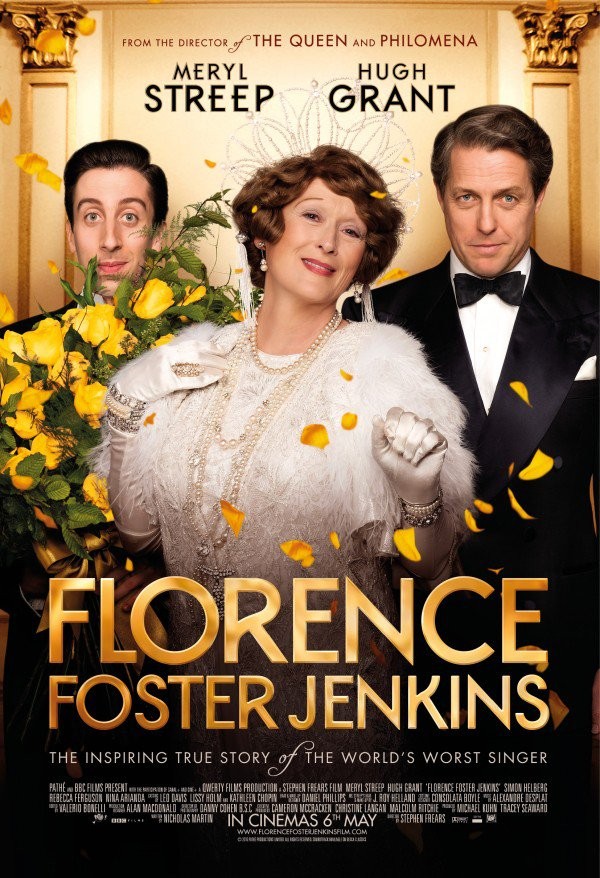
Directed by Stephen Frears who also directed The Queen and Philomena, Florence Foster Jenkins is a delightful film about a New York socialite who happened to be a terrible singer. Surrounded by enablers who simply wanted to profit from her wealth, Jenkins played by the always marvelous Meryl Streep tries to fulfill her dream of becoming a classical singer. Hugh Grant portrays her husband and British Shakespearean actor St. Clair Bayfield who encourages her passions while shielding her from critics knowing that she is not a great singer. His intentions are somewhat ambiguous: it is not readily apparent whether he is with her for her money or true love. The movie has charmingly funny interactions with bemused yet complicit professional vocal coaches and musicians, including her well-compensated pianist Cosmé McMoon played by Simon Helberg of The Big Bang Theory fame. Bayfield’s and others’ ruse runs amok when she books a public performance at Carnegie Hall with the naïve belief that she has the talent to sing at such a prestigious venue. Despite predominantly being a comedy, the film has a heartfelt undertone that supports one’s pursuit of a lifelong dream against all odds. The movie is particularly effective in conveying its high society 1940s New York setting with sumptuous costumes and elaborate sets. It feels especially nostalgic with its traditional film technique of a vertical line wipe transitioning from one scene to the next. Overall, I found the film to be an amusing and entertaining glimpse into a largely unheard of and rather unusual story of a woman with larger-than-life ambitions.
Backdrop
As part of a new addition to the blog, “Backdrop” will provide pertinent historical context and tidbits about the film reviewed.
Born in 1868 to a wealthy Pennsylvania family, Florence Foster Jenkins was a talented pianist who at a young age performed for President Rutherford B. Hayes at the White House. After her father refused to pay for her musical education, she left home and married Dr. Frank Jenkins in 1885. However, the relationship did not last long when she learned she had contracted syphilis from her husband. Syphilis may have been a contributing factor to her hand injury that prevented her from continuing to play the piano. In New York in 1909, she met St. Clair Bayfield, with whom she began a lifelong romance even though they never actually married. That same year, she received a large inheritance after her father passed away. She then pursued her singing ambitions in New York social clubs and eventually Carnegie Hall as portrayed in the film. The renowned composer and songwriter Cole Porter was a devoted follower of Jenkins and reportedly had to jab his cane into his foot so as not to laugh out loud during her performances. Several recordings of her singing were widely released by RCA Victor beginning in the 1950s, and several CD reprints have been produced since then. Only weeks after her famous Carnegie Hall debut in 1944, Jenkins died at the age of 76. She was survived by her beloved Bayfield who died in 1967.
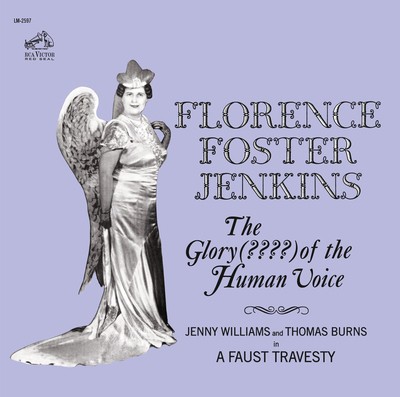
For an actual audio recording of her singing, check out the following link: https://youtu.be/qtf2Q4yyuJ0
The Secret Life of Pets

From the same studio that produced Despicable Me, The Secret Life of Pets is a well-done animated movie that has a clever premise appealing to all members of the family. It sheds light on what pets actually do when their owners are not home by showing talking animals getting into mischief. The film follows Max, a terrier voiced by Louis C.K., as he enjoys life in New York City with his owner Katie voiced by Ellie Kemper until the appearance of a big shaggy dog named Duke voiced by Eric Stonestreet. Trying to get rid of his newly adopted “brother,” Max inadvertently goes on an adventure with Duke after getting lost. They encounter a gang of pets without owners who want to lead a revolution against humans; it is led by Kevin Hart who is an excitable and fast-talking rabbit named Snowball. At the same time, a group of Max’s pet friends, including a fat cat, a dachshund, and a little bird, look for Max at the insistence of a Pomeranian in love named Gidget voiced by the high-pitched Jenny Slate. All the different groups of animals get involved in antics that are both cute and amusing. The film’s wit is largely due to the great casting: each pet character has traits that remind you of the actors themselves. For instance, Kevin Hart known for his hyperactive comedy and diminutive stature comes off perfectly as a small rabbit with a loud mouth who wants to spark a rebellion. Furthermore, the large and fluffy Duke is voiced by Eric Stonestreet who tends to play big and lovable characters. Besides being family-friendly entertainment, the film conveys heartfelt messages about the bond between humans and pets and the grief that is felt when one or the other is lost. Overall, I enjoyed the movie for its charming concept and innocent family humor and would recommend it to those with little ones or pet lovers in general. It is almost up to the level of Pixar who seems to have a monopoly on well-crafted animated comedies, and, undoubtedly, there will be future sequels that are hopefully as good.
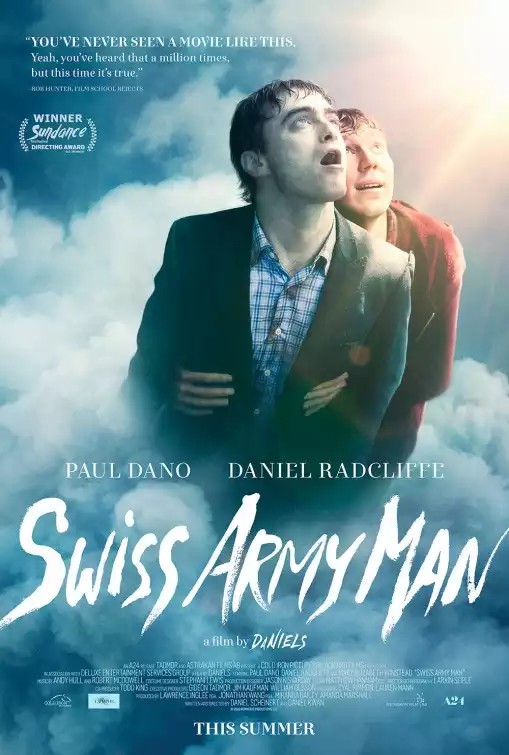
Swiss Army Man
Winner of the directing award at the 2016 Sundance Film Festival, Swiss Army Man is surely one of the strangest yet most creative movies that you will see this year and maybe even in your lifetime. The film has been known for audiences walking out in the middle who find the subject matter too absurd and disgusting. Despite this fact, it has still been applauded as one of the more unique and surprisingly captivating cinematic experiences. Paul Dano plays the despondent Hank who we first meet stranded on a desert island all by himself and about to hang himself. However, out of nowhere, he sees a corpse washing ashore that makes him decide against committing suicide. To his amazement, the body shows signs of life: it has persistent and explosive flatulence. Hank discovers that he can use the corpse’s gas to propel himself off the island and to an unknown densely forested land. He soon learns the body, which is portrayed by Daniel Radcliffe, possesses magical powers that allow for partial reanimation. Almost like a baby, the corpse named Manny begins to talk nonsense and must learn from Hank what it means to live. Having lost all hope and love in life, Hank teaching Manny the basics of living, including sexuality, becomes a cathartic experience. To better explain human interaction to Manny, Hank constructs elaborate sets resembling the real world from repurposed trash found in the forest. For instance, he replicates a bus where Manny supposedly first meets his true love Sarah, a fact that he cannot remember from before his death. Already peculiar enough that a corpse is talking, the movie gets even more bizarre in the ways that Manny becomes an “multi-purpose tool” for Hank’s survival. Rather repulsively, such things include a certain body part acting as a compass, his mouth pouring out freshwater, and his posterior shooting objects like a gun. Paradoxically, the film’s ludicrous premise does not prevent it from becoming an endearing story of friendship and what it truly means to be a human. The message is that one must continue to have hope even when it feels like all is lost. As such, Hank was able to discover the first real person that he could emotionally connect with and love, only after the lowest point in his life when he was contemplating suicide. Overall, I was surprised that a movie with such extremely ridiculous and downright perplexing moments could be so full of meaning. I would recommend it to those looking for a truly distinct movie and can look past its gross-out surrealism.
Hunt for the Wilderpeople

A truly original comedy from New Zealand, Hunt for the Wilderpeople is an oddball adventure story about a juvenile orphan from the city named Ricky Baker, played brilliantly by the young New Zealand actor Julian Dennison. Bouncing from one foster home to another after committing various misdemeanors, Ricky finds himself adopted by an older couple living in the wilderness. He eventually develops an affectionate relationship with the effusive and doting Aunt Bella but finds difficulty get close to the grumpy and gritty Uncle Hec played by the always terrific Sam Neill. Clearly out of his element as a self-described gangster, Ricky gets lost in the “bush” with Hec, and they must find a way back home. All the while, a nationwide manhunt, led by the overly officious child welfare officer Paula and her dimwitted police companion, is underway for Ricky who is mistakenly believed to have been kidnapped by his adoptive uncle. The film evolves into a hilarious wild goose chase in which Ricky and Hec encounter truly “out-there” characters living in the wilds of New Zealand. The comic effect is reinforced by the absurdly over-the-top militaristic police force, especially the gung-ho antics of Paula. Besides being an uproariously good time of a movie, the film paints a rather endearing picture of a troubled orphan who is acting out as a form of crying out for help. After experiencing the adventure of getting lost, Ricky finally finds a semblance of family with Hec who teaches him how to survive in nature. Of indigenous New Zealand Maori heritage from the city, Ricky discovers familial love in the most unexpected place with Hec, a white backwoods curmudgeon. Overall, I would highly recommend the film and rank it as one of my favorite movies of the year. It would be almost impossible for a viewer to come away from the movie without a feeling of sheer delight: it has the perfect blend of humor and charm to create a genuinely memorable moviegoing experience.
Our Kind of Traitor
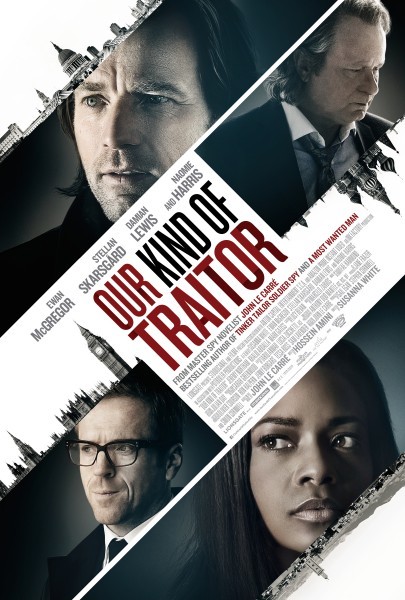
Adapted from John le Carré’s 2010 novel of the same name, Our Kind of Traitor is an above-average spy thriller complete with an all-star cast. The film is the tenth film adaptation of le Carré, the famed contemporary British novelist known for espionage fiction following his early career in British intelligence. Like some of his other works, the film involves a normal law-abiding citizen, in this case an English professor named Perry played by Ewan McGregor, who finds himself entangled in an intricate web of international intrigue. While on vacation with his wife played by Naomie Harris in Marrakech, Morocco, Perry randomly meets a Russian oligarch named Dima who helps launder money for the Russian Mafia. Portrayed by Stellan Skarsgård, Dima takes Perry on a whirlwind of stereotypically extravagant Russian parties, all for what we soon learn to be ulterior motives. Fearing for the safety of his family, the slick Dima covertly passes to the in-over-his-head Perry a thumb drive connecting names with secret bank accounts. He wants the information to reach MI6 so that he can negotiate asylum for him and his family. Eventually, Damian Lewis’s character is brought in as the MI6 handler who is eager for more proof of the elaborate Russian money-laundering scheme that may also implicate high-ranking British officers. Perry and his wife become stuck between their allegiance to the British government and Dima’s family’s safety. Overall, I found the film to be an interesting take on a spy thriller but ultimately left me wanting more. Although the acting performances were a strong suit, the film is not up to the level of the other terrific le Carré’s adaptations, particularly The Constant Gardener, Tinker Tailor Soldier Spy, and the recent BBC miniseries The Night Manager.