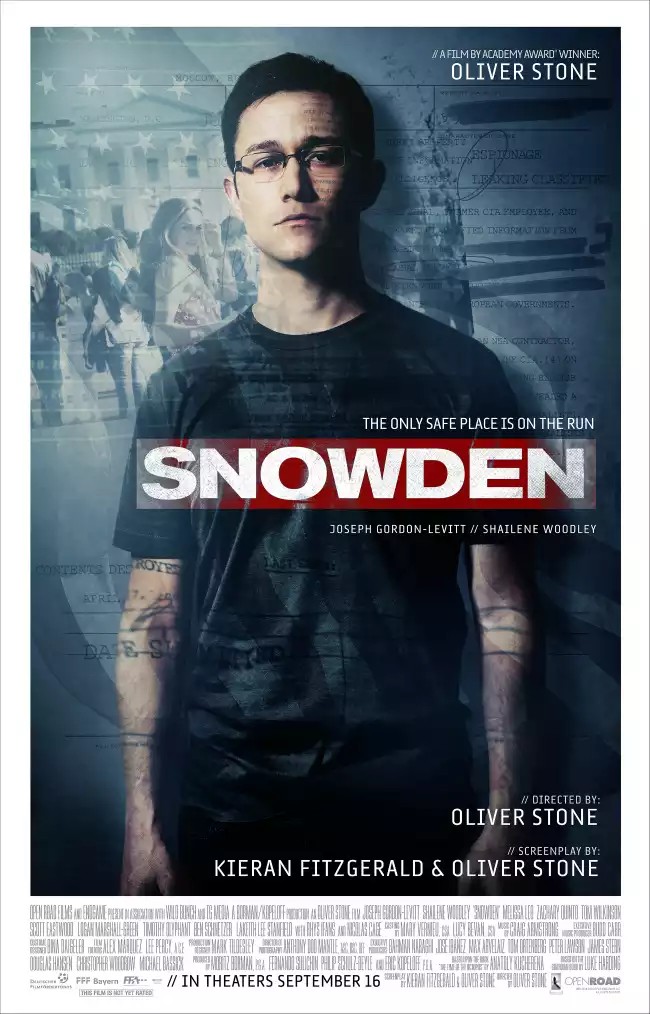
Directed by Oliver Stone, Snowden is a fascinating dramatization of the true life story of Edward Snowden and the largest leak in American intelligence history. Although obviously biased in favor of Snowden’s actions, the film is surprisingly less heavy-handed and controversial than what would be expected from such a famous provocateur as Oliver Stone. Much of the movie is a series of flashbacks to Snowden’s past during an interview with the journalists that publicized the damning allegations that he revealed about the US government in 2013. In fact, the interview was the basis for the 2014 Academy award-winning documentary Citizenfour. This film feels like another way to tell the all-too-familiar story, packaged as a gripping thriller about a complicated figure with a unusual background. Starting with his experience at bootcamp as an idealistic Army recruit, the movie chronicles Snowden’s progression through the CIA, NSA, and intelligence defense contractors. At the same time, the viewer is presented with a love story: the ups and downs of Snowden’s relationship with his long-time girlfriend Lindsay Mills played by Shailene Woodley. As a result, Oliver Stone tries to humanize the story in a way in which we can sympathize with Edward Snowden the human who struggles with his conscience and allegiance to his country. Joseph Gordon-Levitt is what makes the film really stand out with his terrifically realistic performance, complete with having an eerily similar voice as the real-life Edward Snowden. This authenticity becomes clear in the seamless transition to the actual Snowden appearing from an undisclosed location in Russia in the film’s stirring epilogue. Overall, I found the film to effectively present an intriguing intricate web of international espionage and the ethical implications of far-reaching surveillance. Unlike some of his other movies laden with conspiracy theories, Oliver Stone is on the side of proven facts, for the most part, and simply interprets the information in his uniquely creative way.
Action
The Legend of Tarzan
Following a long line of film adaptations of Edgar Rice Burrough’s Tarzan books, The Legend of Tarzan takes a different take on the eponymous character of Tarzan played by Alexander Skarsgård. Almost a decade removed from the African jungles, John Clayton III, also known as Tarzan, is living a life of an aristocrat in England with his beautiful wife Jane played by Margot Robbie. However, at the request of the British government, he is sent back to the Congo as a diplomatic envoy. Accompanied by Jane and the gun-toting American diplomat George Washington Williams played by Samuel L. Jackson, Tarzan discovers that the Congo and his tribal friends are being brutally oppressed by the Belgian colonial powers of King Leopold II. Eventually, Tarzan runs into trouble with the reprehensible Belgian leader Captain portrayed by the always marvelously devious Christoph Waltz. Waltz’s performance is by far the best of the film: his character, based on a real person, nonchalantly orders the wholesale butchering of locals in the greedy pursuit of diamonds. He does all this while dressed in immaculate white suits and clutching a rosary that he uses as a weapon. With the help of his animal friends, including some of the apes that raised him, Tarzan returns to his wild self to rescue Jane and the enslaved tribesmen. Although the story has been told countless times, the film contains flashbacks to Tarzan as a child taken care of by animals and his first meetings of Jane. As a lover of history, I was mostly fascinated by the depiction of Belgian colonialism in Africa in the late 19th century. The movie was set in the Congo Free State at a time when the Belgian military and mercenaries known as the Force Publique exploited the territory for its rich natural resources. Their ruthless stranglehold resulted in what some believe to be an estimated ten million Congolese deaths and the enslavement of millions. The atrocities were a stark reminder to Jackson’s character who witnessed American slavery and the abusive treatment of Native Americans. Interestingly, his character George Washington Williams was a real historical figure who helped expose the brutalities in the Congo. Overall, I found the film to be an entertaining adventure story that brings a unique twist to the Tarzan saga. It is particularly noteworthy for providing a historical context enlightening to many viewers who may never have known about the genocidal Belgian colonialism in the Congo.
Free State of Jones
Starring Academy Award winner Matthew McConaughey, Free State of Jones tells a truly fascinating overlooked true story of the American Civil War and Reconstruction in the South. McConaughey portrays Newton Knight, a larger-than-life figure who is still controversial to this day, who started a small uprising against the Confederacy in the rural Mississippi county of Jones. After enduring the bloody brutality of such battles as the Siege of Corinth in 1862, Knight deserted the Confederate Army and returned home to a dire situation. Many of the local poor white farmers were burdened with high taxes that deprived them of badly needed food supplies. Feeling targeted by the Confederacy and to escape prosecution, Knight hid in the swamp with escaped slaves and other deserters and eventually formed what would be known as the Knight Company. As the group grew with more disenfranchised farmers, they became surprisingly effective in repelling the Confederate authorities. However, General Sherman and the Union Army refused to help the group since they were perceived as simply a small group of bandits with no real power. The movie is unique in that it conveys an alternate message about the Confederate South: a thoroughly white Southerner like Knight has no qualms working with blacks and even fights for their rights during Reconstruction. Through the use of on-screen text giving historical context, the film gives an important historical lesson about the Civil War, its aftermath, and the suppression of black civil rights. The film’s only major drawback is that it tries to fit too much information into a relatively short amount of time. For instance, it almost randomly flashes forward 85 years to a trial when Knight’s descendant is questioned for committing the crime of interracial marriage. Such scenes help to tell the totality of racial discrimination in Mississippi. The movie would feel more coherent if it just focused on the Knight Company around the time of the Civil War. Matthew McConaughey gives an authentic performance as a gritty yet preacher-like rebel leader with a controversial personal life. Overall, I found the film intriguing for telling a noteworthy and powerful piece of history but whose storytelling could be more tightly woven.
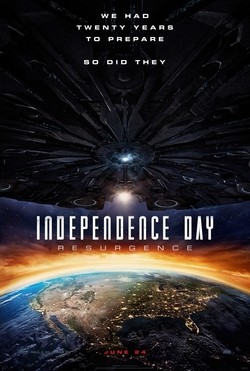
Independence Day: Resurgence
A follow-up to the Hollywood blockbuster Independence Day released in 1996, Independence Day: Resurgence is a fairly lackluster sequel that is visually appealing but filled with cliche, cheesy dialogue. It is basically the same film as the original: the same aliens return to invade Earth yet again and humans unify to fight the aliens. This time, an international defense force is created using alien technology but the attack is on a much larger scale. Relying heavily on CGI, the aliens obliterate many cities and landmarks in epic fashion. I did feel a sense of nostalgia as I watched the film since I remember the original from when I was 11 years-old. The original was one of the first major sci-fi popcorn flicks I saw that was visually stunning, at least for 90’s standards prior to today’s advanced CGI. Although Will Smith did not reprise his role, the movie brings back several of the major members of the original cast, including Jeff Goldblum and Bill Pullman. Like the original, it even included an inspiring speech from Pullman who now portrays the reclusive former president. The movie includes the requisite elements of a love story, eccentric scientists, military camaraderie, and rousing patriotism. Overall, I found the film to be a fairly typical sci-fi blockbuster, with a rather silly premise, whose primary purpose is to serve as a vehicle for special effects.
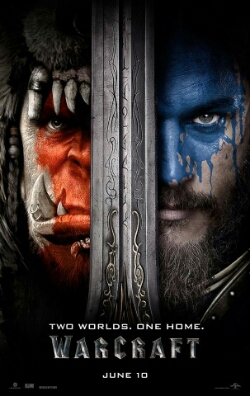
Warcraft
Based on the massively popular video game series first released in 1994, Warcraft follows in a long line of epic fantasy films popularized by The Lord of the Rings series. It is your fairly typical 3D CGI-heavy film that involves humans and fantastical creatures known as orcs fighting over a magical land known as Azeroth. Although it attempts to dumb down the esoteric details of the Warcraft universe, the film feels like it is catered to the millions of role-playing gamers engrossed by Warcraft. The film even at times feels like a video game, with the overhead views of massive battlefields controlled by magic and specialized weapons and ending with a final Boss Level-like fight sequence. While the special effects are well done with an obviously big budget and the story has original fantasy elements, the movie will entice Warcraft gamers but overall does not contribute much to the fantasy genre. Audiences have gotten used to stunning CGI and may feel let down when there already is great fantasy storytelling with The Lord of the Rings and Game of Thrones.
X-Men: Apocalypse
X-Men: Apocalypse is a fairly standard comic book movie that pits superheroes with CGI-enhanced powers against a supervillain threatening humanity. It is the ninth installment in the lucrative X-Men franchise and part of a trilogy following the X-Men characters in their youth beginning in the 1960s. The film is set in 1983 coinciding with the rise of the main antagonist, an ancient mutant known as En Sabah Nur played by Oscar Isaac under a heavy layer of makeup and special effects. A ragtag group of young mutants under the tutelage of a young Professor Xavier played by James McAvoy join forces to save the human and mutant races from this god-like malevolent force. There is also a subplot rivalry between Professor Xavier and the multi-dimensional Magneto played by Michael Fassbender, archrivals as they get older in the earlier films. The movie feels more like an extension of an origin story and would not work as well as a standalone film. We are introduced to many mutants before they become the familiar characters from the previous films. Their younger selves are presented in unique and sometimes entertaining ways that provide important background information on their more recognizable adult selves. However, I enjoyed the first movies more because of the acting gravitas of Patrick Stewart and Ian McKellen and the appearance of Hugh Jackman’s Wolverine beyond a simple cameo. Overall, I thought the film did not break the comic book movie mold but stuck to the rather generic formula proven to practically guarantee box office success for the major studios. It provides enough CGI action and entertainment to appease the hordes of die-hard comic book fans and those looking for a summer popcorn flick.
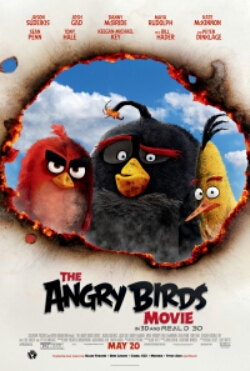
The Angry Birds Movie
Based on the Angry Birds video game series first released in 2009 game and downloaded over 3 billion times, The Angry Birds Movie is a fairly typical animated kids’ movie that attempts to entertain accompanying adults. It follows the adventures of Red voiced by Jason Sudeikis who keeps to himself until he is forced to take an anger management class. After befriending fast-talking Chuck voiced by Josh God and explosive Bomb voiced by Danny McBride, Red discovers a mysterious plot from a group of newly arrived green pigs. Eventually, the whole community of naive birds team up to defeat the mischievous pigs pretending to be friendly. The film is filled with the requisite bird and pig puns, such as a Birds and Bees Fertility Clinic, free-rage chicken, Instaham, and Hamnesty International. Since it is based on the video game, there are many references to actual gameplay that would be familiar to all players. For instance, each bird has a corresponding skill and many birds are launched from a slingshot to destroy the green pigs. Although it will surely entertain young children, the film’s premise feels half-hatched and probably would be better suited as a short film similar to the ones played before Pixar movies. It will no doubt be a commercial success with many sequels to come but hopefully the future films will harness the creativity and heart of Pixar and Disney.
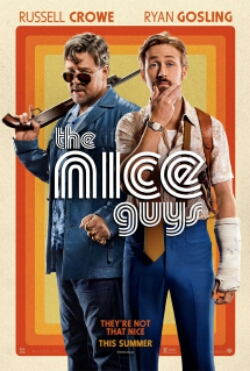
The Nice Guys
Written and directed by Shane Black who wrote the original Lethal Weapon, The Nice Guys is a very entertaining action comedy set in the 1970s. Russell Crowe and Ryan Gosling are two private detectives who go on a wild goose chase after the mysterious death of an adult film actress in Los Angeles. The film is very aware of cinematic history in that it blends elements of a classic crime caper with screwball comedy filled with Three Stooges-esque physical comedy. The soundtrack is particularly effective: songs from Earth, Wind & Fire, Kiss, and America along with the classic Pina Colada Song effortlessly tells us the setting. Also mixed in is a score that sometimes feel like it comes from a 1940s film noir to remind us that the film is essentially a crime mystery. The pairing of the tough guy persona of Russell Crowe along with the sometimes naive buffoonery of Ryan Gosling is terrifically cast, similar to Mel Gibson and Danny Glover in the quintessential buddy action comedy Lethal Weapon. Known for his good looks and charisma, Ryan Gosling paradoxically plays a character who quite literally stumbles and sheepishly squeals his way through unraveling the plot’s mysteries. The film takes on such an entertaining joy ride that the almost satirically preposterous conspiracy discovered at the end is irrelevant. I would highly recommend the movie based on its well-timed elements of action and comedy and perfect casting of Russell Crowe and Ryan Gosling whose on-screen chemistry will hopefully be replicated soon.