Captain Marvel

The twenty-first installment of the Marvel Cinematic Universe movie franchise, Captain Marvel is your fairly typical superhero comic book movie but is elevated by above-average acting performances and a script filled with humor and female empowerment. The story revolves around Vers, played by Oscar winner Brie Larson, who is a member of the Starforce tasked with protecting their own alien race known as the Kree. Her commander and mentor Yon-Rogg, played by Oscar nominee Jude Law, trains her to control her superpower of having a powerful energy force that can be used as a very destructive weapon. They are in the midst of a war with another alien race known as the Skrulls who can shape-shift into any life-form and are led by Talos, played by Golden Globe winner Ben Mendelsohn. Eventually, Larson’s character finds herself on Earth in 1995 after she is captured by the Skrulls. She is discovered by bewildered agents of the secret American agency known as S.H.I.E.L.D., including Nick Fury who is played by Oscar nominee Samuel L. Jackson. He is teamed up with Larson’s character whose Earth name is Carol Danvers and thereby is ordered to keep eyes on her by the agency’s director Keller, also played by Ben Mendelsohn. Over the course of the storyline, not everything is as straightforward as first presented at the beginning, and it does not become entirely clear who the real enemy is and the true motivations of the characters. Things get increasingly complicated for Danvers after discovering she was connected to a secret United States Air Force program known as Project Pegasus run by a woman that Danvers previously forgot about as a result of amnesia, Dr. Wendy Lawson who is played by Oscar nominee Annette Bening. Par for the course with such a blockbuster, the film is filled with CGI-enhanced action sequences and cross references with the other movies in the Marvel Cinematic Universe. Similar to the Guardians of the Galaxy movies, the film does have moments of humor, especially the scenes involving the cat Goose who is seemingly always around for no apparent reason. Overall, I found it to be yet another entertaining blockbuster in the ever-expanding Marvel Cinematic Universe that provides just enough levity to not take itself too seriously while also presenting a powerful female superhero, in the same vein of the inspiring 2017 movie Wonder Woman.

Alita: Battle Angel

Directed by Robert Rodriguez best known for 2005’s Sin City and produced by James Cameron and Jon Landau best known for 1997’s Titanic and 2009’s Avatar, Alita: Battle Angel is a fairly underwhelming science fiction film that has visually stunning special effects and CGI but is bogged down by an uninspired and formulaic script. Set several hundred years in the future when Earth has been devastated from an alien attack, the film follows the powerful warrior cyborg Alita, played by Rose Salazar, who is discovered by the scientist Dr. Dyson Ido, played by two-time Oscar winner Christoph Waltz. He adopts her like his daughter who died years ago and unintentionally allows her to be discovered by the malevolent leaders of the city of Zalem which hovers above Iron City and is forbidden for anyone from the Iron City to enter. As she is pursued by the powerful Iron City businessman Vector, played by Oscar winner Mahershala Ali, and his associate Dr. Chiren, played by Oscar winner Jennifer Connelly, Alita falls in love with a human named Hugo who introduces her to the extremely popular sport of Motorball. Against the wishes of Ido, she decides to become a legal bounty hunter known as a Hunter-Warrior and try out to become a competitor in Motorball. With increasing CGI violence in which Alita skillfully fights off cyborgs and robotically enhanced humans, the influences of Japanese manga, which the film is based upon, and Asian martial arts become readily apparent, contributing to the movie’s unique cinematic style and aesthetic. Overall, despite the advanced use of CGI, I found it to be less of a fully fleshed-out movie that rises above the rest of the sci-fi genre and more of a way to set up for commercial success that it will obviously try to take advantage of with sequels. Furthermore, I often felt myself distracted from the story as a result of the visuals bordering on the uncanny valley in which the attempt at realism does not necessarily work effectively; on a similar note, I found the extremely large eyes of Alita to be often absurd and unnecessary.

The Lego Movie 2: The Second Part

A direct sequel to 2014’s The Lego Movie and the fourth installment in the Lego film franchise, The Lego Movie 2: The Second Part is a very charming and witty family friendly computer animated movie that continues the creativity of the original with funny voice acting and humorous gags. Set five years after the original, we meet the protagonist Emmet Brickowski, voiced by the charismatic Chris Pratt, living his hopelessly naive life in what has now become Apocalypseburg until his Lego world is faced with an even greater danger than before, an army of alien invaders led by Queen Watevra Wa-Nabi, voiced by the comedian Tiffany Haddish. The shape-shifting Queen tries to brainwash Emmet and his friends to join her Systar System and force Batman, voiced by the gruff-sounding Will Arnett, to marry her in order to form an alliance. However, Wyldstyle or simply known as Lucy, voiced by Elizabeth Banks, knows that something is wrong and must fight off the Queen and her minions who could bring forth the so-called Our-Mom-Ageddon. Meanwhile, Emmet tries to rescue his friends, especially his love interest Lucy, and is eventually teamed up with a tough guy named Rex Dangervest, also voiced by Chris Pratt, who is cleverly yet indirectly described as a combination of the actor Chris Pratt’s other roles, including Star-Lord from Guardians of the Galaxy and a velociraptor wrangler from Jurassic World. When Emmet and Lucy finally reunite, they realize that not everything is as it seems and that the Queen may in fact not be as bad as they initially thought. Like the original, the film takes the audience on a very entertaining adventure filled with extremely clever references and metaphorical representations of the real world in which the characters are part of two children’s imaginations. In a very creative twist, it is revealed that Emmet’s world is in the real world realm of the young boy Finn and the Queen is the real world representation of his younger sister Bianca who simply wants to play Legos with her older brother. To clarify this reality, the film occasionally cuts to live action sequences in which the feuding siblings are portrayed as well as their father, played by Will Ferrell, and mother, played by Maya Rudolph, who threatens to put all the Legos in storage if the two siblings do not get along. In the end, the movie gives a heartwarming message of the bond between brother and sister that ultimately overcomes all challenges. Overall, although it is clearly not as great as the original, I found it to be an extremely enjoyable cinematic experience as a result of the terrific and often very funny writing fleshed out by a first-rate cast of voice actors. Furthermore, I was thoroughly impressed by the level of realism generated by the computer animation that makes the Lego pieces look real and are even aged with marks that would typically appear on real life Legos over time.

The Kid Who Would Be King

Written and directed by British filmmaker Joe Cornish best known for 2011’s sci-fi movie Attack the Block, The Kid Who Would Be King is a surprisingly well-done and fun family-friendly adventure film with a very creative take on the iconic British legends of King Arthur and the Knights of the Round Table. The film follows a young teenager named Alex, played by newcomer Louis Ashbourne Serkis, living in London who leads a fairly typical adolescent life until one day he discovers the magical sword Excalibur previously possessed by the legendary Arthur. Along with his bullied best friend Bedders, Alex is unwittingly tasked with saving England by fighting off the magical evil force of Morgana, played by Rebecca Ferguson, who is the half sister of King Arthur and the mortal enemy of the wizard Merlin. With the discovery of Excalibur, she and her magical zombie army are awakened from the depths of Earth after a centuries-old spell to avenge Arthur’s curse and destroy Great Britain during a solar eclipse. The fatherless Alex is told this unbelievable story and how he is a descendant of the great King Arthur from the famed wizard Merlin who is disguised as a older teenage student, played by the film’s comic relief Angus Imrie. When he is not trying to blend into modern-day England, Merlin appears either as an owl or an older man, played by the great Patrick Stewart. Eventually, Alex and his best friend are reluctantly partnered with the school bullies Lance and his girlfriend Kaye to go on a perilous journey to locate and kill Morgana. In the process, the four of them learn moral lessons to overcome their challenges with each other to become lifelong friends despite being enemies prior to their quest. Overall, although it is definitely geared to be a wholesome family movie, I was pleasantly surprised to discover it to be a terrifically entertaining adventure story also appealing to adults looking for a fun time at the movies.

Aquaman

The sixth installment in the DC Extended Universe comic book movie franchise first started in 2013 with Man of Steel, Aquaman is yet another superhero movie that is stuffed with an overabundance of CGI but slightly departs from the many others by embracing the fun and silliness of the genre. The movie begins in 1985 on the remote coast of Maine when the lighthouse keeper Thomas Curry rescues the mysterious Atlanna, played by Oscar winner Nicole Kidman, who is discovered to be the underwater princess of the mythical world of Atlantis. They have a child together named Arthur, but Atlanna is forced to leave her family to return to her father who is the king of Atlantis. As he grows up with his father and is occasionally trained by an advisor of Atlantis named Vulko, played by Oscar nominee Willem Dafoe, Arthur, played by Hawaiian actor Jason Momoa, learns he has great superpowers as a half-Atlantean who can swim fast underwater without having to breathe air. At this point, the movie follows the typical formula of a superhero origin story in which the protagonist plays with his newfound powers and eventually discovers he could use his very special skills for good by saving sailors and fishermen. Aquaman, which becomes Arthur’s superhero alter-ego, enjoys a relatively peaceful life on the surface world until his half-brother Orm, played by Golden Globe nominee Patrick Wilson, sees him as a threat to his legitimate claim to the throne of Atlantis. Orm has a stereotypically villainous plan to overtake rulership of all the seven underwater kingdoms by starting a war with the surface world and humans who are polluting the oceans. Over time, Aquaman is joined by the beautiful Atlantean Mera, played by Amber Heard, who is originally betrothed to Orm by one of the other rulers who happens to be her father, played by Dolph Lundgren. Over the course of the spectacular and quite frankly over-the-top underwater CGI sequences, Aquaman along with his new love interest Mera fight to save both the underwater and surface worlds from the destructive designs of his half-brother. In addition to the surrealistic visuals in which sea creatures come to life, the script, with its self-referential humor and quite silly jokes, lends the movie a certain quality of not taking itself too seriously and thereby promoting the inherent ridiculousness of the story. This aspect of purposely pointing out the ludicrous nature of what takes place on screen helps the movie overcome simply being just another bad attempt at exploiting the superhero genre to make a boatload of cash. Overall, I found it to be an entertaining film that, despite its generic stereotypes, makes for an enjoyable distraction from reality, led by a charismatic actor who truly looks the part of Aquaman.

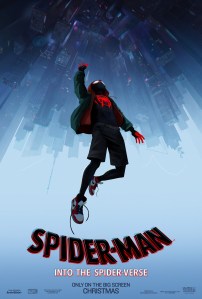
Spider-Man: Into the Spider-Verse

A follow-up to the six Spider-Man movies made since 2002 starring three different actors in three separate series, Spider-Man: Into the Spider-Verse is yet another installment in the Spider-Man comic book franchise that is justifiably the best film as a result of its innovative computer animation and unique storytelling. It is a visually arresting animated feature that relies on a completely new type of CGI very much resembling the aesthetic of the actual comic books while also somehow bringing a level of unorthodox realism. Just by reading the synopsis or even watching the preview, the movie at first seems to be too unusual and convoluted to make any sense but, to my great surprise, it actually becomes one of the most memorable cinematic experiences of the year. The story follows a young black and Puerto Rican teenager living in Brooklyn named Miles Morales, voiced by Shameik Moore, who becomes infected by a radioactive spider that gives him the super powers of Spider-Man. Unexpectedly, he runs into the real Spider-Man, voiced by Chris Pine, battling the supervillain Kingpin, voiced by Liev Schreiber, who is about to unleash a particle accelerator that will open parallel universes and ultimately destroy New York City. As a result of the accelerator’s partial activation, Miles encounters several other iterations of Spider-Man from other parallel universes, including the out-of-shape and depressed Peter B. Parker, voiced by Jake Johnson. Parker reluctantly helps train Miles to save his universe from Kingpin’s maniacal desires, and they are later assisted by Aunt May, voiced by Lily Tomlin, who introduces them to the other Spider-People from the alternate universes. The other personas are rather comical and include Gwen Stacy, voiced by Hailee Steinfeld; the talking pig Spider-Ham, voiced by John Mulaney; the old-fashioned black-and-white Spider-Man Noir, voiced by Nicolas Cage; and the anime Peni Parker, voiced by Kimiko Glenn. The fight to save all of the parallel universes and for the other Spider-Man characters to return to their worlds becomes the responsibility of Miles who must save his own world and destroy Kingpin’s cataclysmic device. While fighting to save his beloved New York City, the young Miles becomes much more confident of himself and comes to better appreciate his family, especially his father and police officer Jefferson, voiced by Brian Tyree Henry, and his troubled uncle Aaron, voiced by Mahershala Ali. Furthermore, even the sceptics, including Miles’ own father, that believe Spider-Man is a menace to society realize they have been mistaken and that really Spider-Man is the true hero of the city. Overall, I found it to be a truly engrossing and invigorating depiction of the tired Spider-Man character and is a remarkable movie for its brilliant use of a new form of computer animation and ability to reconceptualize Spider-Man as an endearing superhero that would make the late co-creater Stan Lee proud.

Bumblebee

A spin-off and the sixth installment of the Transformers movie franchise first released in 2007, Bumblebee is a refreshing take on a film series that has been largely stale and bloated the past few years. The popular franchise has been brought back to life as a result of its much better acting talent and nostalgic quality. Set in the San Francisco Bay Area in the 1980s taking place decades before the other Transformers movies, the much more personal story follows the teenage girl Charlie Watson, played by Oscar nominee Hailee Steinfeld, who feels like an outcast in her community and family after her father died years ago and her mom is now remarried. Eventually, she discovers an alien form that recently crash landed on Earth from the planet Cybertron where a civil war is raging between the Optimus Prime-led Autobot resistance and the malevolent Decepticons. With the ability to transform into any vehicle or heavy machinery, the alien robot takes the form of a 1967 yellow Volkswagen Beetle, which Charlie gets from a local junk yard . To her shock and amazement while working on it, her beloved VW magically transforms into a large robotic-like creature that turns out to be rather innocent with its loss of memory. Charlie eventually becomes friends with what she affectionately names Bumblebee, and she becomes an unwitting defender of Bumblebee from the Decepticons and a secret United States agency known as Sector 7 run by the tough Colonel Jack Burns, played by pro wrestler and actor John Cena. The government is tricked by the Decepticons to pursue Bumblebee after being told that the Autobots pose grave danger to Earth. With the help of her teenage boy neighbor who also happens to have a crush on her, Charlie tries to persuade the government forces that Bumblebee is not a threat and is in fact her very close friend. What sets the movie apart from the other action-filled Transformers movies is that it is not an over-the-top and laughably cheesy Hollywood popcorn flick designed as mindless entertainment. Surprisingly, the script is well-written and has several moments of heartfelt charm and clever nostalgic references to the 1980s. Steinfeld’s endearing performance goes a long way in crafting an entertaining film based on a line of toys first made in the 1980s and makes it feel like it is more than just a CGI-heavy movie designed to make lots of money. Overall, I was pleasantly shocked to discover that a good Transformers film is entirely possible and actually makes me look forward to the likely sequels if they are helmed by the same creative team and actors.

Mortal Engines

Co-written and produced by legendary filmmaker Peter Jackson who is best known for directing the massively popular and acclaimed Lord of the Rings and Hobbit film series, Mortal Engines is a visually arresting and creative blockbuster movie that follows in the long line of post-apocalyptic films based on young adult fiction, but, ultimately, the weak script filled with plot holes and devoid of truly compelling characters is a recipe for a massive flop. Based on the Mortal Engines novel quartet written by Philip Reeve beginning in 2001, the plot revolves around the young revolutionary Hester Shaw, played by Icelandic actress Hera Hilmar, who lives in a post-apocalyptic world in which most of humanity lives on massive mobile cities that rove the so-called Great Hunting Ground and must take over smaller settlements on wheels in order for the larger communities such as London to survive. The visuals very much reminded me of the Mad Max movies in which elaborate machines built from a hodgepodge of antiquated technology move across desolate and immense landscapes. The protagonist Hester is on a revenge mission to kill one of London’s leaders named Thaddeus Valentine, played by the only recognizable actor Hugo Weaving, who was responsible for her mother’s death years ago. At the same time, she sympathizes with the opposition Anti-Traction League whose people live on static settlements behind the Shield Wall in what used to be Asia. Rather stereotypically in movies in this genre, the young heroine must fight off evil forces who pose an existential threat to the good guys. The secretly malevolent Valentine whose own daughter Katherine does not really know his intentions is in search of Old-Tech weapons that can wipe out the Anti-Tractionists living beyond the previously impenetrable Shield Wall. Eventually, Hester along with an apprentice historian from London named Tom, played by Irish actor Robert Sheehan, team up with a revolutionary leader named Anna Fang, played by South Korean musician and actress Jihae, who pilots a fantastical aircraft. There are several other subplots involving formulaic romances and unusual guardians that, rather than adding to the story, bogs down the already messy storyline. Overall, it is a rather large disappointment for a Peter Jackson-produced fantasy movie that relies too heavily on elaborate CGI, which are rather spectacular and unique even for the genre, and whose creative imagery and premise is not done any justice by the overall poor quality of the story and acting.

Ralph Breaks the Internet

The follow-up to the hugely successful Disney computer animated film Wreck-It Ralph released in 2012, Ralph Breaks the Internet is an endearing and extremely creative computer animated feature that effectively incorporates popular culture into a family-friendly story about changing friendships. Like the original, the plot follows a video arcade character named Ralph, voiced by Oscar nominee John C. Reilly, and his adventures with his best friend, another character from a racing video arcade game named Vanellope who is voiced by comedian Sarah Silverman. They both live in a magical world in which they can travel between games at a video arcade that is full of eccentric and lovable characters. The major twist in this particular film is that both best friends end up venturing into the previously unknown world of the internet after the owner of the arcade installs a Wi-Fi router giving them access to the colorful expensive universe of the internet. Ralph must look for eBay in order to purchase a part for Vanellope‘s racing game before it is permanently shut down. The filmmakers create a playful environment recreating what the internet could look like to children characters in which well-known websites like eBay and Facebook are represented as vibrant buildings within a large city. Not realizing that they must pay eBay actual money, Ralph and Vanellope embark on an entertaining adventure to make money through a spambot website represented by a street hawker and eventually a YouTube-like video website. Through the help of a search bar named KnowsMore, voiced by Alan Tudyk, the two are first led to an online racing game called Slaughter Race where they meet a tough racer named Shank, voiced by Gal Gadot best known for her role as Wonder Woman. Ralph finally discovers that he can make the necessary money by posting viral videos to the video sharing website BuzzzTube run by an algorithm represented by the fashionable character Yesss, voiced by Oscar nominee Taraji P. Henson. Chaos ensues after Ralph helps unleash a virus that could possibly prevent Vanellope from wanting to stay in the online game with her new friend Shank. His jealousy and sadness over the possible separation from his dear friend is a message to the viewer about the hardships of a changing role in relationships with friends and family. Ralph eventually comes to terms with his best friend’s desires, and they are able to remain friends despite not always being together at the arcade. Overall, I found it to be a fun and unique movie appealing to both adults and kids who can appreciate the clever representations of the internet and the heartfelt message underscoring the entire premise. The only fault with the film is the occasional oversaturation of pop culture that can sometimes feel like an advertisement for the real products and intellectual property represented, especially during a scene in which all of the Disney princesses appear.

Fantastic Beasts: The Crimes of Grindelwald

The tenth overall installment in J.K. Rowling’s Wizarding World movie franchise beginning with the first Harry Potter released in 2001 and the sequel to 2016’s Fantastic Beasts and Where to Find Them, Fantastic Beasts: The Crimes of Grindelwald is a surprisingly complicated mess of a movie that tries to recapture the magic of the hugely successful Harry Potter universe, and the only real merits are to appeal to Harry Potter fans and the use of fantastical CGI. Set a few years after the original Fantastic Beasts and many decades before the appearance of Harry Potter, the plot follows the exploits of the lowly wizard Newt Scamander, played by Oscar winner Eddie Redmayne, who must track down and disrupt the malevolent desires of the recently imprisoned dark wizard Grindelwald, played by the always creepy-looking Oscar nominee Johnny Depp. Suspicious of his connections to Grindelwald, the British Ministry of Magic also tries to find the villain of the first movie Credence, played by Ezra Miller, who they believe may be working with and for Grindelwald. Newt is surprised to run into his non-magic Muggle friend Jacob, played by Dan Fogler, and Jacob’s magical girlfriend Queenie, played by Alison Sudol, who join the investigation into Grindelwald and the manipulated Credence. In a nostalgic nod to Harry Potter fans, Newt eventually meets up with a young Dumbledore, played by Oscar nominee Jude Law, at Hogwarts School made famous in Harry Potter because it is believed that only the powerful Dumbledore can defeat the equally powerful Grindelwald. As they continue to pursue Grindelwald, Newt along with Jacob and Queenie as well as his love interest Tina, played by Katherine Waterston, find themselves in Paris and trying to find information at the French Ministry of Magic. From there, the characters are taken to the climax of the movie where Grindelwald has gathered all pureblood wizards to join his plot to take over the Muggle world. He uses his dark magic skills to practically force wizards to take up his cause, and Newt along with his allies engage in a battle with Grindelwald in a fantastical CGI sequence. Overall, I found it to have an overly complex storyline that was often hard to follow for the average moviegoer not well versed in the Wizarding World, and strangely there were not many scenes with the titular character Grindelwald or much about his so-called crimes. Unfortunately, I felt that the franchise is reaching a point where it is overextending itself in order to simply make money at the box office and appease the rabid fans of anything related to Harry Potter.