The Accountant is an entertaining action thriller that is noteworthy because of Ben Affleck’s performance and the unique twist of having the gun-toting protagonist autistic. The film starts when Affleck’s character, who later goes by the alias Christian Wolff, is a child suffering from severe autism whose parents become increasingly frustrated with his inability to act “normally.” Interspersed with flashbacks to his difficult youth with a particularly strict military father, the film follows Christian as an adult with a secretive and sinister career. Due to his proficiency with math and anti-social tendencies, he becomes an accountant illegally cooking the books for drug traffickers, terrorists, and other major criminals. Part of his cover, he takes a job as a financial consultant at a cutting-edge robotics company, hired to discover a large mysterious loss of money. With the aid of the company’s internal accountant played by Anna Kendrick, he discovers something nefarious at the company owned by John Lithgow’s character. All the while, Christian who is simply known as “The Accountant” is being pursued by the gung-ho director of financial crimes at the Treasury Department, played by J.K. Simmons. Towards the film’s conclusion, it becomes much more of an action flick after the weapons proficient Christian encounters a hitman and his highly militarized personal army. Christian is highly sought-after because of his involvement with many criminal organizations and his association with the robotics company. Overall, I found the movie to be an interesting take on the action genre, albeit a little preposterous in its premise involving an autistic criminal and assassin. I was most surprised by its seemingly accurate portrayal of people with autism, complete with the character being highly sensitive to loud noises and light. It is worthy to note that the subject matter involving autism may be controversial but the filmmakers try to present Christian’s struggles fairly and how external forces, particularly his cruel father, took advantage of him.
Drama
The Dressmaker
One of the highest grossing Australian movies and based on the 2000 book of the same name, The Dressmaker is a very quirky film about a woman returning to her childhood hometown in rural Australia to take revenge on those accusing her of a past wrongdoing. Played by the Academy Award-winning actress Kate Winslet, Myrtle ‘Tilly’ Dunnage unexpectedly appears in Dungatar 25 years after being sent away as a child, ostensibly to care for her mother Molly who is played by the acclaimed Australian actress Judy Davis. Her particularly ornery mother suffers from some sort of mental illness and still lives in a house in great disrepair. However, we soon learn that Tilly has an ulterior motive for leaving her world of being a high fashion dressmaker in Paris and returning to the town she despises. She was blamed for a local bully’s death when she was a young child and is now trying to figure out if she really was at fault. Creating stylish outfits that are out of place in the Australian Outback gets her in the good graces of the local women and the cross-dressing police officer played by Hugo Weaving. Personally not knowing what to expect, the movie starts out as an oddball dark comedy full of head-scratching shenanigans and truly out-there characters. However, as Tilly finds her place in town, the film abruptly swerves to becoming a romance when she falls in love with a local named Teddy, played by a hunky Liam Hemsworth. But, all of sudden, the plot veers course yet again as Tilly begins to discover the truth of what really happened when she was a child. It becomes more of a melodramatic revenge story in which she turns on the conniving townspeople and gives them their just deserts in the final climactic scenes. Since it is set in 1951, the filmmaker gives a good representation of the time and setting through the use of vintage elaborate costumes and references to Billie Holiday music. Like the story with its unusual tonal shifts, the outfits are paradoxically set against a dusty and unforgiving town in the middle of nowhere. Overall, I found the film to be weirdly intriguing with an undoubtedly talented cast, but, at times, I found it to suffer from a sort of multiple personality disorder in that it did not really feel like it knew what movie it wanted to be.
Denial
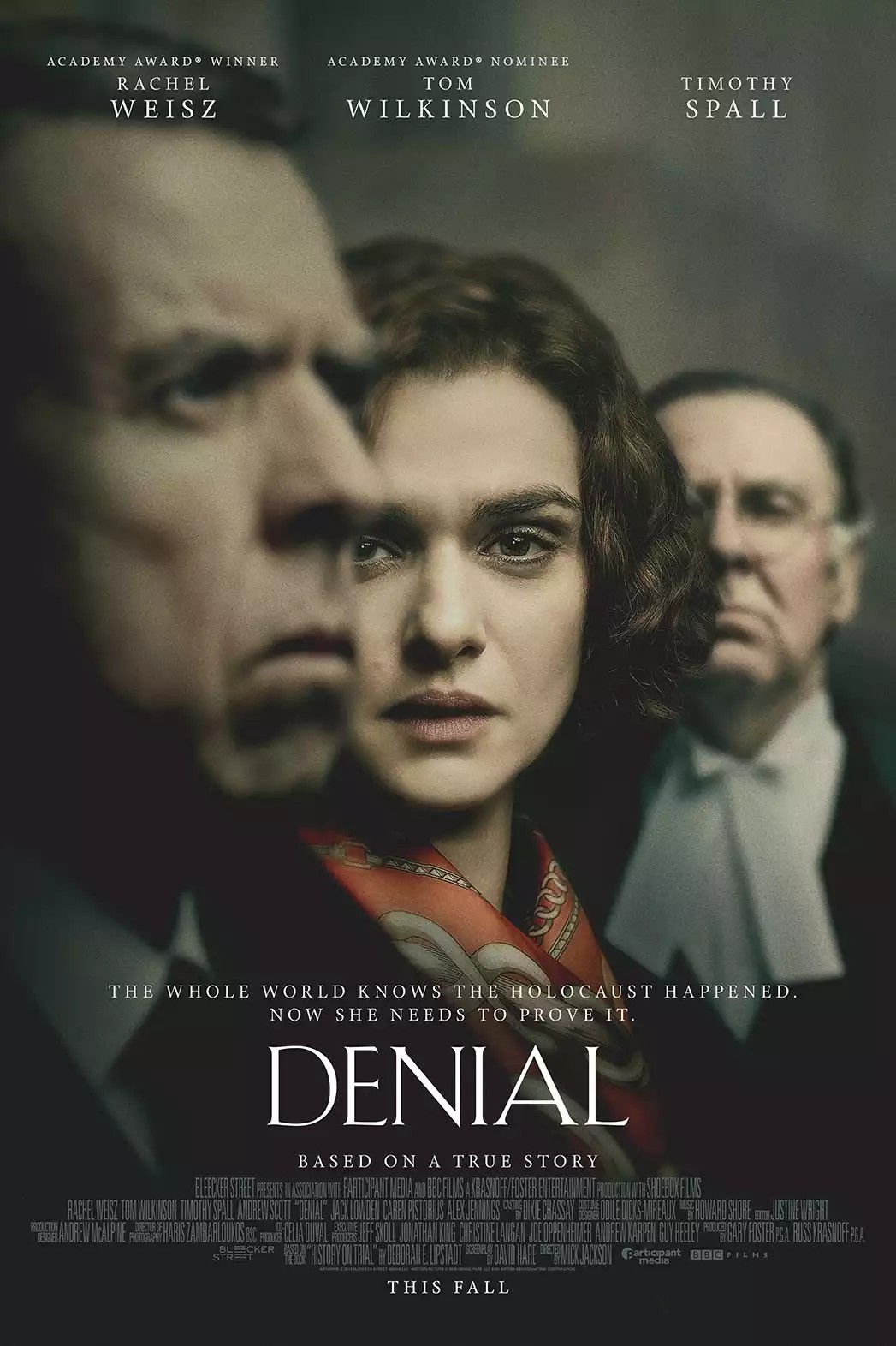
Based on a true story, Denial is a fascinating courtroom drama that delves deep into the issues of freedom of speech, the justice system, and the role of historians. It revolves around a noteworthy 2000 libel case tried in the United Kingdom and brought by a particularly infamous British Holocaust denier named David Irving, brilliantly portrayed by Timothy Spall, against a respected American Holocaust historian, played by Academy Award winner Rachel Weisz. Weisz’s character Deborah Lipstadt becomes a target of the provocative amateur historian Irving after she publishes a book about Holocaust denial that harshly criticizes his writings. He claims she defamed his name and therefore decides to sue her in the British court system, which, unlike, the American system does not assume that the accused are innocent until proven guilty. Along with her publisher Penguin Books, she hires a group of high-powered British lawyers, including the solicitor who represented Princess Diana and a barrister specializing in libel law who is played by the always terrific Oscar-nominated actor Tom Wilkinson Wilkinson. Much of the film takes place during the trial as the defense team prepares for the highly unusual task of proving that the Holocaust really happened in order to prove that Irving’s case is unfounded. Consequently, the filmmakers quite effectively attempt to grapple with what forms of speech are protected and and whether something that is widely perceived as offensive like Holocaust denial should be allowed a platform in public. Furthermore, I was greatly intrigued by learning about some of the intricate details of the British legal system, something that I knew little about and assumed was much more similar to the American system. There were also emotionally powerful moments, especially as Weisz’s character and her legal team visit the ruins of the Auschwitz gas chambers. Overall, I found it to be a compelling movie that raised significant points about justice and what is acceptable in society while presenting a gripping story about a rather unusual trial.
Backdrop

An American of Jewish and German heritage, Deborah Lipstadt remains on the faculty of Emory University in Atlanta, Georgia as a Professor of Modern Jewish History and Holocaust Studies and is the author of several historical books, including her seminal work Denying the Holocaust published in 1993. That book was the basis for David Irving’s lawsuit that he brought forth in 1996 and was finally decided in her favor in a 334-page judgement in 2000 disproving many of his claims about the Holocaust.

David Irving started his career as a largely reputable World War II historian who wrote extensively beginning in the 1960s primarily about Nazi Germany. Although he lived during World War II as a British citizen and his father served in the British military, sometime around 1988, he became a revisionist historian who felt Hitler was misconstrued and that the Holocaust was fabricated. He was heavily influenced by the discredited pseudo-scientific Leuchter Report written by an American execution expert who tried to find evidence disputing the genocidal purpose of the gas chambers at Auschwitz. Under Europe’s strict Holocaust denial laws, Irving has been banned from entering Austria, New Zealand, and Germany. In 1989, Austrian officials had a warrant out for his arrest but did not face jail time until 2005 when she snuck into Austria for a series of speeches to extremist organizations. He was sentenced to three years in jail but only served 13 months after his appeal in 2006. The Southern Poverty Law Center, the preeminent organization on hate groups, calls him the world’s most prominent Holocaust denier.
Deepwater Horizon

Based on the incredible true story of what is commonly referred to as the BP oil spill, Deepwater Horizon follows the largely untold story of the workers on the Deepwater Horizon drilling rig who fought for their lives after a devastating blowout on April 20, 2010. It is directed by Peter Berg who is known for the 2013 true story war film Lone Survivor, which also starred Mark Wahlberg as the main hero. The first part of the film follows what happened before the disaster, predominantly from the perspective of Wahlberg’s real character Mike Williams who was the Chief Electronics Technician on Deepwater Horizon. The viewer gets a glimpse of his personal life, particularly his relationship with his daughter and wife played by Kate Hudson. What fascinated me the most was the actual details of what it’s like to live and work on a massive rig 5,000 feet above the sea floor and 52 miles off the Louisiana coast. It also provided important context: I never before realized that Deepwater Horizon was not actually an oil rig but was rather used to explore and drill the holes for more permanent oil rigs. Unlike other rigs, it was essentially a boat that had thrusters allowing it to float in a stationary position on the surface of the Gulf of Mexico. The film delves into the technical aspects of offshore drilling and the safety apparatuses used to prevent the buildup of pressure that ultimately caused the accident. As depicted in the film, BP who leased the rid and was represented by two of its visiting executives and a supervisor, played by John Malkovich, attempted to cut corners on safety to speed up on beginning the extraction of an estimated 200 million gallons of oil a year. To no avail, several workers for Transocean, the operator of Deepwater Horizon, and Offshore Installation Manager Jimmy Harrell, portrayed by Kurt Russell, warned that the concrete supporting the newly drilled hole could be insufficient. The rest of the story becomes more of an action thriller after the safety mechanisms fail and explosions engulf the entire rig in an inferno. The filmmaker vividly recreates the disaster in such great detail that the viewer is left on the edge of their seats despite knowing the outcome. It shows the heroics of the workers, particularly Mark Wahlberg’s character, as they try to save as many fellow workers as possible and prevent an ecological calamity. As poignantly described by the actual survivors in the film’s epilogue, the Deepwater Horizon catastrophe ended up being the worst oil disaster in American history, with 11 deaths and 200 million gallons spilled over the course of 87 days. Overall, I found the film to be well worth seeing due to its technical insight and exhilarating action sequences captivating the heroics of everyday workers at a time of peril.
Miss Peregrine’s Home for Peculiar Children
Based on the 2011 young adult novel of the same name written by Ransom Riggs, Miss Peregrine’s Home for Peculiar Children is a visually well-crafted fantasy film about a group of children with magical and mysterious powers. It is directed by Tim Burton and has his trademark unique creativity that can border on the macabre. The plot follows Jack, played by Asa Butterfield, who tries to discover the true background of his grandfather, portrayed by Terence Stamp. It eventually leads him to a small isolated island off the coast of Wales and a home for orphaned children with unusual gifts. Jack realizes the orphanage run by Miss Peregrine, played by Eva Green, is trapped in an alternate universe set in 1943 on a certain day that is continuously repeated on a “loop.” Eventually, Jack is tasked with protecting the children from an evil secret group of beings who need to eat the eyes of Peculiar Children to become human. They are led by the creepy white-eyed Mr. Barron, depicted by Samuel L. Jackson, who also controls invisible creatures known as hollowgasts. Jack learns he is endowed with his own power making him particularly well suited to fight Mr. Barron’s forces. The movie is filled with many of the elements you would expect from Tim Burton, particularly nightmarish monsters that appear to come directly from his other films like The Nightmare Before Christmas. Overall, I found it to be a visually dazzling film that would appeal to any fan of Tim Burton but, for my taste, I thought it was a little too peculiar. At the beginning, it reminded me of my favorite Tim Burton movie Big Fish, with its story revolving around a aging character’s mysterious past leading the main protagonist on a fantastical adventure. I also found it probably to be a little too creepy for younger audiences, namely children under 10, one of the targeted demographics.
The Birth of a Nation

Written and directed by Sundance Film Festival favorite Nate Parker, The Birth of a Nation is a phenomenally powerful and intense film about the horrors of slavery. It is based on the true story of Nat Turner, a preacher and slave who led a slave rebellion in Southampton County, Virginia in August 1831. Without even watching a single frame, the movie makes a potent statement in its reappropriation of the title The Birth of a Nation, which is also an infamous 1915 movie that denigrated African Americans and praised the Ku Klux Klan. We first meet Nat, who is superbly played by Nate Parker, as a child who is taught to read the Bible from his master’s wife. Over the course of the film’s first half, he is a preacher who tries to uplift fellow slaves with a hopeful message. Eventually, he is used by his master to help other nearby slave owners appease their slaves by preaching a perverted message justifying slavery. The film undergoes a dramatic tonal shift after Nat’s wife is brutally raped by a group of white men. His preaching becomes much more aggressive, and he finally decides that something must be done to avenge himself and fellow slaves. He organizes a group of slaves in a full-blown revolt that would result in over 60 killings of slave masters and their family members. Nat’s turning point goes to the heart of the film’s message: is violence, including the deaths of some innocents, ever a justified response to such an evil practice as slavery? What really makes the movie stand out is its effective use of visceral imagery and symbolism. For instance, there is a brief shot of a piece of corn gushing red blood, likely to underscore the blood spilled on Southern plantations simply for profit. The film also begins and ends with dreamlike sequences depicting African spiritual ceremonies in which Nat and presumably his ancestors are in traditional garb and covered by what appears to be a warpaint. For me, the most powerful scene is when the camera slowly pulls out revealing dead black men, women, and even children hanging from a tree, while Nina Simone’s rendition of Strange Fruit plays in the background. That particular song is so evocative because it is a ballad about lynchings in the South and comparing blacks to strange fruit hanging from trees. Overall, I found it to be one of the best movies of the year and comprable to the 2013 Oscar-winning 12 Years a Slave in its vivid portrayal of America’s greatest sin. Notwithstanding the controversial nature of the film’s violence and its filmmaker, it must stand on its own merits and be viewed as one of the more important films you will see in a long time.
Backdrop
Born in 1800 on a plantation in Southampton County, Virginia, Nat, along with his mother, were the slaves of Benjamin Turner until his death in 1810 after which his brother Samuel Turner became his master. As was the custom of taking an owner’s surname, he was known as Nat Turner and commonly called The Prophet by fellow slaves due to his fervent religiosity. He spent his entire life at the same Turner plantation, and there is some disputed evidence that he was married to a slave named Cherry. Claiming to have received a vision from God, Nat ultimately was able to recruit 70 slaves and freedmen to take part in a violent revolt against slave owners. In a period of 48 hours beginning on August 21, 1831, the group killed upwards of 65 white men, women, and children in a seemingly indiscriminate fashion, save for a few impoverished white farmers. He survived two months after the first skirmish and was eventually sentenced to death in November 1831. He was hung on November 11, 1831 in Jerusalem, Virginia and his body was flayed, beheaded, and quartered in order to set an example. In the uprising’s aftermath, over 200 blacks were killed in retaliation and 45 of his cohorts were tried in court. Although it would set the stage for the eventual freedom of slaves after the Civil War, the rights of slaves and freedmen were drastically curtailed in response to the violent slave rebellion.
Queen of Katwe

Directed by the critically acclaimed Indian director Mira Nair, Queen of Katwe is an inspiring underdog story of a girl from the slums of Kampala, Uganda who becomes an unlikely international chess star. Selling corn on the streets of the poor neighborhood Katwe from a young age to help support her family and widowed mother, Phiona Mutesi feels her life is hopeless as an impoverished, uneducated young woman. Eventually, she sees a glimmer of hope after a local missionary named Robert Katande, played by the Golden Globe-nominated actor David Oyelowo, teaches her how to play chess. Interestingly, the film has a certain degree of realism by having Phiona impressively portrayed by Madina Nalwanga, an Ugandan actress in her first movie who also happens to be from the same slums as her character. The movie follows Phiona as she and her teammates compete in progressively harder chess tournaments against more privileged competitors throughout Uganda and eventually even in Russia. The film also effectively presents the more personal side of Phiona’s life. For instance, Katande becomes less of a coach and more of a father figure despite himself struggling to find a steady job to support his wife and infant daughter. Despite her successes on the chessboard, she must face the harsh realities of her life and be there for her single mother played by the Oscar-winning actress Lupita Nyong’o. Her mother fears Phiona will become jaded and used to a more comfortable life that may not continue after her chess career. Overall, I found the film to be one of the more inspiring stories of how a girl against all odds is able to overcome her extremely difficult life and excel at a game associated with the highly educated and privileged. It is also refreshing that Disney decided to make a mainstream movie defying the cinematic stereotypes of Africa: it is comprised of an all black cast and is set almost exclusively in the real neighborhoods of Uganda. There is no archetypal white savior who single-handedly saves the impoverished black child from a life of crime and misery.
Backdrop
Now 20 years old and considered one of the top chess players in the world, Phiona Mutesi originally had to drop out of school at the age of 9 due to a lack of money and following the death of her father from AIDS. In 2010, she returned to school and participated in her first major international tournament at the 39th Chess Olympiad held in Russia. By 2012, she was the Uganda junior girls champion three times and represented Uganda at the 40th Chess Olympiad where she became a Woman Candidate Master along with her fellow teammate, becoming the first females with titles in Ugandan chess history. She also became the first girl to win the open category in the National Junior Chess Championship in Uganda in 2012 and followed the next year as the overall champion. She was able to support her family after getting paid as the subject of a biography about her inspiring story written in 2012 by the Sports Illustrated journalist Tim Crothers entitled The Queen of Katwe, which is the basis for the film.
Sully
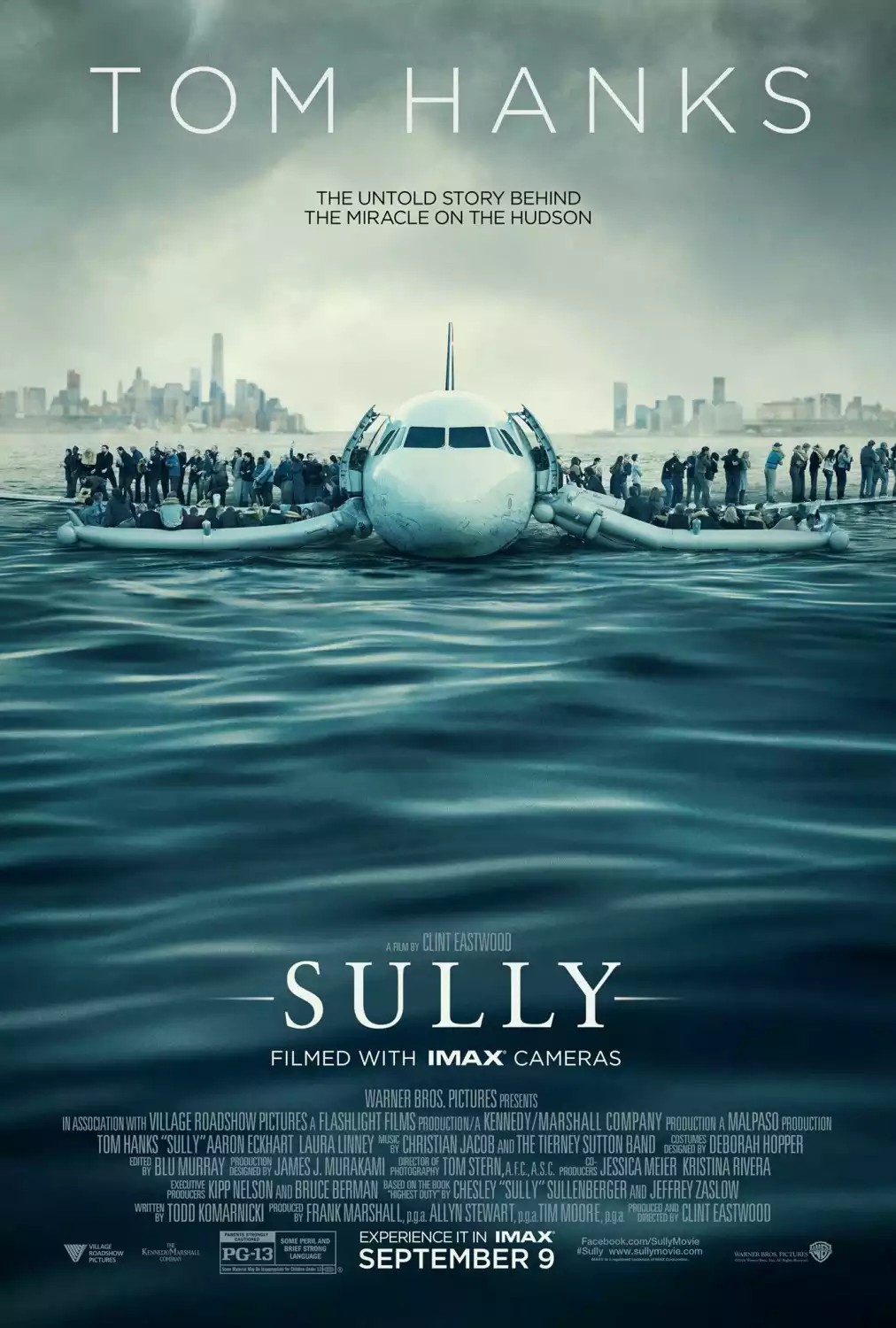
Directed by Clint Eastwood, Sully is a well-crafted movie that tells the amazing true story of the Miracle on the Hudson when Captain Chesley ‘Sully’ Sullenberger safely landed US Airways Flight 1549 on the Hudson River in New York City on January 15, 2009. With its relatively short runtime and attention to detail on what happened during and after the flight, the film feels more like a documentary. Much of the story takes place after the incident during the investigation when Captain Sullenberger, played by the always terrific Tom Hanks, is being questioned by the National Transportation Safety Board. The movie is particularly fascinating because it delves into largely unreported details of the bureaucratic aftermath of the miraculous water landing. It shows the various attempts of trying to recreate his actions on a flight simulator and the criticisms of what he did as a pilot despite the survival of all 155 passengers and crew members. The overly officious aviation officials take up the role of the archetypal bad guys while the audience cheers for Sully to be rightly recognized for his heroism. The film is particularly effective in dramatizing the actual incident and the realtime reactions of Sully and First Officer Jeffrey Skiles portrayed by Aaron Eckhart. Interspersed with the technical aspects of what happened, there are personal scenes of Sully having flashbacks and nightmares and emotional encounters with his family and total strangers praising him as a hero. The audience comes away with the feeling that Captain Sullenberger is a very humble man who feels the attention is not merited because he was simply doing his job. Overall, I found the film to be a particularly powerful case study of heroism and that the world, despite all of its problems, is full of amazing people and inspirational stories. It reminded me of the 2012 movie Flight because it also focused on the actions of a pilot saving many lives but also under the microscope of an investigation. However, in this case, Sully is unquestionably a moral man while Denzel Washington’s character is deeply flawed with substance abuse issues.
Snowden
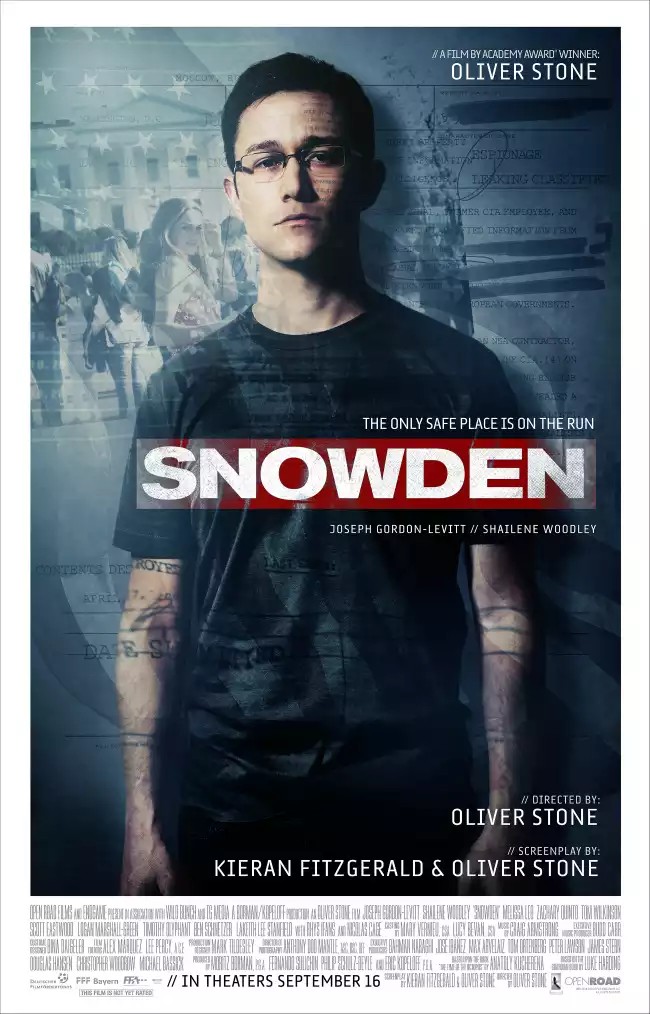
Directed by Oliver Stone, Snowden is a fascinating dramatization of the true life story of Edward Snowden and the largest leak in American intelligence history. Although obviously biased in favor of Snowden’s actions, the film is surprisingly less heavy-handed and controversial than what would be expected from such a famous provocateur as Oliver Stone. Much of the movie is a series of flashbacks to Snowden’s past during an interview with the journalists that publicized the damning allegations that he revealed about the US government in 2013. In fact, the interview was the basis for the 2014 Academy award-winning documentary Citizenfour. This film feels like another way to tell the all-too-familiar story, packaged as a gripping thriller about a complicated figure with a unusual background. Starting with his experience at bootcamp as an idealistic Army recruit, the movie chronicles Snowden’s progression through the CIA, NSA, and intelligence defense contractors. At the same time, the viewer is presented with a love story: the ups and downs of Snowden’s relationship with his long-time girlfriend Lindsay Mills played by Shailene Woodley. As a result, Oliver Stone tries to humanize the story in a way in which we can sympathize with Edward Snowden the human who struggles with his conscience and allegiance to his country. Joseph Gordon-Levitt is what makes the film really stand out with his terrifically realistic performance, complete with having an eerily similar voice as the real-life Edward Snowden. This authenticity becomes clear in the seamless transition to the actual Snowden appearing from an undisclosed location in Russia in the film’s stirring epilogue. Overall, I found the film to effectively present an intriguing intricate web of international espionage and the ethical implications of far-reaching surveillance. Unlike some of his other movies laden with conspiracy theories, Oliver Stone is on the side of proven facts, for the most part, and simply interprets the information in his uniquely creative way.
The Light Between Oceans
Based on the 2012 best-selling novel of the same name, The Light Between Oceans is a beautifully crafted period romance with an intriguing twist of drama. Set after World War I on the remote coast of Australia, the movie begins with the arrival of a new lighthouse keeper named Tom, superbly played by Oscar-nominated Michael Fassbender. Eventually, he falls in love with a daughter of local school headmaster named Isabel who is also brilliantly portrayed by last year’s supporting actress Oscar winner Alicia Vikander. After they get married, she moves with Tom to the lighthouse which is located on a small desolate island many miles away from the town. After a series of personal tragedies, Isabel is desperate to have a child. Unexpectedly, her wishe seems to come true when a young infant washes ashore still alive. The moral dilemma of whether or not to keep the child or tell authorities puts a strain on Tom’s and Isabel’s marriage. Several years later, the relationship undergoes even more significant stress when they discover that the mother of the child lives in the local town. The grieving mother and widow played by another Oscar winner Rachel Weisz has been told that her child and her husband were lost at sea. The movie is effectively able to convey the gut-wrenching agony of both biological and adoptive mothers coping with the loss of a child. The remote setting is perfectly encapsulated by breathtaking shots of turbulent seas and windswept vistas. In addition to the cinematography, the acting is what makes the movie special; the chemistry between Fassbender and Vikander feels very real so much so that the two actors started dating during filming. Overall, I found the film to be a first-rate period romance that had enough drama to make it interesting. It was greatly elevated by being an acting tour de force.