Pirates of the Caribbean: Dead Men Tell No Tales

The fifth film in the Hollywood Blockbuster movie series beginning with Pirates of the Caribbean: The Curse of the Black Pearl released in 2003, Pirates of the Caribbean: Dead Men Tell No Tales is an entertaining swashbuckling fantasy that ultimately suffers from being basically a retread of the previous films and not as fun and innovative as the original. The highlight of every Pirates of the Caribbean is Johnny Depp’s character Captain Jack Sparrow who is both charismatic and a buffoon that keeps audiences entertained. This film follows Henry who is the son of Will Turner, previously played by Orlando Bloom, and the beautiful Elizabeth Swann, previously played by Keira Knightley, as he embarks on an adventure to release his father from a curse by finding the mythical Trident of Poseidon. He is faced with daunting obstacles, especially after encountering the villainous undead Spanish Captain Salazar and his equally cursed crew. Salazar, played by Oscar-winner Javier Bardem, is also trying to find the Trident to break his spell and leaves a path of shipwrecks to enact revenge. At the same time, a young woman named Carina is imprisoned for witchcraft and eventually meets up with Henry and Jack, and they all escape after Carina tells them of a way to find the Trident of Poseidon. Also, Captain Barbossa, played by Oscar-winner Geoffrey Rush, is searching for Jack while Salazar pursues him and destroys much of Barbossa’s fleet. After eventually making a deal with Salazar, Barbossa switches allegiance to Jack, Henry, and Carina in hopes of finding the Trident. All of the film’s constant, almost excessive compared to the other movies, swashbuckling and high-speed and often explosive maritime chases across the Caribbean finally lead all of the characters to an island and an epic fantastical CGI-enhanced sea battle. Overall, I found it to be your typical summer blockbuster sequel that was an unnecessary addition to the already bloated Pirates of the Caribbean franchise; the originality is lost at sea, and it feels like the same movie as the others, even with the new young characters Henry and Carina appearing as look-alikes of Will and Elizabeth. 

Beauty and the Beast

Based on the beloved Disney animated feature released in 1991, Beauty and the Beast is a visually spectacular film that faithfully retains many of the same elements of the original, including being filled with recognizable songs and an enjoyable family friendly experience. As Disney has done for many of its famous animated classics, the movie is a live-action reinterpretation of a fairy tale about an unorthodox romance between a terrifyingly ugly beast, portrayed by Dan Stevens of Downton Abbey fame, and a beautiful young French country girl, played by Emma Watson of Harry Potter fame. Having not seeing the original in many years and not remembering it being a musical, the resulting adaptation remains very much a musical, which leads to an overall joyous and fun atmosphere, despite containing several dark and dramatic moments. Watson’s character Belle who is very attached to her father, played by Kevin Kline, finds herself a prisoner in the large and decrepit castle of the Beast who has been cursed for his prior life as a selfish and cruel prince and will remain a monster until he finds true love. To her surprise and eventual delight, Belle discovers that the entire castle is also enchanted and that many of the servants have been turned into previously inanimate objects, such as a sweet and motherly teapot voiced by Emma Thompson, an officious clock voiced by Ian McKellen, and a talkative candelabra voiced by Ewan McGregor. Assisted by CGI, the filmmakers did a terrific job of realistically bringing many of the characters to life and creating a visually arresting magical world, components essential to the animated version. The costumes and sets also really capture the setting of the French countryside in the late 1700s, albeit a glossed over and probably unrealistic depiction of real life at the time. Overall, I found it to be a rather good live-action remake of a now classic story that will surely delight fans of the original and other Disney animated movies, in addition to those simply looking for a light-hearted family flick.

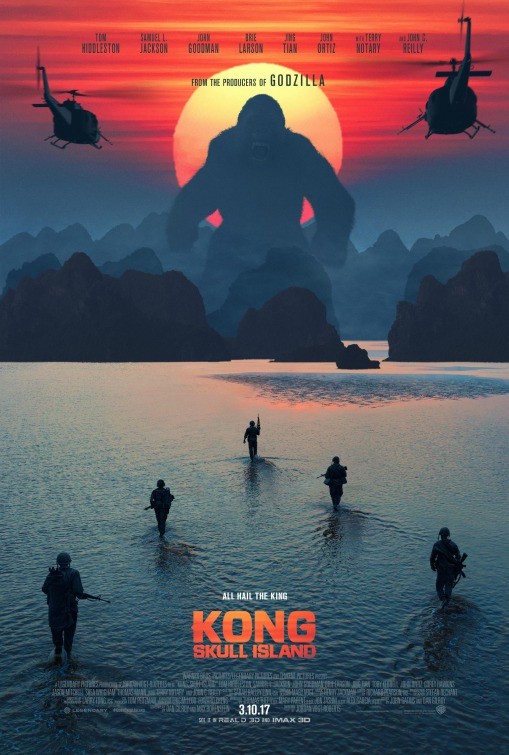
Kong: Skull Island

Part of a long line of films revolving around the classic monster King Kong who first appeared in 1933, Kong: Skull Island is a fun and stylish action-adventure flick that is unlike any other King Kong movie by being heavily influenced by the 1979 Vietnam-set film Apocalypse Now. John Goodman plays the director of a secretive government
organization investigating the supernatural who leads a group of researchers and Army personnel in 1973 to an unexplored island called Skull Island that may reveal unusual creatures. After their first encounter with King Kong, the expeditionary group gets
split up and must cross the mysteriously dangerous island to reach their helicopter rendezvous pickup point. The soldiers led by a gung-ho lieutenant colonel, played by Samuel L. Jackson, lean on their militaristic instincts and feel that Kong is a threat and must be eliminated with military force. On the other hand, the other group comprising of a mercenary and former officer in the British Special Air Service, played by Tom Hiddleston, and a young female photographer and pacifist, played by Oscar-winner Brie Larson, sympathize with Kong after realizing that he is the protector of the island and the human inhabitants that they encounter. The latter group are amazed to discover an American soldier, played by John C. Reilly, who has been stranded on the island since 1944 after crash landing his airplane towards the end of World War II. Similar to Marlon Brando’s elusive character who lives deep in the jungles of Vietnam with natives in Apocalypse Now, John C. Reilly’s character named Marlow has become the de facto leader
of the indigenous people and warns the newcomers of the dangers of Skull Island, particularly the sinister creatures known as the Skullcrawlers. Eventually, the militaristic group pull out all the stops, including napalm and other explosives, to try and kill Kong while the group that met up with Marlow try all their best to save Kong knowing his role as the island’s godlike protector. Overall, I found it to be an enjoyable moviegoing experience that provided all the cheap thrills and excitement from a typical
action movie involving monsters but went one step further by capturing the mood of the 1970’s and the Vietnam War in its striking resemblance to the classic Apocalypse Now.

A Monster Calls

Based on the best-selling 2011 book written by Patrick Ness after the death of writer Siobhan Dowd who came up with the original idea, A Monster Calls is an emotionally powerful movie that mixes a tragic story about human suffering and fantastical elements of allegory. The film follows Conor, a 12-year-old boy living in England who must cope with his single mother suffering from a terminal illness. Feeling extremely isolated at home and school where he is bullied, he is visited by a monster in the form of a tree who provides him an outlet for his difficult life. The monster, voiced by Liam Neeson, feels very much part of his vivid imagination and is inspired by his love for drawing creatures. The appearance of the friendly monster late at night serves as a coping mechanism for Conor as he is subjected to the unfathomable experience of watching his mother, portrayed by Oscar-nominated actress Felicity Jones, slowly die and without the constant presence of his father. Eventually, the monster forces him to rebell against his school bullies and his less-than-endearing grandmother, played by Sigourney Weaver. The filmmaker crafts an evocative, almost magical story by interspersing fantastical animated sequences that feel as if they jump off the pages of an artistic child’s notebook. It provides a visually spectacular experience that helps to underscore the deeply moving emotions of the suffering characters. Overall, I found it to be a wholly unique movie whose message is ultimately uplifting despite the fact that it can be best described as a tearjerker. The imagery is symbolic of the raw emotions of a child too young to have to go through such profound grief.

Fantastic Beasts and Where to Find Them

Written by J.K. Rowling, the author of the Harry Potter book series, Fantastic Beasts and Where to Find Them is the spiritual prequel to the hugely popular Harry Potter movie series but stands on its own as a technically marvelous cinematic experience about magic. It stars the Academy Award winner Eddie Redmayne as Newt Scamander, a British wizard who arrives in New York City in 1926 on his quest to discover and document the otherworldly magical creatures that live hidden in the human world. During a time when the so-called Magical Congress of the United States is attempting to neutralize threats from the wizardry world, Newt unwittingly befriends a desperate potential bakery owner named Jacob, a regular human without powers, known as a No-Maj. Jacob, rather comically, becomes Newt’s accomplice in trying to evade arrest from the powerful Magical Congress while becoming ensnared in a hunt for a malevolent force known as an Obscurus potentially destructive to all of mankind. Eventually, they also team up with a young woman trying to move up in the rankings at the Magical Congress and her beautiful young sister who can read minds. The special effects enhanced by CGI were beautifully crafted and help to create a highly imaginative world in which truly fantastical beasts look and feel real. The film was even more dazzling with its attention to detail and setting in the 1920’s, an era in American history marked by remarkable engineering achievements and a feeling of exuberance despite the Prohibition. The movie has one major drawback: it is sometimes overly complicated and uses lingo and concepts that may not be readily understood by nonreaders of the Harry Potter universe. Overall, it is an entertaining film full of technical wizardry and ripe with a vast array of characters and details that can be readily explored in future installments. It is an experience that will surely delight all the millions of Harry Potter fans in addition to casual viewers of fantasy.

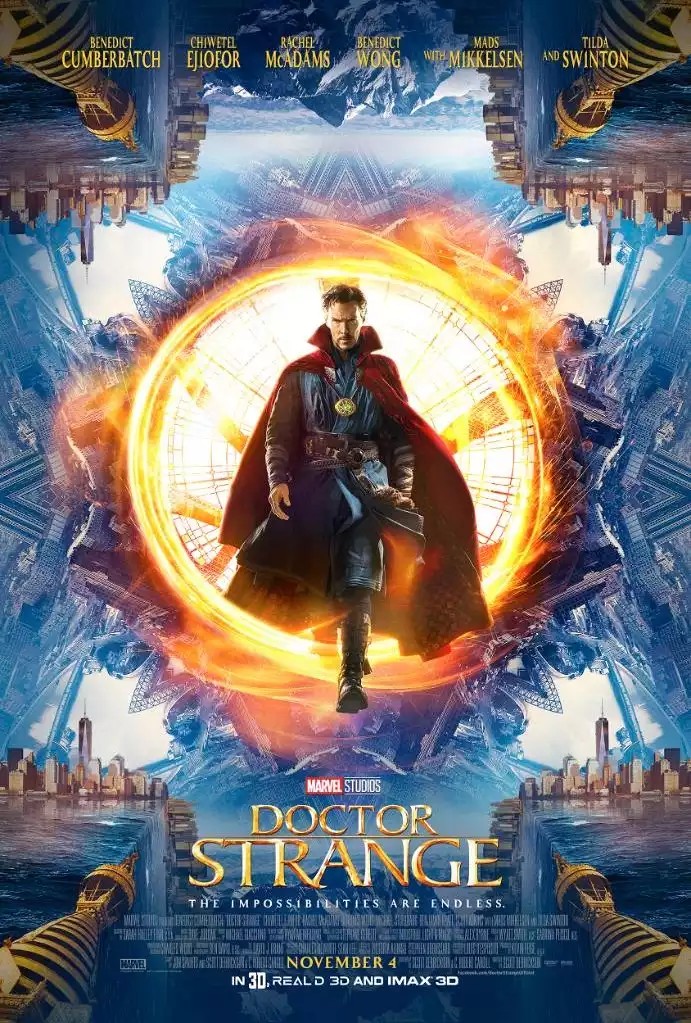
Doctor Strange

Yet another comic book-based installment in the seemingly endless Marvel Cinematic Universe, Doctor Strange is a entertaining film that takes a refreshingly new approach to the superhero genre by telling a rather peculiar story in a visually stunning fashion. The movie starts out as a typical comic book origin story in which the audience is shown how the protagonist originally attains his superpowers. We first meet the brilliant yet arrogant neurosurgeon Dr. Stephen Strange who goes along with his normal life until a fateful accident. Played by the talented British actor Benedict Cumberbatch, Doctor Strange becomes desperate after losing most function in his hands so vital to being a surgeon and sacrifices practically everything in order to find a medical solution. Nowhere else to turn, he ends up in Kathmandu, Nepal where he meets a mystical teacher known as the Ancient One who says he can be healed through the spiritual realm. He is taught ways to tap into his mind to unleash hidden supernatural powers by reading ancient texts and being mentored by the Ancient One, portrayed by the otherworldly looking Tilda Swinton, and her followers. Eventually, he is thrust into protecting Earth from a mysteriously malevolent dark power. He must help battle a devotee of this evil force who used to be a disciple of the Ancient One, a character played by the brilliantly creepy Mads Mikkelsen. As a novice sorcerer endowed with mystical powers, Doctor Strange finds himself in mind-bending fight sequences that defy the laws of physics. The filmmaker does a terrific job of creating visually arresting scenes that feel straight from M.C. Escher, where any sense of up or down is jumbled together. With its deeply spiritual undercurrent and heavy use of spectacular visual effects, the movie very much reminded me of Christopher Nolan’s 2010 film Inception. As a result of its unusual qualities, it is a radical departure from any other Marvel adaptation, which tend to be formulaic and more of the same. However, there are a few hallmarks of the more traditional Marvel movie: it includes a crossover of characters from the rest of the Marvel Cinematic Universe and the characters crack self-aware jokes. Overall, I found the film to be thoroughly enjoyable and filled with enough creativity for it to stand out from what has been expected in the innumerable superhero movies. There is no doubt that this will not be the last time we see Doctor Strange as the character’s strange storyline is ripe for a very lucrative movie franchise.

Miss Peregrine’s Home for Peculiar Children

Based on the 2011 young adult novel of the same name written by Ransom Riggs, Miss Peregrine’s Home for Peculiar Children is a visually well-crafted fantasy film about a group of children with magical and mysterious powers. It is directed by Tim Burton and has his trademark unique creativity that can border on the macabre. The plot follows Jack, played by Asa Butterfield, who tries to discover the true background of his grandfather, portrayed by Terence Stamp. It eventually leads him to a small isolated island off the coast of Wales and a home for orphaned children with unusual gifts. Jack realizes the orphanage run by Miss Peregrine, played by Eva Green, is trapped in an alternate universe set in 1943 on a certain day that is continuously repeated on a “loop.” Eventually, Jack is tasked with protecting the children from an evil secret group of beings who need to eat the eyes of Peculiar Children to become human. They are led by the creepy white-eyed Mr. Barron, depicted by Samuel L. Jackson, who also controls invisible creatures known as hollowgasts. Jack learns he is endowed with his own power making him particularly well suited to fight Mr. Barron’s forces. The movie is filled with many of the elements you would expect from Tim Burton, particularly nightmarish monsters that appear to come directly from his other films like The Nightmare Before Christmas. Overall, I found it to be a visually dazzling film that would appeal to any fan of Tim Burton but, for my taste, I thought it was a little too peculiar. At the beginning, it reminded me of my favorite Tim Burton movie Big Fish, with its story revolving around a aging character’s mysterious past leading the main protagonist on a fantastical adventure. I also found it probably to be a little too creepy for younger audiences, namely children under 10, one of the targeted demographics. 

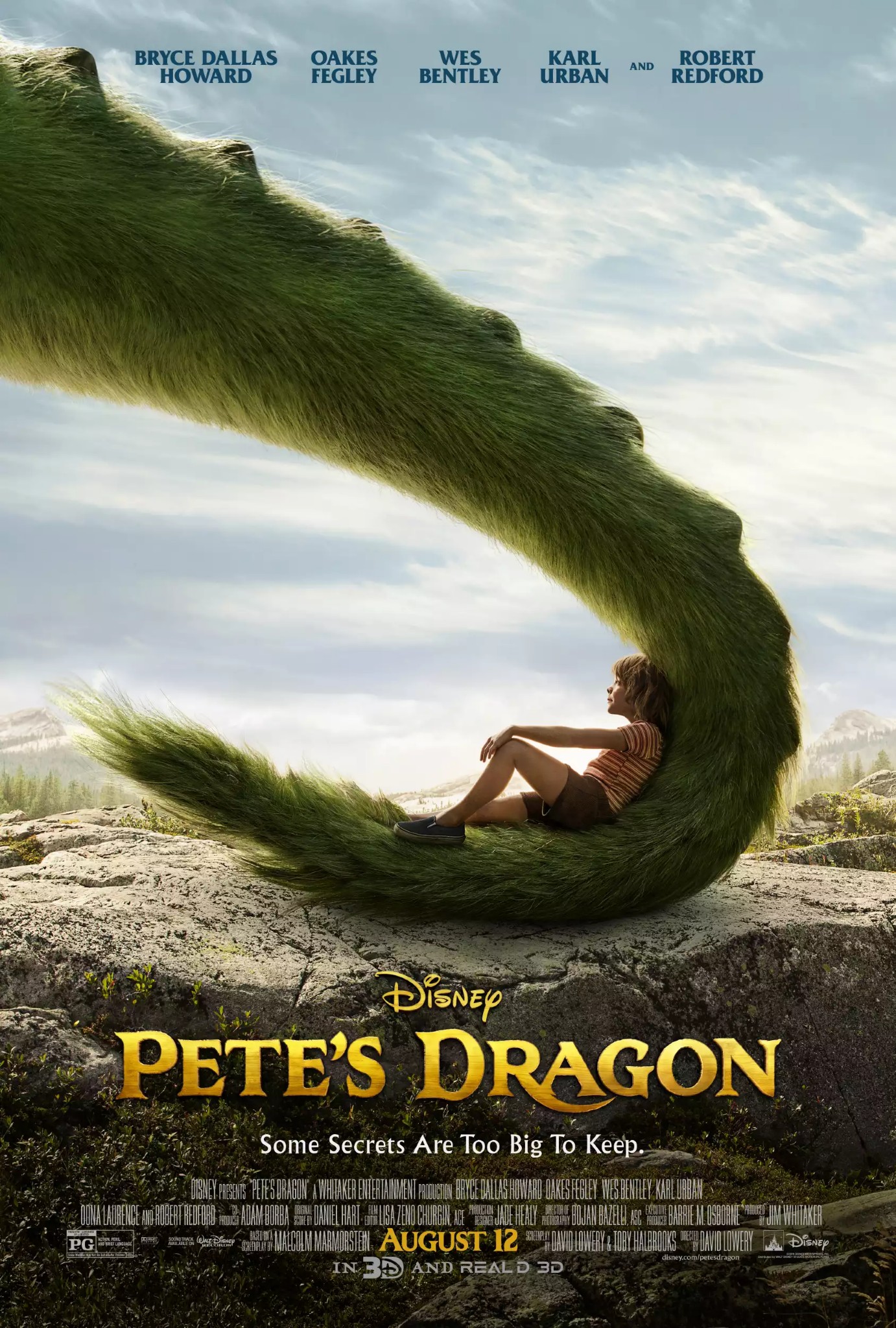
Pete’s Dragon

Based on the Disney animated movie of the same name released in 1977, Pete’s Dragon follows in the recent succession of Disney remaking classic animated movies into well-crafted live action films. The plot revolves around Pete who loses his parents in a car accident and is left alone in the forested wilderness where he survives with the help of a friendly dragon. The film takes place six years after the opening scene when Pete and eventually the dragon named Elliot are discovered by a crew of lumberjacks and a local park ranger played by Bryce Howard Dallas. Pete, portrayed by the terrific young actor Oakes Fegley, must figure out a way to live in civilization and away from the only companion that he has ever really known, a large furry green dragon that everyone believes is a figment of his imagination. The only true believer is the scruffy old outdoorsman played by Robert Redford who has been claiming for years that he saw a dragon in the woods. When Elliot is finally discovered, many of the lumberjacks and residents of the nearby Pacific Northwest town of Millhaven overreact and try to hunt him down as a threat. At the heart of the film is a charming and inspirational tale of overcoming personal tragedy and finding familial bonds with the most likely of people and, in this particular case, creatures. The film is not only a family story, but it is a particularly well-done movie marked by beautiful cinematography, an atmospheric soundtrack, and a great cast. The whole experience is tinged with nostalgia harking back to the original film and other family-friendly classics. In addition, the film has an undercurrent relevant to contemporary issues of environmentalism. It can be seen as an allegory for preserving nature as it is: the conflict between the timber industry and park ranger service, as well as whether to allow Elliot to live in his native wild habitat or be held in captivity like a zoo animal. Overall, I thought the movie was better than the original animated version due to its creative blending of wholesome adventure, magical whimsy, endearing charm, and important lessons about family and nature.

The BFG

Adapted from Roald Dahl’s children book of the same name written in 1982, The BFG is a cute family-friendly film about an orphan girl and a gentle giant. The film reunites director Steven Spielberg and Academy Award winning actor Mark Rylance who were both involved in 2015’s Bridge of Spies. Rylance plays the CGI-enhanced titular character BFG, which stands for big friendly giant. The movie begins at a London orphanage where Sophie is lonely and often wanders the hallways in the middle of the night. This one particular night she hears something stirring outside the window and is amazed to discover a literal giant roaming the streets. She is taken by him back to the magical Giant Land and his cave where he lives. Eventually, they develop a close friendship and Sophie helps him, who she affectionately calls BFG, to fight off nine bullying giants. With such whimsical names as Fleshlumpeater and Gizzardgulper, BFG also must protect Sophie from these giants who want her for food since they are human “bean” eaters. One of my favorite parts of the film is the humorous language spoken by BFG, a quaint combination of broken English and gibberish with such made-up words as crockadowndillies and scrumdiddlyumptious. Visually, the movie is marvelously well done: CGI was effective in creating a realistic illusion of giants while still retaining the actors’ recognizable facial features. By using live action with elements of CGI, the film’s ability to tell a uniquely fantastical story was greatly enhanced. The juxtaposition of an actual child actor playing Sophie with the realistically outsized BFG underscores the story’s lesson about friendship. People of all shapes and sizes and from all backgrounds who may normally be enemies can in fact develop close relationships. Quite simply, not all giants should be judged as scary human-eating creatures; BFG is the complete opposite of the sinister perception of a monster. Furthermore, it is about the power of dreams. BFG is a dreamcatcher who sneaks into the human-inhabited cities to capture children’s dreams and also has the power to give children either good or bad dreams. Beyond fostering simple dreams while sleeping, he is able to fulfill Sophie’s dream of leaving the orphanage and having a semblance of a family with BFG. Overall, I found the movie to be an adorable film that can be enjoyed by all in a family. Its fantasy style and hopeful storytelling reminded me of Martin Scorsese’s 2011 Hugo and the many iterations of Peter Pan.

Warcraft

image

Based on the massively popular video game series first released in 1994, Warcraft follows in a long line of epic fantasy films popularized by The Lord of the Rings series. It is your fairly typical 3D CGI-heavy film that involves humans and fantastical creatures known as orcs fighting over a magical land known as Azeroth. Although it attempts to dumb down the esoteric details of the Warcraft universe, the film feels like it is catered to the millions of role-playing gamers engrossed by Warcraft. The film even at times feels like a video game, with the overhead views of massive battlefields controlled by magic and specialized weapons and ending with a final Boss Level-like fight sequence. While the special effects are well done with an obviously big budget and the story has original fantasy elements, the movie will entice Warcraft gamers but overall does not contribute much to the fantasy genre. Audiences have gotten used to stunning CGI and may feel let down when there already is great fantasy storytelling with The Lord of the Rings and Game of Thrones.