Rules Don’t Apply

Directed by Academy Award-winning director Warren Beatty, Rules Don’t Apply is a light-hearted film presenting a glorified look into early Hollywood through a fictionalized romance between a starlet and driver in the employ of billionaire Howard Hughes. Set in 1950s and 1960s Hollywood, the story follows the young and religious Frank Forbes, portrayed by rising star Alden Ehrenreich, who moves to Los Angeles in hopes of getting a wealthy benefactor to finance a real estate project. As the driver for many young actresses under contract with Hughes’ movie studio, Forbes falls in love with one of these women, a young and naive actress named Marla, played by the fresh-faced Lily Collins. While this budding romance, strictly forbidden by their boss, surreptitiously unfolds, we witness the hilariously absurd behavior of the notoriously peculiar Howard Hughes, played by Warren Beatty in his first acting role in almost 15 years. Over the course of the movie, Forbes, along with another driver played by Matthew Broderick, becomes a close confidant to the obscenely wealthy business executive, aviator, and movie producer who is evidently plagued with a whole host of mental problems. Much of the film’s charm comes from the zany and often laughable antics of Hughes, whether it be ordering several hundred gallons of banana nut ice cream or hiding away in a hotel suite. At times, the plot seems to be all over the place and too reliant on poking fun of Hughes. Although it looks nice on camera and is filled with a wide range of Hollywood A-listers, the movie does not feel as polished and satisfying as some of Warren Beatty’s other works. It comes across as more of a piece of nostalgia harking back to the pinnacle of Beatty’s career as an international sex symbol in the 1960s and 1970s. It also seems like a platform for many famous actors and actresses to simply have the opportunity to cameo in a movie alongside such a highly respected figure as Warren Beatty. Overall, the film does contain entertaining moments that work as cheap laughs deriving from the quirky nature of Hughes, but it ultimately falls short of the high expectations set by the return of such a talent as Warren Beatty. It should not be treated as more than a superficially amusing comedy whose greatest asset is Beatty’s depiction of the exceptionally strange historical figure Howard Hughes.

Allied

Directed by Robert Zemeckis who is best known for the 1994 Academy Award-winning film Forrest Gump, Allied takes an unusual twist on the World War II-set Hollywood blockbuster by making it a predominantly romantic movie. The film starts in Nazi-controlled French Morocco in 1942 where we meet a Canadian intelligence officer, played by Brad Pitt, who is on a secret mission to assassinate a high-ranking German official. As part of his cover, he works closely with a beautiful French Resistance fighter, played by the Oscar-winning French actress Marion Cotillard. Eventually, they fall in love and get married after moving to London several months after their operation. Besides the constant bombardment of London from German bombers, the couple leads a rather normal life and even become parents to a daughter amidst an air raid. However, things begin to go awry after Pitt’s character is informed by his British military intelligence boss that his beloved wife may in fact be a Nazi spy. Extremely wary of what he is told about the woman he loves, he breaks protocol and decides to take matters into his own hands by personally uncovering the truth. Over the course of the movie, there are several thrilling scenes resembling a traditional war film, especially during their mission and the bombing of London, but, at its heart, it is a love story. Although with much higher stakes, it is essentially about times when one’s relationships are tested and who can one really trust when several allegiances overlap. Undoubtedly two good-looking people who are international superstars, Brad Pitt and Marion Cotillard lend the film a certain quality of sexiness, which makes their on-screen chemistry even more appealing. Overall, I found it to be an enjoyable cinematic experience that was surprisingly more of a romance than I expected from a movie about German spies at the height of World War II.

Hacksaw Ridge

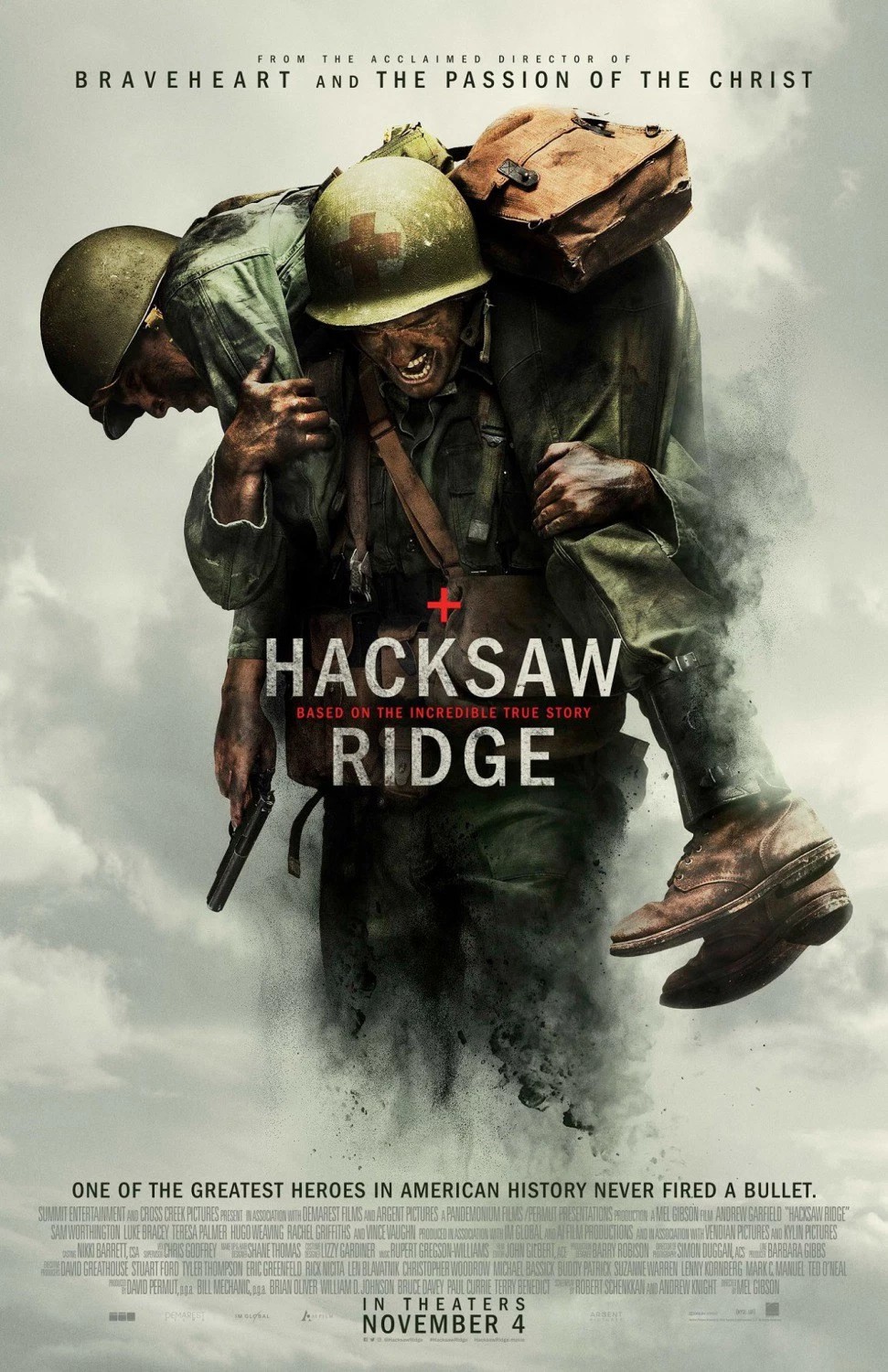
Directed by Mel Gibson in his first movie since 2006’s Apocalypto, Hacksaw Ridge is a tremendous World War II movie that is remarkable both for its brutally realistic depiction of war and powerful story of heroism. It is based on the true life story of Desmond Doss who served in the Pacific Theater as a combat medic and was distinct for refusing to carry a weapon of any sort. Growing up in a working-class family in Lynchburg, Virginia, Doss, portrayed by the baby-faced Andrew Garfield, had a difficult childhood but always maintained deeply-held religious convictions as a Seventh Day Adventist. The first part of the film is primarily focused on his life back at home before he enlisted in the army and includes his falling in love with a local nurse named Dorothy. It also revealed his often tense relationship with his drunk and abusive father, played by Hugo Weaving, who clearly suffers from post-traumatic stress as a World War I veteran. Although his faith taught him to be nonviolent, Doss enlisted in the military to serve the United States like his fellow countrymen and eventually was deployed with the 77th Infantry Division in 1944. However, while at boot camp where he meets his initially unsympathetic sergeant, played by Vince Vaughn, he is scorned by his fellow soldiers and commanding officers for his pacifist stance. Ultimately, he is granted conscientious objector status and allowed to serve as a medic without ever touching a rifle. The second part of the movie is much more gritty and does not hold back on showing the truly hellish parts of warfare. It follows Doss and his regiment in May 1945 as they attempt to take control of an area of the Japanese-controlled island of Okinawa, simply referred to as Hacksaw Ridge. At times, the very extended sequence of extremely graphic combat violence is difficult to watch but is very much necessary to underscore the horrific costs of war. Throughout such intense scenes, Desmond Doss is portrayed as the epitome of courage: he voluntarily goes in harm’s way to save as many lives as possible without a means of defending himself. He must literally rely on his fellow soldiers for his life and, in the process, develops an unbreakable bond of brotherhood. His heroism was richly rewarded when he became the first conscientious objector to receive the Congressional Medal of Honor from President Harry Truman. Overall, I found the film to be one of the best war movies made and the horrifically gruesome battle scenes reminded me of Saving Private Ryan. Besides simply presenting a skillful portrayal of warfare, it has a heartfelt message about courage and the struggle between a person’s conscience and patriotic duty. For all his personal flaws, Mel Gibson is finally back to form and gives us a film worthy of Braveheart.

Backdrop

Born in 1919 in Lynchburg, Virginia, Desmond Doss was drafted in April 1942 and worked in a naval shipyard in Newport News before serving as a combat medic in an infantry unit. Although he could have received a deferment as a conscientious objector, he was deployed with a rifle company in the 1st Battalion, 307th Infantry, 77th Infantry Division and sent to the Pacific Theater, first to Guam and the Philippines before eventually arriving on Okinawa in May 1945. He participated in taking the 350-foot high Maeda Escarpment, ominously referred to as Hacksaw Ridge, a heavily fortified part of the vitally important island of Okinawa. The three-month campaign collectively known as the Battle of Okinawa resulted in over 12,000 American deaths and more than 75,000 Japanese deaths on top of the upwards of 150,000 civilian casualties. Okinawa was only 340 miles off the Japanese Mainland and therefore could serve as a crucial air base for an Allied invasion.

During the course of the battle over the Ridge, Desmond Doss is estimated to have saved the lives of 75 soldiers, all without touching a single weapon or killing any Japanese. Throughout the war, he was injured at least three times and lost five ribs and a lung as a direct result of contracting tuberculosis on the island. He was also largely deaf for more than twelve years as a result of doctors accidentally giving him an overdose of antibiotics. Following the war, he spent five and a half years recuperating at various times in VA hospitals and was eventually discharged in 1951. He spent the remainder of his life primarily in Georgia and Alabama where he grew his own vegetables on a farm with his wife Dorothy who he was married to from 1942 until her death in 1991. In 1993, he married his second wife Frances and together until his death in 2006. He died in Piedmont, Alabama at the age of 87 due to respiratory complications associated with his tuberculosis. For his service, he was awarded the Congressional Medal of Honor on October 12th, 1945 by President Harry Truman, which made him the first conscientious objector to receive the honor and remains to this day only one of three to have ever received it.

The Light Between Oceans

Based on the 2012 best-selling novel of the same name, The Light Between Oceans is a beautifully crafted period romance with an intriguing twist of drama. Set after World War I on the remote coast of Australia, the movie begins with the arrival of a new lighthouse keeper named Tom, superbly played by Oscar-nominated Michael Fassbender. Eventually, he falls in love with a daughter of local school headmaster named Isabel who is also brilliantly portrayed by last year’s supporting actress Oscar winner Alicia Vikander. After they get married, she moves with Tom to the lighthouse which is located on a small desolate island many miles away from the town. After a series of personal tragedies, Isabel is desperate to have a child. Unexpectedly, her wishe seems to come true when a young infant washes ashore still alive. The moral dilemma of whether or not to keep the child or tell authorities puts a strain on Tom’s and Isabel’s marriage. Several years later, the relationship undergoes even more significant stress when they discover that the mother of the child lives in the local town. The grieving mother and widow played by another Oscar winner Rachel Weisz has been told that her child and her husband were lost at sea. The movie is effectively able to convey the gut-wrenching agony of both biological and adoptive mothers coping with the loss of a child. The remote setting is perfectly encapsulated by breathtaking shots of turbulent seas and windswept vistas. In addition to the cinematography, the acting is what makes the movie special; the chemistry between Fassbender and Vikander feels very real so much so that the two actors started dating during filming. Overall, I found the film to be a first-rate period romance that had enough drama to make it interesting. It was greatly elevated by being an acting tour de force.

Maggie’s Plan

image

Directed by Rebecca Miller, the daughter of famed playwright Arthur Miller and wife of Daniel Day-Lewis, Maggie’s Plan is the quintessential indie rom-com, reminiscent of a Woody Allen comedy. It stars Greta Gerwig as Maggie, an insecure control freak living in New York who decides to have a baby on her own in order to make up for her failed love life. As described by the film’s title, she wants her life to follow according to her exact plans. However, her set course in life is unexpectedly altered when she meets an anthropologist named John played by Ethan Hawke. Unhappily married to Julianne Moore’s character, a world-renowned Danish anthropologist at Columbia, John gets advice from Maggie about his new novel that he is struggling to write. Eventually, John, feeling underappreciated by his wife, and Maggie, grasping to a new love interest, begin a world wind romantic affair that ultimately leads to his divorce. Forced to take care of John and his children, Maggie does not feel in control of her life and so she develops a new plan. She confides in her close friends humorously played by Bill Hader and Maya Rudolph that she wants to reunite John with his ex-wife. Throughout the movie, the viewer is taken on an unusual journey marked by many elements of screwball comedy, including Maggie’s encounters with a “pickle entrepreneur.” A staple of independent comedies, Gerwig gives a nuanced and often very funny performance as a neurotic who absurdly tries to destroy her love life simply to completely control her life. Furthermore, Hawke and Moore help to round out the film with their witty depiction of academic intellectuals replete with occasional drama and charm. Evoking the movie’s screwball nature, many of the scenes are scored by the hallmarks of a Woody Allen comedy: the music sounds like old-time jazz that has a playful and energetic spirit. Overall, I would recommend the film to all fans of romantic comedies and those looking for a lively and smart independent comedy, making for an enjoyable time at the movies.

The Lobster

image

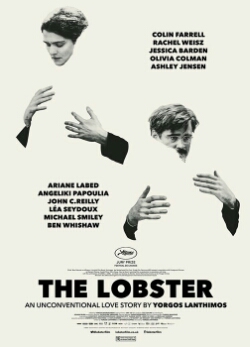
Winner of the Jury Prize at the prestigious Cannes Film Festival in 2015, The Lobster may be one of the strangest movies you’ll ever see and it’s definitely an acquired taste. It is an absurd, Kafkaesque film set in a dystopian world in which humans turn into animals if they do not find love. Colin Farrell plays a newcomer at a matchmaking resort known simply as the Hotel where guests must go through preposterous activities to find a mate within 45 days or be transformed into an animal of their choosing. Accompanied by his brother who has been turned into a dog, he encounters quite the characters portrayed by an impressive ensemble cast, including Olivia Colman, John C. Reilly, and Ben Whishaw. Eventually, Farrell’s character finds his true soulmate outside the confines of forced love at the Hotel. His love played by Rachel Weisz is a part of a group called the Loners that escaped the Hotel and harshly punish those making romantic gestures. The story’s ridiculousness is underscored by the intentionally stoic, unemotional performances from the actors. None of the characters bat an eye even amidst truly confounding situations and dialogue so ludicrous that the audience cannot help but laugh. The subtle comic undertones reinforce the film’s satirical and allegorical messages about the absurdities of modern romance. It suggests that love cannot be mandated and does not always conform to a strict pattern. The structure of the Hotel mimics online dating and the feeling that there is a time clock on when people should find romance and get married. Beyond the effective use of the bizarre to perpetuate satire, the cinematography is remarkable in its own right. The dreary yet naturally beautiful setting of the isolated Hotel and woods next to an alpine lake under an almost constant fog creates an eerie and mystical atmosphere. Also, the random appearance of exotic animals, representing those unable to find a partner, visualizes the absurdity of the film’s premise. The score with discordant music and sound effects further accentuates the movie’s unique tone. The creative use of all these elements fashion a film that blends the weirdness of Wes Anderson, Charlie Kaufman, and David Lynch. Overall, I felt the film to be a well-executed and biting satire so utterly strange that audiences will either love it or hate it. It is definitely something that may be more appealing to film snobs, critics, and filmmakers.

Love and Friendship

image

Adapted from Jane Austen’s posthumously published novella Lady Susan written around 1794, Love and Friendship is a well-crafted intellectual comedy set in 18th century England among the aristocracy. It follows the exploits of Lady Susan Vernon, marvelously played by Kate Beckinsale, after the death of her rich husband. Attempting to escape her insufferable status as a dependent widow, she unexpectedly visits her in-laws’ country estate. She uses witty and cunning charm to manipulate her way through high society and maintain status by marrying any eligible wealthy aristocrat. The language used throughout the film feels as if it comes directly from the pages of a Jane Austen novel, complete with flowery and hifalutin words. The quick back-and-forth banter filled with pithy remarks reminded me of something written by Aaron Sorkin. Along with highbrow comedy, the film effectively incorporates moments of hilarious silliness. The dim-witted well-off bachelor Sir James Martin played by Tom Bennett steals many scenes with his buffoonery, including his musings on the word Churchill and discovery of peas. As a quintessential British period piece, the movie is brimming with sumptuous costumes set amongst palatial country estates and London townhouses and scored by playful classical music. The film posits itself as a self-aware, almost satirical comedy about the frivolities of aristocratic society. For example, before the first scene, each character is introduced with their own descriptive subtitle, including Sir James Martin being labeled as “a bit of a ‘rattle.'” Overall, I would recommend the movie to all lovers of Jane Austen and those looking for a sophisticated yet whimsical period comedy.

The Meddler

image
Starring Susan Sarandon, The Meddler is best described as a cute independent film that delves into touching subject matter with a mixture of comedy and romance. The acting is top-notch with Susan Sarandon playing an overly meddlesome mother to her daughter played by Rose Byrne who is dealing with a recent heartbreak. Sarandon’s character is willing to help anyone while trying to deal with heartbreak of her own that she stubbornly refuses to confront. Her character eventually becomes romantically involved with the always superb JK Simmons who plays an endearing motorcycle-riding retired cop. The Meddler is a very good light-hearted film that provides the right material for its exceptional cast to display their comedic, romantic, and dramatic range of talent.