Beatriz at Dinner

A particularly relevant story during such a time of political divisiveness, Beatriz at Dinner is an incisive dark comedy with important social commentary about social class and income inequality problems facing contemporary America. Played by the Mexican actress Salma Hayek in a terrific performance, Beatriz is a humble and kind-hearted Mexican immigrant who works as a holistic healer and masseuse for cancer patients and wealthy clients like the characters Cathy and Grant. After a session with Cathy at her and her husband Grant’s palatial mansion in upscale Orange County, Beatriz’s car breaks down and Cathy offers her to stay for a dinner party while she waits for her ride. Eventually, two other couples whose husbands have business interests with Grant arrive and practically ignore Beatriz’s presence, which leaves her in a very awkward position. However, she becomes vocally appalled by one of the guests, Doug Strutt who is played brilliantly by John Lithgow and is an extremely wealthy real estate tycoon with questionable legal and ethical practices. After learning more about what he actually does, Beatriz, who comes from a poor Mexican Village and exudes positivity, argues with Doug and berates him for his smug contempt and sheer meanness in his misguided pursuit of wealth at all costs. She is particularly disgusted by his showing off to the dinner guests of hunting a large animal on a recent African safari. You also get the sense that the hosts and the rest of the guests are out-of-touch with the real world because they talk about petty things and the accumulation of wealth rather than expressing sincere personal emotion and passion for taking care of others like Beatriz. The film in the form of Doug’s character eerily reminds the viewer of Donald Trump who, like Doug, is a brash real estate billionaire on his third wife. Overall, I found it to be a remarkable movie that touches on so many of today’s important societal issues in a fascinating fashion by recreating a supposedly simple dinner party through the eyes of an “outsider.”

All Eyez on Me

Based on the true story of one of the most famous rappers, All Eyez on Me is a mediocre biopic that tells the story of revolutionary rap star Tupac Shakur through his struggles as a poor black youth living in the projects to his eventual rise to fame. Played by newcomer Demetrius Shipp Jr. who has an uncanny resemblance to the real Tupac, Tupac bounces around public housing in New York, Baltimore, and Oakland with his siblings and single mother who was a prominent member of the Black Panthers. After writing lyrics for himself, he debuts as a nationally recognized rapper in the early 1990’s, especially after signing and releasing his first albums with Interscope Records. Eventually, he joins Death Row Records run by controversial rap mogul Suge Knight who helped kickstart the massively popular group N.W.A. At the time, he is hailed as the next great gangsta rap star and rapidly becomes rich while also becoming the target of rival rappers, particularly the East Coast-based The Notorious B.I.G. Despite his success, he runs into legal trouble several times and is shot on one occasion at least five times before his early death. Tragically, in September 1996 at the age of 25, he is gunned down in the streets of Las Vegas in a car driven by Suge Knight. To this day, his murder remains unsolved. Even after his untimely death, his estate has released at least five posthumous albums, and he has sold over 75 million albums as of 2007, ranking him as the second best-selling rap and hip-hop artist in history. Overall, I found the movie to take an occasionally interesting look at arguably the greatest rap icon, but I came away disappointed in the overly confusing and rushed plot line that did not really delve deep into Tupac’s fascinating life story. Although lacking the high-quality script and powerful acting performances, the movie reminded me of the terrific 2015 film Straight Outta Compton about N.W.A. with its biographical depiction of an equally significant rap group and their rise to fame.

Megan Levey

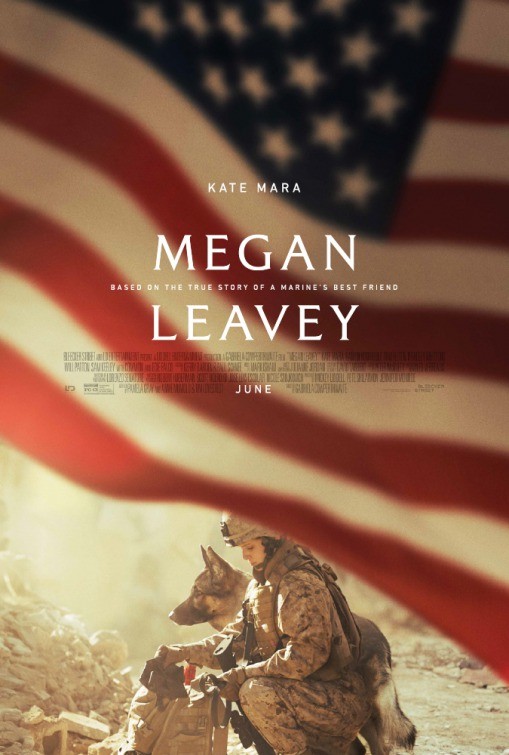
Based on an inspirational true story, Megan Leavey is a well-crafted and emotionally powerful movie about war in addition to the bond between humans and animals. In a sublime performance filled with raw emotion, Kate Mara of House of Cards fame plays Megan Leavey, a troubled young woman who decides to join the United States Marine Corps as a way to escape her life. During her time training at Camp Pendleton outside San Diego, she desperately wants to become a Military Police K-9 handler. Eventually, she becomes a corporal and is paired with a difficult-to-control bomb-sniffing military working dog named Rex. Never really having bonded with anyone in her hardship-filled life, Megan quickly develops a close kinship with Rex, especially when they are deployed into combat in war-torn Iraq. First serving in Fallujah in 2005 then Ramadi in 2006, she, as a woman not allowed in combat, and her best friend Rex are mostly posted at checkpoints looking for IEDs (improvised explosive devices) that were wounding and killing so many American and Coalition troops. Everything changes when out on a rare mission outside Ramadi, an IED explodes and injures Megan and Rex. While recovering from her wounds and battling depression caused by PTSD, she is heartbroken to learn that Rex is returning to combat with a different handler and will be labeled unadoptable after his deployment and retirement. Herself retired from the Marines, she fights with her superiors to be able to adopt Rex as her own dog and even finds herself profiled in the media and appealing to Senator Chuck Schumer for support. Megan’s dogged determination shows just how important the human bond can be with animals; she is only able to effectively cope with her PTSD by being with Rex and Rex seems to only be happy with her. The film also shows the emotional impact that war has on people and the chronic PTSD problem among a large portion of war veterans. Overall, I found it to be an excellent movie, complete with a terrific performance from Kate Mara, about the horrors of war that also had a hopeful message about the important relationship between humans and animals. Additionally, I thought the film did an excellent job of shedding light on the mostly overlooked work of military combat dogs and how vital they are to protecting and saving so many soldiers lives.

The Mummy

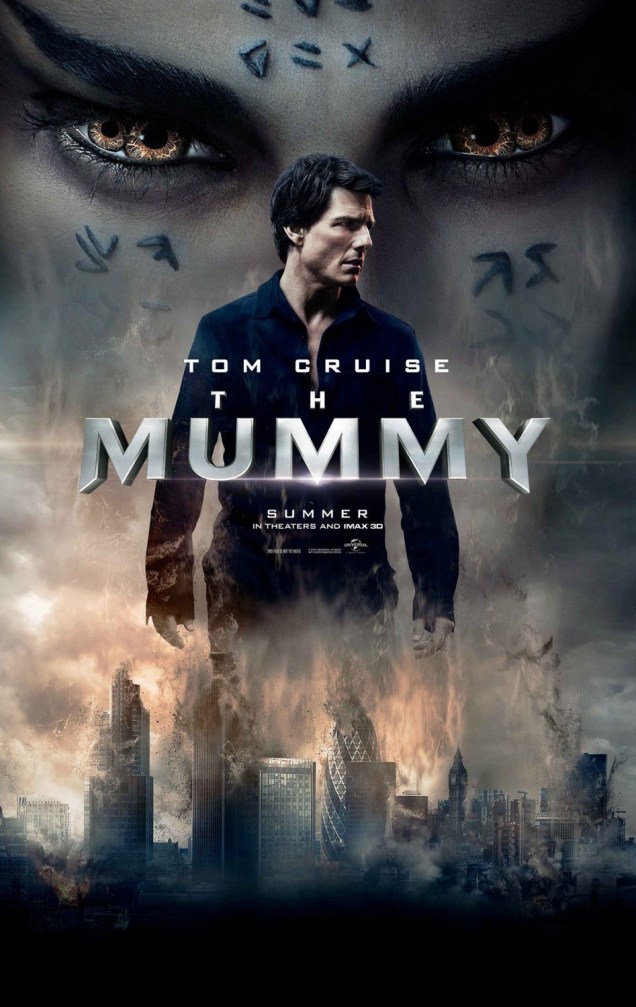
A reboot of three different franchise series beginning in 1932, The Mummy is a fairly average Hollywood summer blockbuster action adventure monster flick that simply seems to be a money-making vehicle for the action superstar Tom Cruise. Tom Cruise portrays Nick Morton, a treasure hunter and mercenary for the U.S. Army, who, along with his wisecracking partner Chris Vail, played by comedian Jake Johnson, discover a large mysteriously secret Egyptian tomb in present-day Iraq. They soon realize with the help of the young and beautiful archaeologist Jenny Halsey, played by British actress Annabelle Wallis, that the mummy is a cursed Egyptian princess named Ahmanet, played by Algerian actress Sofia Boutella, who comes to life to make a pact with the evil Egyptian god Set. Morton finds himself possessed by the malevolent undead mummy princess and as a result survives a horrific plane crash in England with the sarcophagus. After battling reanimated corpses under Ahmanet’s spell, Morton and Jenny meet up with Dr. Henry Jekyll, played by Russell Crowe, who runs a secret organization known as Prodigium with the purpose of hunting down and destroying evil and supernatural forces. The organization’s soldiers are able to trap and keep Ahmanet prisoner in their underground base in London. However, her supernatural powers allow her to escape and wreak havoc on London with a dramatic CGI-enhanced sandstorm and creation of an undead army. At the end of the movie, Morton makes a drastic sacrifice in order to save Jenny and prevent Ahmanet’s further reign of terror. Overall, I found the so-called horror sequences not so scary and rather cheesy, and the film was less of an entertaining thrill ride like the most recent series starring Brendan Fraser that started in 1999. Its lackluster quality as a movie that did not really need to be rebooted and poor reception among critics and audiences is not a good starting point for Universal’s new Dark Universe movie series that wants to bring back the classic horror monsters.

An Inconvenient Sequel: Truth to Power

A follow-up to the 2006 Academy Award-winning documentary An Inconvenient Truth, An Inconvenient Sequel: Truth to Power is a profound environmental documentary that resonates particularly well now with the current politically divisive debate over global climate change policy. Like the original, it follows former Vice President Al Gore as he sounds the alarm on the increasingly dire effects of global warming largely caused by industrial and energy production pollution. The cameras film Gore as he travels the world giving his famous slideshow about global warming to various climate leadership forums. He also refutes his critics, who say he is exaggerating what’s happening to the Earth, by outlining empirical evidence and actually traveling to Greenland to show the rapidly melting glaciers. In an especially provocative scene, his claim in the original documentary that the World Trade Center site could be flooded in the near future, a statement many critics laughed off, is unfortunately proven true when Superstorm Sandy in 2012 floods the construction site at the new World Trade Center. Much of the movie revolves around the surprisingly riveting and complicated negotiations of the landmark Paris Climate Accord in 2015. For instance, Gore personally deals with the hesitancy of the Indian government who are still relying on dirty energy sources as a result of financial constraints. Eventually, a record deal, in which 195 countries agreed to help reduce carbon emissions and stabilize global temperatures, was reached in April 2015 in Paris. Since I saw an early screening of the film, it did not include the recent decision of the Trump Administration to withdraw from the Paris Climate Accord. With huge implications for the United States and the world as a whole, this dramatic development has forced the filmmakers to work on a new version of the documentary by fully re-editing the film’s cautiously optimistic conclusion about global warming. Overall, I found it to be important movie that sheds more light on the serious issues surrounding global warming and makes the new political developments much more worrisome.

Churchill

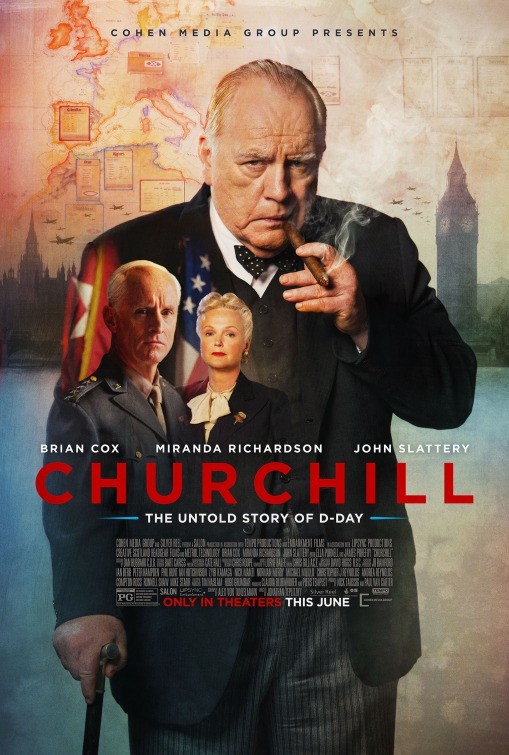
Based on the true story of one of the most pivotal moments in Winston Churchill’s life, Churchill tells a fascinating chapter of World War II history and is marked by a terrific acting performance from Brian Cox, but the movie’s impact ultimately falls short and feels more like a low budget TV movie. The film follows the larger-than-life British Prime Minister Winston Churchill, played by the great Scottish actor Brian Cox, during the lead up to the massive invasion of Normandy, France on D-Day. We witness the pivotal days before June 6, 1944 through the eyes of the war-weary Churchill who is opposed to the plan because it reminds him of his fateful decision during World War I at the Battle of Gallipoli that led to thousands of Allied deaths and an embarrassing defeat. The stubborn and strong-willed political leader butts heads with the military leaders, including the Supreme Commander of the Allied Expeditionary Forces in Europe, U.S. General Dwight D. Eisenhower who is played by John Slattery of Mad Men fame, and British Field Marshal Bernard Law Montgomery. For such dramatic decision-making that turns the tide of the war, the movie never really builds up enough tension and is hampered by the stilted performances of the supporting cast. Much of the film wallows in the despair of Churchill who, at times, is unresponsive and must be encouraged by his emotional backbone, his wife Clementine Churchill who is played by Miranda Richardson. I was most fascinated by the deep depression that Churchill experienced and his resistance to such a bold action as D-Day, both surprising aspects for a great leader famous for his power and resiliency. Overall, I was disappointed by the less-than-stellar and oftentimes convoluted writing and narrative structure of the movie, which had so much potential. The remarkable story of an unexplored area of such a consequential man as Winston Churchill and his role during World War II deserved a better cinematic treatment.

The Wedding Plan

An Israeli film with dialogue spoken in Hebrew, The Wedding Plan is a romantic comedy that is able to transcend the genre by providing a unique and creative twist and a charismatic performance by the lead actress. Michal, portrayed by the Israeli actress Noa Koler, is an Orthodox Jewish woman in her early thirties who is finally about to get married after so many desperate years but encounters a serious problem a month before the wedding when her husband calls it off. Adamant to not be single, she decides to leave her fate up to God by continuing to plan to get married on the day that was she was supposed to have her wedding. Despite the urging of her mother and sister not to go ahead with the quite unusual plan, Michal keeps the wedding hall booking in Jerusalem even though she does not have a groom because she has full faith that God will provide her a suitable match in time. Her outlandish decision leads to several comic moments as she employees two Jewish matchmakers who set her up on several blind dates with some fairly unusual men. At one point during the movie, she takes a pilgrimage to Ukraine at the tomb of a famous rabbi where she runs into a dreamy yet unsuitable famous Israeli pop star who eventually falls in love with her. Her family becomes increasingly nervous as the day approaches, but Michal remains confident that everything will work out due to her fervent religiosity. On the day of her planned wedding, the 200 invited guests, along with a now very nervous Michal, awkwardly wait and see if a man will show up to marry her. Everyone is eventually greeted with an unexpected surprise that makes the festivities possible. Overall, I found it to be an interesting and sometimes funny film that mixes religion and romance in unorthodox fashion and showcases the acting performance of an actress who must portray a sometimes contradictory and overly zealous character. 

Paris Can Wait

Written and directed by first-time feature filmmaker Eleanor Coppola who is married to Academy Award-winning director Francis Ford Coppola, Paris Can Wait is a light-hearted romantic comedy that takes the audience on a frivolous yet pleasant journey through the beautiful French countryside. Diane Lane plays Anne who is married to an aloof successful movie producer, played by Alec Baldwin, and unexpectedly takes a two-day road trip from Cannes to Paris with her husband’s suave and charming French associate. Jacques, played by the French actor Arnaud Viard, is an easy-going debonair aficionado of fine wine, food, and art who takes Anne on a wonderfully scenic tour of his favorite parts of France and stops at exquisite restaurants and quintessentially French landmarks. Initially, she wants to get to Paris as soon as possible and feels awkward participating in such romantic activities with a flirtatious bachelor while she is married. Over the course of the film, she welcomes Jacques’ suggestions after realizing that the trip provides a much-needed distraction from her secretly unhappy life and largely unfulfilled marriage with her busy husband, a typical Alec Baldwin character. The movie reminds me of several other Diane Lane movies, particularly 2003’s Under the Tuscan Sun in which she leads a carefree existence in a beautiful foreign country. Overall, I found it to be a pleasing film full of joy and beauty that provides a welcome respite to the viewer’s dull daily life; it is a nice little movie that should not be taken too seriously. 

Wonder Woman

Directed by the first female director of a superhero film with a female protagonist, Wonder Woman is one of the better comic book superhero movies that I have seen because it effectively blends action, humor, and drama, all underscored by a unique feminist approach. We first meet Diana, later known as Wonder Woman and played by the beautiful and strong Israeli actress Gal Gadot, as she grows up on the mystical island of Themyscira, which is home to the female warriors the Amazons, and begs her mother Queen Hippolyta to train as an Amazonian warrior. Her aunt General Antiope considered the greatest fighter, played by Robin Wright, secretly trains Diana to become one of the best warriors on the island. Throughout the first part of the film, we learn the back story based on ancient Greek mythology of the Amazons: they are a group of strong females created by Zeus to protect humanity against Ares, the god of war who murdered all of the gods except Zeus, and his corrupting influence on mankind to engage in war. Suddenly Diana’s idyllic life changes after she rescues Steve Trevor, played by the charismatic Chris Pine, who is an American pilot spying for the British whose airplane crashes off the coast of Themyscira. Eventually, Diana travels with Steve to help bring World War I to a peaceful end and prevent the use of a new deadly chemical weapon developed by the evil female scientist Doctor Maru, also known as Doctor Poison, under the guidance of the equally villainous German General Erich Ludendorff, played by Danny Huston. When Diana first arrives in London, the movie becomes more of a funny fish out of water story as she tries to understand feminine fashion and that she cannot carry a sword and shield out in public. Eventually, Diana and Steve along with Steve’s hodgepodge team, including Sameer the North African spy, Charlie the drunk Scottish marksman, and Chief the Native American smuggler, make their way to the Western front in Belgium in hopes of discovering Ludendorff’s weapons factory. In an unusual twist for the superhero genre, Diana is the one with super-strength and superhero powers who helps the male protagonists complete their mission and kill most of the bad guys. At times, Steve and other men are shocked and somewhat embarrassed when they see Diana outmaneuver and outfight them. The film ends with Diana facing an unlikely enemy and losing a newly loved one, but, otherwise, she successfully completes her mission to save human lives. Overall, I found the movie to lend a greatly refreshing take on the wildly successful yet male-dominated superhero genre by creating a strong-willed feminist superhero who can take down the bad guys herself without male intervention. The filmmaker is able to avoid the pitfalls of many recent DC Comics movies and craft a greatly entertaining action hero film, complete with realistic World War I settings and explosive CGI effects while subtly relaying a message of female empowerment and equality for Hollywood and beyond.

Pirates of the Caribbean: Dead Men Tell No Tales

The fifth film in the Hollywood Blockbuster movie series beginning with Pirates of the Caribbean: The Curse of the Black Pearl released in 2003, Pirates of the Caribbean: Dead Men Tell No Tales is an entertaining swashbuckling fantasy that ultimately suffers from being basically a retread of the previous films and not as fun and innovative as the original. The highlight of every Pirates of the Caribbean is Johnny Depp’s character Captain Jack Sparrow who is both charismatic and a buffoon that keeps audiences entertained. This film follows Henry who is the son of Will Turner, previously played by Orlando Bloom, and the beautiful Elizabeth Swann, previously played by Keira Knightley, as he embarks on an adventure to release his father from a curse by finding the mythical Trident of Poseidon. He is faced with daunting obstacles, especially after encountering the villainous undead Spanish Captain Salazar and his equally cursed crew. Salazar, played by Oscar-winner Javier Bardem, is also trying to find the Trident to break his spell and leaves a path of shipwrecks to enact revenge. At the same time, a young woman named Carina is imprisoned for witchcraft and eventually meets up with Henry and Jack, and they all escape after Carina tells them of a way to find the Trident of Poseidon. Also, Captain Barbossa, played by Oscar-winner Geoffrey Rush, is searching for Jack while Salazar pursues him and destroys much of Barbossa’s fleet. After eventually making a deal with Salazar, Barbossa switches allegiance to Jack, Henry, and Carina in hopes of finding the Trident. All of the film’s constant, almost excessive compared to the other movies, swashbuckling and high-speed and often explosive maritime chases across the Caribbean finally lead all of the characters to an island and an epic fantastical CGI-enhanced sea battle. Overall, I found it to be your typical summer blockbuster sequel that was an unnecessary addition to the already bloated Pirates of the Caribbean franchise; the originality is lost at sea, and it feels like the same movie as the others, even with the new young characters Henry and Carina appearing as look-alikes of Will and Elizabeth.