Directed by Rebecca Miller, the daughter of famed playwright Arthur Miller and wife of Daniel Day-Lewis, Maggie’s Plan is the quintessential indie rom-com, reminiscent of a Woody Allen comedy. It stars Greta Gerwig as Maggie, an insecure control freak living in New York who decides to have a baby on her own in order to make up for her failed love life. As described by the film’s title, she wants her life to follow according to her exact plans. However, her set course in life is unexpectedly altered when she meets an anthropologist named John played by Ethan Hawke. Unhappily married to Julianne Moore’s character, a world-renowned Danish anthropologist at Columbia, John gets advice from Maggie about his new novel that he is struggling to write. Eventually, John, feeling underappreciated by his wife, and Maggie, grasping to a new love interest, begin a world wind romantic affair that ultimately leads to his divorce. Forced to take care of John and his children, Maggie does not feel in control of her life and so she develops a new plan. She confides in her close friends humorously played by Bill Hader and Maya Rudolph that she wants to reunite John with his ex-wife. Throughout the movie, the viewer is taken on an unusual journey marked by many elements of screwball comedy, including Maggie’s encounters with a “pickle entrepreneur.” A staple of independent comedies, Gerwig gives a nuanced and often very funny performance as a neurotic who absurdly tries to destroy her love life simply to completely control her life. Furthermore, Hawke and Moore help to round out the film with their witty depiction of academic intellectuals replete with occasional drama and charm. Evoking the movie’s screwball nature, many of the scenes are scored by the hallmarks of a Woody Allen comedy: the music sounds like old-time jazz that has a playful and energetic spirit. Overall, I would recommend the film to all fans of romantic comedies and those looking for a lively and smart independent comedy, making for an enjoyable time at the movies.
Author: Keith Young
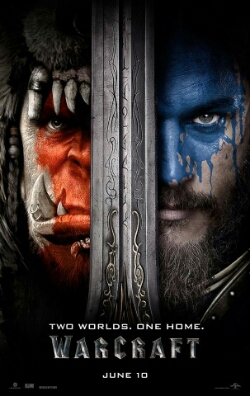
Warcraft
Based on the massively popular video game series first released in 1994, Warcraft follows in a long line of epic fantasy films popularized by The Lord of the Rings series. It is your fairly typical 3D CGI-heavy film that involves humans and fantastical creatures known as orcs fighting over a magical land known as Azeroth. Although it attempts to dumb down the esoteric details of the Warcraft universe, the film feels like it is catered to the millions of role-playing gamers engrossed by Warcraft. The film even at times feels like a video game, with the overhead views of massive battlefields controlled by magic and specialized weapons and ending with a final Boss Level-like fight sequence. While the special effects are well done with an obviously big budget and the story has original fantasy elements, the movie will entice Warcraft gamers but overall does not contribute much to the fantasy genre. Audiences have gotten used to stunning CGI and may feel let down when there already is great fantasy storytelling with The Lord of the Rings and Game of Thrones.
The Idol
Based on a true story, The Idol is a Palestinian film that tells the inspiring tale of Mohammed Assaf played by the Arab-Israeli actor Tawfeek Barhom. He overcomes the struggles of being a Palestinian living in the squalor of Gaza to become an international popstar after winning the second season of Arab Idol in 2013. The first half of the movie follows Assaf as a child when he forms a small music group with his sister and two close friends. Although pop music is frowned upon in their largely conservative society more concerned with survival, Assaf’s childhood band scrapes together whatever they can to follow their passion of playing music. Assaf perseveres to pursue a better life even in the midst of personal tragedy, poverty, and the threat of war. The movie’s second half fast-forwards to Assaf’s late teens and early twenties when he realizes that the new music competition television show Arab Idol, a recent offshoot of American Idol, may lead to his musical breakthrough. However, he discovers that as a Palestinian it will not be easy to even simply audition like other contestants. The harsh realities of Gaza are powerfully represented by the film juxtaposing bombed-out buildings and other images of decades-long warfare against the modern and glitzy television show. The rise of Assaf who eventually captures the hearts of all Palestinians against all odds is a potent message of inspiration. By following one Palestinian’s journey, the movie humanizes the tragic and complicated circumstances of the Middle East in a politically subtle yet evocative manner. It tells a remarkably uplifting story of how hope and perseverance can prevail over adversity and help fulfill one’s dreams. Overall, the film feels like a Palestinian version of Slumdog Millionaire, with its similar plot of an impoverished young man navigating the obstacles of a largely hostile environment to achieve fame through a television contest.
Popstar
Produced by Judd Apatow, Popstar is surprisingly an often hilarious comedy that can be best described as This Is Spinal Tap for the modern generation. Like This Is Spinal and Christopher Guest films, the movie is a mockumentary following behind the scenes of a world famous popstar. The intent is to parody the music and entertainment industries. The film is the brainchild of comedy trio The Lonely Island whose satirical music videos have been featured as digital shorts on Saturday Night Live. Andy Samberg, the group’s leading member and a Saturday Night Live alumnus, plays a popstar going by the ridiculous stage name Connor4Real. Connor is about to release the second album of his solo career after leaving the pop group formed with his childhood friends known as Style Boyz. Samberg’s over-the-top character is an exaggerated combination of Justin Bieber’s recklessness, Justin Timberlake’s stardom, and Kanye West’s egotism. Giving it a feel of a real documentary, several famous musicians, music producers, and other celebrities discuss Connor’s music career in a very much tongue-in-cheek fashion. There is even a cameo from Justin Timberlake who is mercilessly parodied throughout the film. Through a series of scenes resembling comic sketches, Connor and his entourage are involved in very silly and preposterous antics. The lyrics and dance moves for the songs are incoherently ridiculous, obvious allusions to hyper-sexualized language, twerking, and other aspects of contemporary pop music. The plot also follows a very formulaic story arc: a star rises from obscurity with his childhood bandmates, enjoys fame and success with the band, goes on a solo career with mixed results, and finally redeems himself. Despite my rather low expectations, the movie is a very funny guilty pleasure that successfully employs the mockumentary format to poke fun at the entertainment industry and our preoccupation with fame.
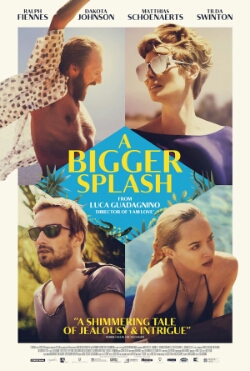
A Bigger Splash
Based on the 1969 French film La Piscine, A Bigger Splash is a very sensual drama that evolves into a slow-burn thriller full of seduction and deception. Tilda Swinton plays a famous David Bowie-esque rock star named Marianne recuperating from a throat surgery with her younger boyfriend Paul played by Matthias Schoenaerts on the Italian island of Pantelleria. Their tranquility is unexpectedly interrupted by the arrival of Marianne’s former lover Harry portrayed by Ralph Fiennes and beautiful young daughter Penelope portrayed by Dakota Johnson. What follows is a clash of personalities and love interests that starts amicably on the surface but eventually descends into darkness. A quintessential player with intoxicating energy and mischief, Harry stirs up the past, visualized through the film’s flashbacks to his troubled romance with Marianne. His intentions and reason for being there is left murky for much of the film. Further complicating things is Penelope, a Lolita-type character, who flirts with and tries to seduce the young and handsome Paul who has his own past demons. The movie creates a perfect atmosphere for the palpable tension percolating until literally splashing over at the plot’s climax. Pantelleria is a small volcanic island that, although stunningly beautiful, gives a rustic, almost ominous vibe with its dry and barren landscape. The rocky terrain reflects the increasingly rocky relationships between the four characters. As tensions escalate, the island is also beset by strong Sirocco winds and rainstorms. All at the same time, the score dramatically shifts into much more menacing music and finally with a operatic crescendo at the most intense scene. The film’s exploration of human desire and jealousy is accentuated by the terrific acting from the four principal actors. It is anchored by Tilda Swinton who exudes an otherworldly aura despite her character rarely speaking. Following his real life playboy reputation, Ralph Fiennes gives a raw performance as a hedonistic rabble-rouser living on the edge. The younger actors equally impressed, including Dakota Johnson who is ironically more sultry than her role in Fifty Shades of Grey. Overall, the film was a high-quality erotic thriller exhibiting the hallmarks of a foreign flick with a permissive attitude and emphasis on first-rate acting.
All The Way
Based on the Tony Award-winning play, All The Way is a phenomenal HBO movie about LBJ in his first year as president following JFK’s assassination in 1963. It is a first-rate political drama drawing the curtains on the inner workings of LBJ’s determination to pass the Civil Rights Act of 1964. LBJ is brilliantly portrayed by Bryan Cranston who won the Tony Award for his performance in the theatrical version. It is exhilarating to watch Cranston as he uncannily transforms into LBJ, complete with his physical appearance, mannerisms, and sharp wit. He is effectively able to show the nuances of LBJ, a complex larger-than-life character with deep convictions about making America a better place. The film chronicles LBJ’s deft political acumen to enact legislation through sometimes controversial tactics and compromise with his political enemies. In order to achieve his ends, LBJ was also forced to confront his political allies, including MLK and the Dixiecrats, even at the risk of hurting his chances in the 1964 presidential election. Although depicted in a largely positive light, the movie touches on his ultimately disastrous decision to escalate the Vietnam War. LBJ is also vividly shown as a regular man with a folksy, often profane wit and humor. He comes across as a simple Texas country boy from humble beginnings who truly wants to make a difference. Besides Cranston’s skillful performance, the film has a star-studded cast, including Anthony Mackie as MLK, Bradley Whitford as Hubert Humphrey, Frank Langella as Senator Dick Russell, and Melissa Leo as Lady Bird Johnson. Overall, the movie is a must-see for its terrific performances, especially Bryan Cranston, and its well-crafted portrayal of a politician during a time when compromise was not a dirty word. It is an refreshing look into how politics should work unlike today with the Congressional gridlock and the rise of political demagoguery.
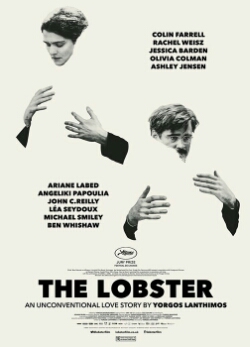
The Lobster
Winner of the Jury Prize at the prestigious Cannes Film Festival in 2015, The Lobster may be one of the strangest movies you’ll ever see and it’s definitely an acquired taste. It is an absurd, Kafkaesque film set in a dystopian world in which humans turn into animals if they do not find love. Colin Farrell plays a newcomer at a matchmaking resort known simply as the Hotel where guests must go through preposterous activities to find a mate within 45 days or be transformed into an animal of their choosing. Accompanied by his brother who has been turned into a dog, he encounters quite the characters portrayed by an impressive ensemble cast, including Olivia Colman, John C. Reilly, and Ben Whishaw. Eventually, Farrell’s character finds his true soulmate outside the confines of forced love at the Hotel. His love played by Rachel Weisz is a part of a group called the Loners that escaped the Hotel and harshly punish those making romantic gestures. The story’s ridiculousness is underscored by the intentionally stoic, unemotional performances from the actors. None of the characters bat an eye even amidst truly confounding situations and dialogue so ludicrous that the audience cannot help but laugh. The subtle comic undertones reinforce the film’s satirical and allegorical messages about the absurdities of modern romance. It suggests that love cannot be mandated and does not always conform to a strict pattern. The structure of the Hotel mimics online dating and the feeling that there is a time clock on when people should find romance and get married. Beyond the effective use of the bizarre to perpetuate satire, the cinematography is remarkable in its own right. The dreary yet naturally beautiful setting of the isolated Hotel and woods next to an alpine lake under an almost constant fog creates an eerie and mystical atmosphere. Also, the random appearance of exotic animals, representing those unable to find a partner, visualizes the absurdity of the film’s premise. The score with discordant music and sound effects further accentuates the movie’s unique tone. The creative use of all these elements fashion a film that blends the weirdness of Wes Anderson, Charlie Kaufman, and David Lynch. Overall, I felt the film to be a well-executed and biting satire so utterly strange that audiences will either love it or hate it. It is definitely something that may be more appealing to film snobs, critics, and filmmakers.
X-Men: Apocalypse
X-Men: Apocalypse is a fairly standard comic book movie that pits superheroes with CGI-enhanced powers against a supervillain threatening humanity. It is the ninth installment in the lucrative X-Men franchise and part of a trilogy following the X-Men characters in their youth beginning in the 1960s. The film is set in 1983 coinciding with the rise of the main antagonist, an ancient mutant known as En Sabah Nur played by Oscar Isaac under a heavy layer of makeup and special effects. A ragtag group of young mutants under the tutelage of a young Professor Xavier played by James McAvoy join forces to save the human and mutant races from this god-like malevolent force. There is also a subplot rivalry between Professor Xavier and the multi-dimensional Magneto played by Michael Fassbender, archrivals as they get older in the earlier films. The movie feels more like an extension of an origin story and would not work as well as a standalone film. We are introduced to many mutants before they become the familiar characters from the previous films. Their younger selves are presented in unique and sometimes entertaining ways that provide important background information on their more recognizable adult selves. However, I enjoyed the first movies more because of the acting gravitas of Patrick Stewart and Ian McKellen and the appearance of Hugh Jackman’s Wolverine beyond a simple cameo. Overall, I thought the film did not break the comic book movie mold but stuck to the rather generic formula proven to practically guarantee box office success for the major studios. It provides enough CGI action and entertainment to appease the hordes of die-hard comic book fans and those looking for a summer popcorn flick.
Dark Horse
Dark Horse is a fascinating documentary that tells the inspiring story of a group of working-class people working together to overcome adversity. In a sleepy Welsh town impoverished since the local mine’s closure, a barmaid decides to become a racing horse owner. She gathers together a horse syndicate comprised of fellow working-class townspeople and breed a scrappy horse named Dream Alliance. As true underdogs, they take on the elitist horse racing establishment that can spend millions per horse. The film effectively underscores the disparity by juxtaposing footage of British aristocrats in their fancy hats against Dream Alliance’s down-to-earth owners with their tattoos and missing teeth. Despite their dire situations in life, the townspeople seemed happy just to have a glimmer of hope and success. As I watched the story unfold, it felt as if I was one of the owners and cheered the horse on through its ups and downs. The documentary embodies the powerful spirit of perseverance against all odds and makes you believe in humanity. As such, I would highly recommend the movie and your spirits will definitely be uplifted after watching.
Love and Friendship
Adapted from Jane Austen’s posthumously published novella Lady Susan written around 1794, Love and Friendship is a well-crafted intellectual comedy set in 18th century England among the aristocracy. It follows the exploits of Lady Susan Vernon, marvelously played by Kate Beckinsale, after the death of her rich husband. Attempting to escape her insufferable status as a dependent widow, she unexpectedly visits her in-laws’ country estate. She uses witty and cunning charm to manipulate her way through high society and maintain status by marrying any eligible wealthy aristocrat. The language used throughout the film feels as if it comes directly from the pages of a Jane Austen novel, complete with flowery and hifalutin words. The quick back-and-forth banter filled with pithy remarks reminded me of something written by Aaron Sorkin. Along with highbrow comedy, the film effectively incorporates moments of hilarious silliness. The dim-witted well-off bachelor Sir James Martin played by Tom Bennett steals many scenes with his buffoonery, including his musings on the word Churchill and discovery of peas. As a quintessential British period piece, the movie is brimming with sumptuous costumes set amongst palatial country estates and London townhouses and scored by playful classical music. The film posits itself as a self-aware, almost satirical comedy about the frivolities of aristocratic society. For example, before the first scene, each character is introduced with their own descriptive subtitle, including Sir James Martin being labeled as “a bit of a ‘rattle.'” Overall, I would recommend the movie to all lovers of Jane Austen and those looking for a sophisticated yet whimsical period comedy.