Beautiful Boy

Based on the memoirs Beautiful Boy written by David Sheff in 2008 and Tweak written by Nic Sheff in 2007, Beautiful Boy is a heartbreaking and emotionally powerful film about a troubled relationship between a father and his drug-addicted son, that is brought to life by extraordinary acting performances. The movie begins with Nic Sheff, played by the terrific Oscar nominee Timothée Chalamet, going missing, and, after returning from using drugs, his father who is the well-known writer for Rolling Stone David Sheff, played by comedian and Oscar-nominated actor Steve Carell, forces his son to enter rehab. Throughout the course of the film, Nic struggles with his addiction to such illicit drugs as meth and heroin and fluctuates between periods of sobriety and serious relapse as he bounces between rehab and home. Starting a new family with two young kids after marrying his second wife Karen, played by Golden Globe winner Maura Tierney, David has trouble balancing helping out the very troubled Nic and making sure that his new wife and young kids have normal and happy lives. At one point, he is even sent to his rather hands-off mother Vicki, played by Oscar nominee Amy Ryan, in Los Angeles to see if a change in environment could get Nic sober with the help of a sponsor there. The filmmaker does an excellent job of exploring the horrific impact that drugs have on the users and their families by showing the many complicated steps that Nic and his father must take in order for Nic to become a fully recovering addict. Almost like grieving for his son who has been lost to the drug underworld, David goes through a mixed bag of emotions, including anger that his son would put the family through so much, depression that he is not able to help his son, and guilt that he allowed his son to even get to such a dark place. The audience is also a witness to the heartbreaking and tragic circumstances of drug addiction: David eventually giving up on his son and refusing to give him money, and Nic breaking into his family home in Northern California for drug money. For a while, nothing seems to help, but he is able to get to a better place after seeing the overdose of a close friend and his own almost fatal overdose. Overall, I found it to be a very profound drama that, although at times feels uneven, is a showcase for the mesmerizing acting abilities of Timothée Chalamet and Steve Carell.
The Happy Prince

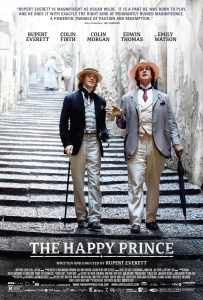
Written and directed by the talented actor Rupert Everett in his directorial debut, The Happy Prince is a terrifically well-crafted independent film exploring the tragic final days of the world-renowned playwright and author Oscar Wilde brought to life by the transformative performance of Rupert Everett. The plot tells the mostly untold story of Oscar Wilde’s downfall after being imprisoned with hard labor for two years in 1895 when the United Kingdom found him guilty of committing homosexual acts, which at the time was illegal, and it would not be until 2017 that Oscar Wilde along with 50,000 other convicted gay men would be pardoned. Exiled to Europe following his release in 1897, Wilde, played by Rupert Everett in his greatest performance of his career, tries to scrape by after clearly being tormented in prison and is continually vilified by those back in the UK. He lives for a time in Naples, Italy with his former young and handsome lover Lord Alfred “Bosie” Douglas, played by Colin Morgan, who was part of the reason that Wilde was caught and convicted for being a homosexual. At the same time, another former lover and his current literary executor Robbie Ross, played by Edwin Thomas, tries to find sympathetic people who can financially support Oscar Wilde’s life, and he encourages him to avoid scandal for business and personal reasons. Robbie is also somewhat jealous of Alfred who captivates the notoriously wild Wilde’s attention once again. Although these two men in addition to the novelist Reggie Turner, played by Academy Award winner Colin Firth who has collaborated in several other movies with Everett, do their best to keep him out of trouble, his life quickly spirals out of control. Towards the end of his life, he lives off the streets of Paris after being disinherited by almost everyone, including his estranged wife played by Emily Watson. The movie also includes several flashbacks to Oscar Wilde’s better days when he was a warmly embraced celebrity throughout the world; these scenes illustrate the juxtaposition of how far such an illustrious writer as Oscar Wilde can be brought down by society’s disdainful view of homosexuality. Neither a happy story or one about a charming prince, the film is truly noteworthy for the astounding Rupert Everett who is drastically different from his usual role as the handsome and vivacious character in such movies as 1997’s My Best Friend’s Wedding for which he received a Golden Globe nomination. Everett is fully immersed in his performance and is almost physically unrecognizable as a downtrodden, overweight, and sickly man nearing the end of his troubled life. Overall, I found it to be a fascinating glimpse into one of the most important writers in history and the often overlooked tragedies that he experienced in his life realistically portrayed by the magnificent Rupert Everett. On another note, I had the privilege of seeing Rupert Everett in person who provided great insight into how this film has been a passion project for him, especially as a homosexual man, and the difficulty of capturing the famously witty Oscar Wilde without becoming a caricature.

First Man

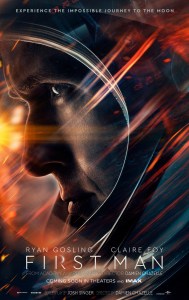
Directed by Damien Chazelle who is best known for 2014’s Whiplash and 2017’s La La Land for which he won the Academy Award for Best Director, First Man is a terrific biographical movie that explores the personal side of Neil Armstrong and the Apollo 11 mission and is anchored by excellent acting performances and dramatic cinematography. We first meet Neil Armstrong, played by Golden Globe winner Ryan Gosling, in 1961 as he is attempting an extremely dangerous test flight at Edwards Air Force Base where he is a military test pilot. At the time, he and his wife Janet, played by Golden Globe winner Claire Foy, are struggling with the sickness of their young daughter Karen who is undergoing treatment for cancer; her memory will later serve throughout the film as a sort of metaphor for the personal life of Armstrong as he becomes world-famous for being the first man on the moon. Eventually, he is accepted to the NASA astronaut program and becomes one of the astronauts in Project Gemini, the space program that would lead into the Apollo missions with the goal of a lunar landing. Living in Houston in 1965, he develops close friendships with fellow astronauts, especially his neighbor Ed White, played by talented actor Jason Clarke, and his wife befriends the other astronaut wives who also have young children. While much of the film focuses on the more personal aspects of Armstrong and his family coping with his hazardous job, the filmmaker does an excellent job of recreating the very tense rocket launches in which the slightest problem could be catastrophic for Armstrong and the other astronauts aboard. Leading up to the climax of the film, Armstrong learns from NASA’s Chief of the Astronaut Office Deke Slayton, played by Emmy Award winner Kyle Chandler, that he will be the commander on Apollo 11, the mission selected for the first landing on the moon, and will be joined by the often lighthearted Buzz Aldrin, played by Cory Stoll best known for his role in the Netflix series House of Cards, and the Command Module Pilot Michael Collins. Before he is selected for the historic mission, tragedy strikes NASA on January 27, 1967 when a fire during a routine test for Apollo 1 engulfs the capsule resulting in the death of three astronauts, including Armstrong’s close friend Ed White and one of the original astronauts Gus Grissom, played by Shea Whigham best known for his role in the HBO series Boardwalk Empire. The final scenes of the movie revolve around the actual mission of Apollo 11, complete with the dramatic takeoff, four-day flight to the moon, undocking the Lunar Module, and finally landing on the moon’s surface on July 20, 1969 with hundreds of millions of people watching around the world. After becoming the first human to touch the moon, Armstrong’s immortal moon walk is portrayed as a much more introspective personal look into his life and what led up to such a historical event for all of mankind. He makes a touching tribute to his beloved daughter Karen, which helps bring the movie back to the beginning as he begins to lose his child to cancer. Overall, I found it to be one of the more memorable movies that effectively takes a quite different and more emotional approach to the space movie genre, that was elevated by the talented performances given by Ryan Gosling and Claire Foy, and kept the audience on the edge of their seats during the magnificent spaceflight sequences. The film must now be included in the historical space movie canon, joining the likes of The Right Stuff and Apollo 13 with each contributing a different aspect to the story of humans in space. For instance, the seminal 1983 movie The Right Stuff provided more of a historical background by showing Chuck Yeager breaking the sound barrier and the early efforts of the Mercury program that ultimately led the United States to the moon. On the other hand, the 1995 Ron Howard movie Apollo 13 was much more of a thriller in which the characters must figure out a way to survive after a catastrophic failure and focuses more on the actual mission.

Colette

colette_xlgDirected by Wash Westmoreland best known for the 2014 movie Still Alice in which Julianne Moore received an Oscar for her role, Colette is a fascinating period drama about one of France’s most renowned writers and is quite remarkable for its terrific acting, especially the dazzling performance given by Keira Knightley. The film is based on the real-life story of the French author Sidonie-Gabrielle Colette, played by twice Academy Award-nominated Knightley in arguably her greatest performance, who moves from the French countryside in the late nineteenth century to the artistic center of the world at the time Paris after marrying a well-known writer referred to as simply Willy, played by the twice Golden Globe-nominated British actor Dominic West. After witnessing her remarkable writing talents first-hand, Willy encourages her to write novels in which he would be fully credited for writing them. They come upon a great success with the publication of a novel loosely based on Colette’s early life revolving around a French country girl named Claudine and her daily life and adventures in rural France. Over the course of the film, Colette becomes increasingly distant from her controlling husband and decides she would like to write for herself with her real name instead of his. The filmmaker does an excellent job of creating a beautiful and realistic depiction of early twentieth century Paris through the use of high-fashion costuming and sumptuous Parisian scenery in which the arts and high society are highly valued. Amidst this exciting backdrop, Colette evolves into a much more independent individual who explores her own sexual expression by entering into a sexual relationship with a beautiful young socialite, played by Eleanor Tomlinson best known for her role in the BBC television series Poldark. She becomes quite the sensation and even causes a riot in an already liberalized Paris with her extremely progressive views and unorthodox artistic expressions through her fashion and writing, including performing a risqué mime act in which she kisses a masculine woman. At the same time, she faces her sometimes cruel and desperate husband whose finances are rapidly collapsing. It becomes quite clear that his own career will never be as successful after Colette refuses to write anymore Claudine novels that have become such a cultural phenomenon throughout France, and, as a result, he becomes a shell of himself and their marriage begins to disintegrate. Overall, I found it to be a truly wonderful film that is brought to life by the dynamic performances of the lead actors, in particular Keira Knightley, and is especially relevant to today’s society in which sexual and artistic expression is accepted and women are using their platforms to speak up for gender equality, just like Colette did in her time.
Operation Finale

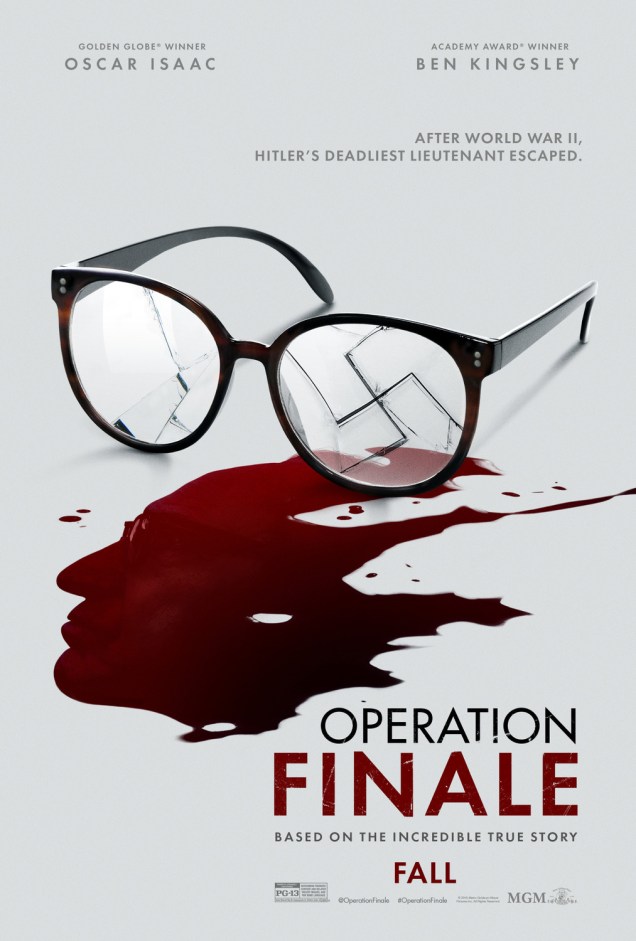
operation_finale_xlgDirected by Chris Weitz who is best known as the cowriter of 2002’s About a Boy and 2016’s Rogue One: A Star Wars Story and the director of 2007’s The Golden Compass and 2009’s The Twilight Saga: New Moon, Operation Finale is based on the true life story of the hunt for and capture of one of the most notorious Nazi officers Adolf Eichmann, played by the always terrific Academy Award winner Ben Kingsley. Although the film does not fully live up to its expectations and can be at times slow, its greatest appeal is its fascinatingly real life story that may not be widely known. The story takes place in 1960 and follows a group of agents and officers in the Israeli intelligence agency Mossad and security agency Shin Bet as they travel to Argentina after learning that Eichmann who is credited with being the architect of the Holocaust is living in a suburb of Buenos Aires undercover. At the behest of the upper echelon of the Israeli government, the Mossad agent Peter Malkin, played by Golden Globe winner Oscar Isaac, is recruited to form a team that will track the whereabouts of Eichmann and come up with a plan to bring him back to Israel to stand trial for his crimes against the Jewish people during World War II. His team includes several secret operatives, including an anesthesiologist named Hanna, played by Mélanie Laurent best known for her role in 2009’s Inglourious Basterds, and fellow agent Rossi, played by comedian Nick Kroll. The movie presents a sometimes gripping account of the operatives following Eichmann’s every move and eventually decide to capture him at nighttime very near his home that he shares with his wife and two sons. When several issues arise, Eichmann must remain captive in the Israeli safe house in Argentina until the occasion arises when they can safely transport him out of the country. Throughout his detainment, Eichmann begins to develop somewhat of a rapport with Peter, and they both discuss their personal lives and their experiences during World War II. Eventually, after a internationally televised trial in Israel, Eichmann is finally executed in June 1962 for his horrific crimes against humanity and participation in the killing of over 6 million Jews. Overall, I found it to be an intriguing film highlighting the lengths in which Mossad and other intelligence agencies went to in order to capture Nazis who had escaped to South America; however, I thought it was not tightly executed and the action could have been intensified.

BlacKkKlansman

Directed by critically acclaimed filmmaker Spike Lee best known for the 1989 movie Do the Right Thing and 1992 biopic Malcolm X, BlacKkKlansman is a truly magnificent film elevated by Spike Lee’s unique voice that makes for a powerful and sometimes paradoxically entertaining cinematic experience. Based on a remarkably true story set in the late 1970s, the movie follows the newly-recruited police officer Ron Stallworth, played by the terrific John David Washington who is the son of Academy Award winner Denzel Washington, who was the first African American in the Colorado Springs Police Department and would embark on a unbelievable undercover investigation into the local chapter of the Ku Klux Klan. Stallworth easily infiltrates the white supremacist organization by pretending to be a Caucasian racist interested in joining the KKK. Eventually, he enlists a white Jewish police officer named Flip Zimmerman, played by Emmy-nominated actor Adam Driver, to masquerade as Ron Stallworth in person meeting the local Ku Klux Klan leaders Walter and Felix along with their bumbling cohort Ivanhoe. While these rather unusual events take place, the real Stallworth begins to fall in love with a African American activist named Patrice who does not know that Stallworth is actually a police officer. Over time, Zimmerman increasingly becomes weary that he will be discovered as a cop by the rapidly radicalizing KKK. The organization hatches a plot to engage in violence against African Americans in order to start what they perceive as a holy race war to purify the United States. Within the film itself, Spike Lee cleverly makes political statements about the current state of American politics that clearly criticize President Trump. He is able to do this by juxtaposing the rhetoric of the KKK, especially David Duke, played by Topher Grace, who attempts to mainstream white supremacy, with the movie’s final sequence emotionally portraying the deadly Charlottesville, Virginia protests of August 2017 in which racism reared its ugly head and politicians appeared to look the other way. Lee also brilliantly incorporates a truly evocative cameo appearance of the musician and civil rights icon Harry Belafonte. Overall, I found it to be one of the most memorable films that incisively delves deep into the horrors of racism normalized by such hateful groups as the Ku Klux Klan, all the while providing a remarkably entertaining story that is so hard to believe.

Won’t You Be My Neighbor?

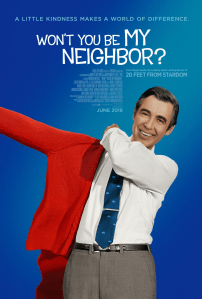
Directed by Morgan Neville who won the Academy Award for Best Documentary Feature for 2013’s 20 Feet from Stardom, Won’t You Be My Neighbor? is an excellent documentary about the remarkably kind children’s television host Fred Rogers and provides insight into what inspired him to create the iconic television program Mister Rogers’ Neighborhood. When the low-budget family-friendly show debuted on Pittsburgh public television in 1968, nobody could foresee the impact that the soft-spoken ordained minister Fred Rogers would have on children’s programming and the education of young minds through such a new medium as television. The documentary gives an insider’s look into Mister Rogers by interviewing cast and crew members as well as his children and surviving wife who describe his personal life reflective of his on-screen persona as a gentle and patient man who truly cared about children. Because of his profound influence on the millions of people who grew up with his breakthrough show that premiered its last episode in 2001, the film is at times emotional for the audience by bringing back such heartwarming and joyous memories to life. In a day in age in which several iconic personalities have let down audiences after the revelation of egregious moral failings, it is refreshing to see a movie about a honest-to-goodness wonderful human who always presented his true inner self and simply wanted to do what was best for others. As presented by the documentary, there were times when Fred Rogers struggled and felt the obligation to discuss rather depressing topics with his young audience, including the assassination of Bobby Kennedy in 1968. Overall, I found it to be a truly fascinating glimpse into the life of Fred Rogers and his passion for creating Mister Rogers’ Neighborhood, and I would highly recommend it to anybody who watched Mister Rogers or simply looking for a heartwarming story about a positive figure during such a divisive time in our country.

The Post

Directed by Steven Spielberg who won the Oscar for best director for 1994’s Schindler’s List and 1998’s Saving Private Ryan, The Post is a terrific film about the importance of journalism and is full of brilliant performances from an all-star cast under the guidance of one of the greatest filmmakers with a well-crafted script. Set in the early 1970s as the Vietnam War became increasingly unpopular, the movie tells the true story of the release of the so-called Pentagon Papers, which documented the failures and cover-ups of the war in Vietnam by the United States government. It is about the fierce competition between The New York Times and the relatively small Washington Post to get the scoop on such consequential classified documents. The plot follows the groundbreaking female publisher and owner of The Washington Post Katharine Graham, played by Oscar winner Meryl Streep, and the well-respected editor-in-chief Ben Bradlee, played by Oscar winner Tom Hanks, as they struggle to raise the newspaper’s national profile as they begin the process of going public to raise funds to keep the paper running. When they catch wind of the Pentagon Papers leaking, they along with their journalists desperately try to get the full report and publish stories about the secret government report that The New York Times has been barred from publishing because of a government injunction. Eventually, the Post journalist Ben Bagdikian, played by Golden Globe nominee Bob Odenkirk, is given thousands of pages of the Pentagon Papers from one of its authors, a government contractor for the Rand Corporation named Daniel Ellsberg, played by Emmy nominee Matthew Rhys. Graham and Bradlee must grapple with the legal implications of publishing confidential government records, which could result in jail time and the newspaper going bankrupt, and the journalistic duty of informing the public in a country with freedom of the press. Although it is a historical snapshot of a crucially important time in journalism, the filmmakers effectively allude to the parallels in today’s society, with the current president of the United States criticizing the free press and calling for the prosecution of leakers. The movie very much reminds me of the 1976 movie All the President’s Men, perhaps the greatest movie ever made about journalists, by focusing on the investigative reporting at The Washington Post during the Nixon era. Both films powerfully shed light on the significance that journalism has on holding the American government and president accountable for their actions. A spiritual prequel to the Robert Redford and Dustin Hoffman movie in which the story takes place almost immediately after the Pentagon Papers, Spielberg’s work is much more about the leadership at The Washington Post and its conflict with the judicial system. Overall, I found The Post to be one of the most relevant movies made about America’s current political and journalistic environment and stands by itself as an excellent movie due to its marvelous ensemble cast with almost too many great actors to name directed by the great Steven Spielberg.

Molly’s Game

Directed by Aaron Sorkin who is best known for creating the Emmy Award-winning TV series The West Wing and writing the Oscar-winning screenplay for the 2010 movie The Social Network, Molly’s Game is a well-crafted film from a talented screenwriter in his directorial debut that tells a remarkable story and is marked by terrific acting performances and a first-rate script. The plot revolves around the true story of Molly Bloom, brilliantly played by Oscar nominee Jessica Chastain, who runs one of the most exclusive high stakes poker games after a career-ending injury as a Olympic-level skier. She finds herself desperate for a job after moving to Los Angeles and is enlisted by her jerk of a boss to help put on a weekly poker game attended by Hollywood actors, powerful businessmen, and other influential men. The movie is a series of flashbacks recounting her rise from this first arrangement and through the high stakes poker community to establishing her own game first in Los Angeles and later in Manhattan. She narrates her own life story to her defense attorney Charlie Jaffey, played by the always outstanding Golden Globe winner Idris Elba, after she finds herself in trouble with the FBI for possible connections to the Russian mafia. Much of her legal problems stem from the fact that she published a memoir about her days in the legally dubious poker world. Because of her position in the world of gambling, Molly’s wealth garnered from poker is frozen by the government, and she must convince authorities she was unaware of the most damaging allegations, particularly the involvement of several criminal organizations. Besides telling her fascinating story, the filmmaker also does an excellent job of providing a glimpse into the shadowy world of high stakes poker and its popularity with power brokers and well-known celebrities. For instance, the character known as Player X, played by Michael Cera, is supposed to represent a composite of Leonardo DiCaprio, Tobey Maguire, Ben Affleck, and other Hollywood actors who likely attended Molly’s poker games. The movie’s energy is greatly enhanced by the hallmarks of an Aaron Sorkin production: many scenes comprise of clever and fast-paced dialogue to underscore the high-stakes that Molly faces gambling with powerful men and the federal government. Overall, I found it to be an entertaining movie that tells a truly unbelievable story about the largely unknown world of underground poker and is captivating for most of the time despite some rather slow and drawn-out moments.

All the Money in the World

Directed by Oscar-nominated filmmaker Ridley Scott who is best known for 1979’s Alien, 1982’s Blade Runner, 2000’s Gladiator, and 2015’s The Martian, All the Money in the World is a well-crafted and gripping thriller about the kidnapping of a grandson of one of the world’s wealthiest men in the 20th century. The story takes place in 1973 when the 16-year-old grandson of billionaire oil businessman J. Paul Getty, terrifically played by Academy Award winner Christopher Plummer who replaced the disgraced Kevin Spacey only one month before release, is taken hostage by an Italian criminal organization in Rome. They ask for a ransom of $17 million for the life of J. P. “Paul” Getty III, played by Charlie Plummer, from his mother Gail Harris, played by the brilliant Academy Award nominee Michelle Williams, who is now divorced from Getty’s troubled son. Without a financial settlement from the divorce and without help from her former father-in-law, she is distraught because she does not have the money to save her son’s life. As a result, she has no other recourse but to ask Getty who she greatly despises to help pay the ransom, but he refuses as a ruthless tactic to avoid having his other grandchildren being kidnapped and costing him money. The movie portrays Getty as a vicious tycoon who will do anything to keep his money even though he is worth over a billion dollars. To avoid paying a single penny, he eventually enlists a former CIA operative and negotiator for Getty Oil named Fletcher Chase, played by Mark Wahlberg, to figure out a way to free Paul from his captors. Chase is also told to remain in contact with Gail about the kidnapping and report everything back to Getty. The best moments of the film show Getty making rather brutal comments about his family and apparent lack of interest in helping his grandson and much hated former daughter-in-law even while he continues to spend millions of dollars on his art collection. To further illustrate the cruelty of Getty, the story dramatically captures the anguish and anger of Gail while her son is wasting away partly as a result of her former father-in-law’s actions. As Chase and the authorities get closer and closer to finding Paul and capturing his kidnappers, the movie evolves into more of a standard crime thriller full of riveting chases and shootouts. Overall, I found it to be a quite entertaining and truly fascinating film full of top-notch acting performances and thrills about a story I really did not know much about and am now quite surprised that the unbelievable true story has not been made into a movie earlier.