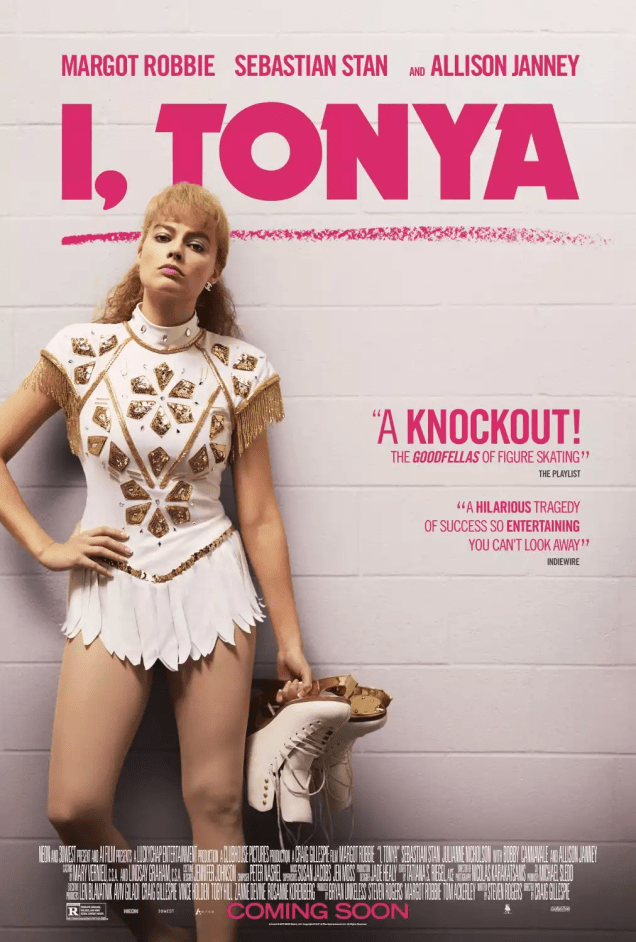
Directed by Craig Gillespie who is best known for 2007’s Lars and the Real Girl and 2016’s The Finest Hours, I, Tonya is an incredibly entertaining dark comedy and compelling drama that is full of brilliant acting performances and shines as a result of its creative storytelling. The story revolves around the life of the infamous figure skater Tonya Harding, played by Australian actress Margot Robbie in her best performance, and her association with the brutal attack on fellow American ice skater Nancy Kerrigan. The filmmaker quite effectively reinforces the often ridiculous nature of the story by interspersing conventional film narrative with the mockumentary format by including interviews with the characters and the characters directly interacting with the audience. We first meet Tonya as a young girl forced to enter the world of competitive ice skating by her chain-smoking abusive mother LaVona, brilliantly played by Emmy Award winner Allison Janney. As Tonya progressively moves up the ranks of United States figure skating, her mother becomes increasingly vicious and does everything and anything to make sure she stays competitive at the expense of living a normal life. She eventually escapes her mother and moves in with her boyfriend and future husband Jeff Gillooly, played by Sebastian Stan, who is more supportive but ultimately turns out to be a bad influence. Coming from a rough background filled with abuse and poverty, Tonya feels she is unfairly judged at the competitions despite her almost technically perfect performances. As a result of her frustrations, she finds herself in a whole heap of trouble with the FBI after it is discovered that Jeff’s best friend and her bodyguard Shawn Eckhardt orders a pair of petty criminals to injure her fiercest competitor Nancy Kerrigan only a few weeks before the 1994 Winter Olympics in Lillehammer, Norway. Although it presents a rather tragic and complicated downfall of a truly talented athlete, the film brings a certain level of levity through the recreated contemporary interviews with the main characters who come off as either cruel, naive, or stupid. Furthermore, the preposterous circumstances and events portrayed make for some darkly hilarious moments, especially the actions of the dim-witted Shawn. Overall, I found it to be one of the most entertaining films of the year that paradoxically paints a sympathetic picture of the notorious Tonya Harding with the help of a stellar cast, particularly Margot Robbie and Allison Janney.


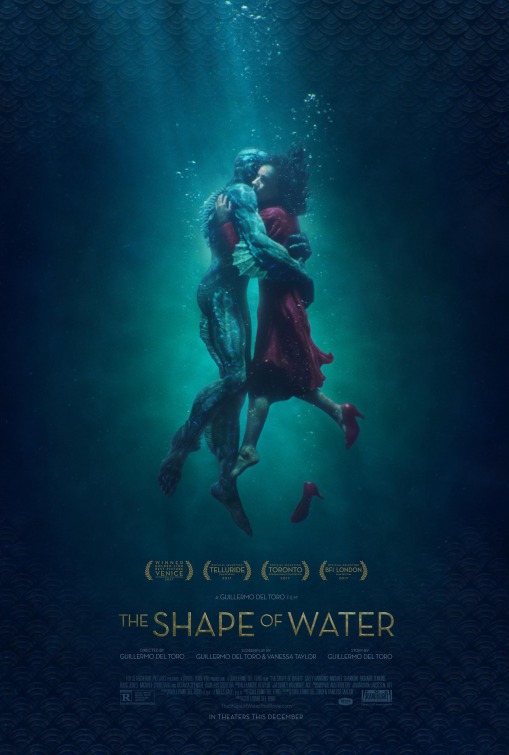 Directed by critically acclaimed Mexican filmmaker Guillermo del Toro who is best known for 2006’s Pan’s Labyrinth and 2004’s Hellboy, The Shape of Water is a beautiful and strange fantasy drama benefiting from evocative cinematography and terrific acting performances from a stellar cast. Set in early 1960s Baltimore, the story follows Elisa Esposito, played by the always brilliant Golden Globe winner Sally Hawkins, who is a lonely and compassionate mute woman working as a janitor for the mysterious Occam Aerospace Research Center. Her life dramatically changes when a new so-called Asset arrives at the laboratory after being discovered by the vicious Colonel Richard Strickland, played by the remarkably creepy Oscar-nominated actor Michael Shannon. Primarily living a quiet life alone with the exception of her charming coworker Zelda, played by Oscar winner Octavia Spencer, and eccentric neighbor Giles, played by Oscar nominee Richard Jenkins, Elisa develops a very close and warm relationship with the Asset, a sea creature that somewhat resembles a human. Strickland along with his overly officious boss General Hoyt, played by Nick Searcy, only see the Asset as a scientific experiment who can possibly help with space technology and allow the United States military to have a competitive advantage over the Soviet Union. Fully aware that the military leadership has plans to exterminate the Asset so that it cannot fall into the hands of the Soviets, Elisa devises a plan to free the Asset from the laboratory with the help of Zelda, Giles, and the secretive scientist Dr. Robert Hoffstetler, played by Michael Stuhlbarg best known for his role on the HBO TV series Boardwalk Empire. Although it is a very peculiar story and features a somewhat grotesque fantastical creature, the movie becomes something much more than simple fantasy; the dark and mysterious setting created by the mesmerizing cinematograph blends with the powerfully poignant emotions of the characters to create a very special movie. Overall, I found it to be one of the best films of the year despite probably being one of the weirdest movies that the audience will see; even though the subject matter may not be for everyone, it is definitely a very worthwhile cinematic experience.
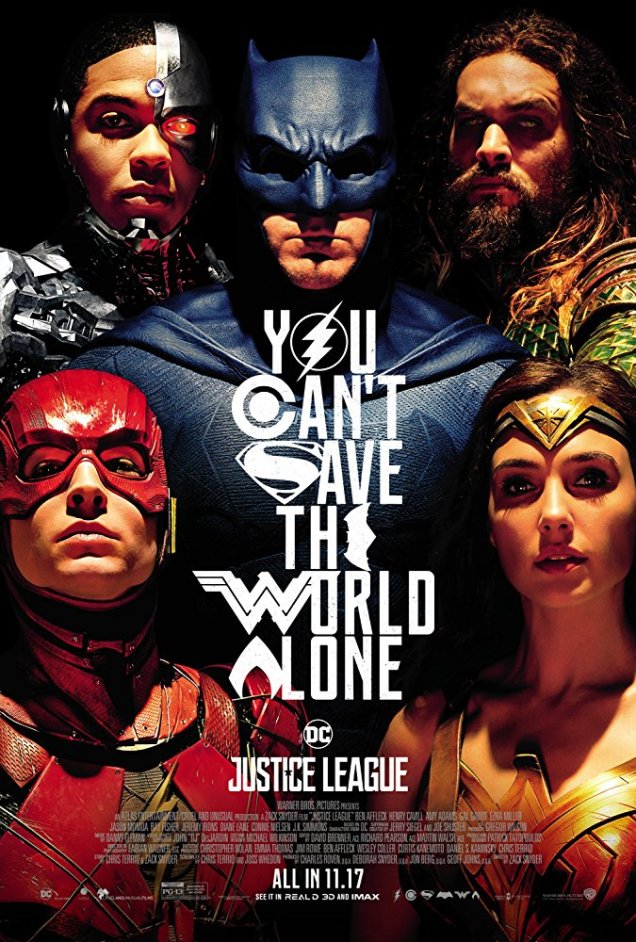 Directed by Zach Snyder who is best known for 2006’s 300 and 2009’s Watchmen, Justice League follows a long line of superhero comic book movies that ultimately falls short of reaching the more entertaining adaptations in the Marvel Cinematic Universe. As the sixth installment in DC Comics Extended Universe that desperately tries to emulate the success of Marvel, the film is unfortunately only marginally better than the other critically unsuccessful installments, including 2016’s Batman v Superman: Dawn of Justice and 2016’s Suicide Squad. Similar to The Avengers, the plot revolves around a group of famous superheroes who come together to fight off a villain trying to destroy the world. An alien creature awoken after thousands of years, Steppenwolf, along with his army of Parademons, is set on conquering Earth by locating three so-called Mother Boxes whose combined power would set off the destruction of the world. Eventually, Diana Prince who is better known as Wonder Woman, played by Gal Gadot, is alerted to Steppenwolf’s malevolent goal and eventually joins forces with the superheroes Batman who is played by Ben Affleck, The Flash who is played by Ezra Miller, Aquaman who is played by Jason Momoa, and Cyborg who is played by Ray Fisher. After their first major battle with Steppenwolf in Gotham City, the team learns there may be a way to resurrect Superman, played by Henry Cavill, who died at the end of Batman v Superman and is universally mourned as one of the last great heroes. The ending is fairly formulaic because it involves the newly formed Justice League entering into one epic final battle with the villain Steppenwolf and the outcome has major repercussions for Earth and humanity. Overall, although it has many fine actors, the movie feels like a hodgepodge of several different superhero action flicks that includes several new characters that are not properly introduced for the casual filmgoer. It should have followed the extremely successful formula of 2017’s Wonder Woman in which the characters’ back stories are told in greater detail and thereby the audience feels a greater emotional connection.
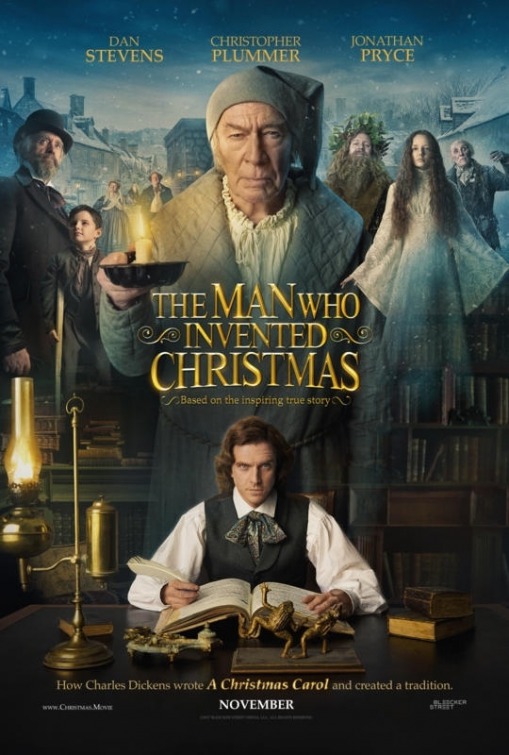 Loosely based on a true story, The Man Who Invented Christmas is a fascinating look into the life of Charles Dickens as he writes the classic A Christmas Carol in London in 1843. The film effectively illustrates the inspirations for Dickens, played by Dan Stevens of Downton Abbey fame, by depicting the characters in the famous Christmas story as characters in the movie. We first meet Dickens ten years after the incredibly successful publication of Oliver Twist and is currently suffering from a string of unsuccessful books. To appease his publisher and maintain his fame, he sets out to write a new novel. Suffering from writer’s block, he eventually finds inspiration after witnessing several events in the daily life of impoverished Londoners and the return of his erstwhile father John Dickens, played by the terrific Jonathan Pryce. For much of the film, he is cooped up in his study where he grapples with the story and characters that will be featured in his Christmas-themed novella and interacts with the imaginary characters, especially Ebenezer Scrooge, played by Oscar winner Christopher Plummer. While struggling to finish the story in six weeks time, he asks for advice from a very unlikely source, a young housekeeper named Tara, who encourages him to make the book into a redemption story. Dickens must also deal with his father who has returned to London because of financial difficulties and becomes an imposition and a reminder of Dickens’ troubled early life, including working in a factory as a child. At the end of the movie, Dickens himself evolves into a better person and is more affectionate towards his father, somewhat like Scrooge embracing the true spirit of Christmas at the end of the book. Overall, I thought it was a well done movie that illuminates the background behind one of the greatest Christmas stories ever told, and I enjoyed the unique twist that the filmmaker used in presenting the fictional characters in A Christmas Carol to show how Charles Dickens was influenced.
 KEITH on Reels