
Directed by British filmmaker Andrew Haigh who is best known for 2015’s 45 Years, Lean on Pete is a heartwarming and sometimes heartbreaking tale about a young man living in challenging circumstances who is able to overcome his life’s difficulties through his relationship with an aging racehorse. The film is notable for the truly astounding performance from the young actor Charlie Plummer who plays a 15-year-old named Charley Thompson recently arrived to Portland, Oregon living with his troubled single father Ray. Living somewhat of a vagrant lifestyle trying to scrape by with small jobs to help support him and his father and thereby unable to attend school, Charley stumbles into a job working for a down-on-his-luck horse trainer named Del, played by the terrifically grumpy Golden Globe winner Steve Buscemi, at the local race track. Buscemi’s character as well as a female jockey named Bonnie, played by Chloë Sevigny, take Charley on the lower racehorse circuit. He quickly forms a bond with one of the quarter horses, Lean On Pete, who is simply used by Del as a cash cow in second-rate races and is eventually destined to slaughter after several weak performances. Never having a real relationship with friends or family, Charley views Pete as more than just an old horse and more of a friend. After another personal tragedy, Charley decides to run away with Pete and set out on a epic adventure across the West to find his beloved aunt. The unlikely duo find themselves crossing lonesome and treacherous landscapes, meeting all sorts of characters, and running into trouble. In addition to the powerful performances, the filmmaker does an excellent job of setting up a compelling narrative structure by dividing the film into three parts that coincide with the character development of Charley as he suffers setbacks and discovers himself. Overall, I found it to be an emotionally powerful drama that beautifully shows the important connection between humans and animals and is filled with groundbreaking acting: introducing the world to the talents of the up-and-coming actor Charlie Plummer.
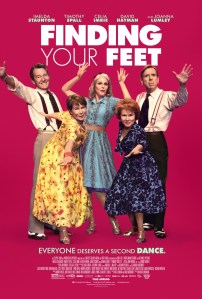 Directed by Richard Loncraine who is best known for romantic comedies and 2006’s thriller Firewall, Finding Your Feet is the quintessential British romantic comedy revolving around a group of senior citizens looking for joy and love and is brought to life by the highly talented cast. We first meet one of the protagonists Sandra Abbott, played by Oscar-nominated actress Imelda Staunton, after she discovers that her husband of many years has been cheating on her with her best friend. She moves out of her wealthy enclave to go to London and stay with her older sister Bif, played by Celia Imrie best known for 2012’s The Best Exotic Marigold Hotel. Unlike Sandra, Bif is very much a free spirit who is happy to live a modest life in a crowded inner-city apartment and has a group of eccentric friends who all take a dance class at the local community center. Eventually, Sandra is convinced to participate in the dance class in order to get over her pending divorce and reconnect to others her age and outside her comfort zone. Through a series of charming scenes marked by typically dry British humor, she meets Bif’s friends and dance classmates, including the down-to-earth and delightful Charlie, played by acclaimed British actor Timothy Spall, the jovial Ted, played by David Hayman, and the flirtatious Jackie, played by comedic actress Joanna Lumley. The romantic part of the movie comes into play as Sandra begins to fall in love with Charlie; at that very moment, Sandra evolves from being preoccupied with wealth and social status to falling for a man who has very little wealth and lives on a river barge in London. Their romance is complicated by unforeseen circumstances, including Sandra’s husband trying to make amends and Charlie’s past love life. Although much of the movie is an innocent feel-good movie, there are some sentimental moments in which life is brought down to earth through the universal aspects of aging, including grief and loss of loved ones. Overall, I found it to be a delightful British film filled with witty innocent humor and a realistic pinch of bittersweet emotions that is elevated by a terrific cast of characters.
 Based on the 1928 play written by R. C. Sherriff that has been adapted to film four previous times, Journey’s End is a gripping war film set in the battlefields of World War I that is effectively able to explore the psychological effects experienced by a group of British officers as a result of a truly outstanding cast. The story follows C-company of the British Army who are sent to the northern French trenches for a six-day rotation in March 1918 during a time when a major German offensive may take place. Clearly based on a theatrical production, the film is much more of a intimate affair in which the characters are immersed in emotional dialogue rather than a typical war movie focused more on the action sequences, and most of the story takes place in an underground bunker reserved for officers in the trenches. The unit is led by Captain Stanhope, played by Sam Claflin, who is clearly suffering from PTSD after witnessing the horrors of war and resorts to drinking to soothe his severe depression. Rounding out the all-star cast, Paul Bettany plays Stanhope’s best friend Lieutenant Osborne, Stephen Graham plays the more upbeat Second Lieutenant Trotter, and Toby Jones plays the officers’ cook Private Mason. Things change with the arrival of the very young new officer Second Lieutenant Raleigh, played by Asa Butterfield, who knows Stanhope from school and whose sister is in a relationship with Stanhope. Fearful that his tragic change of character will be revealed to Raleigh and thereby his love interest, Captain Stanhope is upset that Raleigh has been assigned to his unit and feels that he must try to put on a more hopeful façade. Throughout the movie, the characters try to distract themselves from their horrific situations by recounting their personal civilian lives and talking about their futures back home. Underscoring how warfare changes one’s psyche, the vibrant Second Lieutenant Raleigh rapidly becomes a shell of himself and more like the despondent Stanhope after he goes on his first raid across no man’s land to the German trenches in which several of his fellow man are brutally killed. Overall, I found it to be one of the more emotionally powerful films about World War I that brings to life the truism that war is hell and has a profound impact on those who serve.
 Directed by acclaimed first filmmaker Cédric Klapisch who is best known for 2002’s L’Auberge Espagnole, Back to Burgundy is a sentimental French film about a winemaking family in the French countryside of Burgundy. The plot follows three siblings who are reunited at their family-owned winery after the return of the prodigal son Jean, played by Pio Marmaï, when the father becomes gravely ill. From the beginning, there is tension between all of the siblings, especially Jean who has been away for many years working at a winery in Australia after having a falling out with the father. Juliette, played by Ana Girardot, is running the day-to-day operations of the family’s fledgling winery and remembers having a much better relationship with the father who taught her the winemaking business. She is occasionally helped out by the younger brother Jeremie, played by François Civil, who has problems of his own dealing with his strict father-in-law who owns one of the more well-known wineries in Burgundy. After the father finally dies, the three siblings must figure how to successfully run the family business at the same time that they are facing an insurmountable inheritance tax. The emotional maturation of the family is eloquently emphasized by showing time-lapse footage of the vineyards over the course of four seasons and the winemaking process that requires time and patience. Eventually, they all become closer to one another and come to appreciate the land that they are so dependent on as equal owners of a winery. Overall, I found it to be a sweet film filled with serious feelings and occasional comedic flair that makes for an enjoyable cinematic experience that leaves you appreciating family even through the inevitably difficult times.
 Directed by Israeli filmmaker Samuel Maoz who is best known for the award-winning 2009 film Lebanon, Foxtrot is an emotionally searing drama about grief and the experiences of those affected by the military but brings levity to the depressing material by mixing in dark humor and rather bizarre situations. The movie is split into three different acts in which the audience follows a upper middle-class Israeli family living in Tel Aviv as it relates to the son Jonathan’s military service in the Israeli Defense Forces. The beginning sequence reveals the intimate details of how Michael Feldman, played by the talented Israeli actor Lior Ashkenazi, and his wife Dafna, played by Sarah Adler, learn about the tragic death of Jonathan while serving. Finishing out the first act, the couple are faced with a bizarre twist about their son that angers Michael while leaving his wife relieved. The audience is then immersed into Jonathan’s story as a soldier who works, along with three other young men, at a very remote Israeli checkpoint where the greatest challenge is surviving boredom. Rather matter-of-factly, the soldiers are shown passing the time by doing such mundane activities as watching a can roll in a rotting shipping container serving as their barracks and even almost inexplicably performing the foxtrot dance alone. Finally, the plot returns to Michael and Dafna who are undergoing even more intense grief, interspersed with brief moments of humor about the absurdity of their situation. Overall, I found it to be a well-crafted film that reaffirms life and the importance of not always taking things so seriously even at the darkest points in one’s life; at times, it can be uncomfortably odd while still delving into serious issues surrounding the military.
 Directed by Brazilian filmmaker José Padilha who is best known for 2007’s Elite Squad and producing the Netflix series Narcos, 7 Days in Entebbe is a fairly routine crime thriller hampered by a slow pace but noteworthy for its retelling of a truly remarkable true story. The movie is about the 1976 hijacking of Air France Flight 139 from Paris to Tel Aviv by a group of terrorists sympathetic to the Palestinian cause against Israel. Its primary focus is on the German terrorists Wilfried Böse, played by Daniel Brühl, and Brigitte Kuhlmann, played by Oscar nominee Rosamund Pike, who decide to join several other Palestinians to hijack an airliner in order to make demands in favor of the Palestinians. After overtaking the plane, they divert to Entebbe, Uganda whose ruthless dictator Idi Amin is pro-Palestinian will harbor the terrorists and the 248 passengers and crew members taken hostage. The characters spend most of the movie waiting for a response from the Israeli government while also showing the ideological differences between the German and Palestinian terrorists. At the same time, the film switches to providing an inside glimpse into the Israeli response led by the hawkish Minister of Defence Shimon Perez, played by Eddie Marsan, and the more moderate Israeli Prime Minister Yitzhak Rabin, played by Lior Ashkenazi. Furthermore, it also follows a few of the Israeli Defense Forces soldiers as they go about their daily lives in preparation for the climactic raid on the airport to free the hostages that occurred on July 4, 1976. In a creative twist, the movie begins and ends with a very dramatic modern dance performance that metaphorically represents the delicate dance of negotiating with terrorists and the highly choreographed military maneuvers involved in the raid. Overall, I found it to be a rather disappointing film that I had high expectations for as a result of its fascinating story; unfortunately, it was rather lacking in providing a gripping and gritty account of one of the most publicized terrorist acts in modern history.
 Directed by Francis Lawrence who is best known for several of The Hunger Games films starring Jennifer Lawrence, Red Sparrow is a highly eroticized spy thriller aiming to become a prestige espionage film like 2011’s Tinker Tailor Soldier Spy and whose greatest asset is the acting performance from Oscar winner Jennifer Lawrence. Lawrence stars as a Russian ballerina named Dominika Egorova who suffers a career-ending injury and enlists, at the urging of her powerful uncle Ivan, played by Matthias Schoenaerts, as a Russian operative known as a red sparrow in order to support her sick mother. After her recruitment, the film uses a training montage to depict the brutal tactics, including using one’s sexuality to obtain valuable information from targets, she learns at a secret training facility run by the stone-faced character played by Oscar nominee Charlotte Rampling. Eventually, Dominika is sent to Budapest to uncover the identity of a Russian double agent working for the CIA and also to get close to the CIA agent Nate Nash, played by Joel Edgerton. Things begin to get complicated after she begins an intimate relationship with Nate and discovers that there may be other double agents at work for both the Russians and Americans. Overall, I found it to be a somewhat entertaining and stylized film, but it, unfortunately, fell short of my high expectations for a well-crafted intelligent espionage thriller suited for such a talented cast.
 KEITH on Reels